
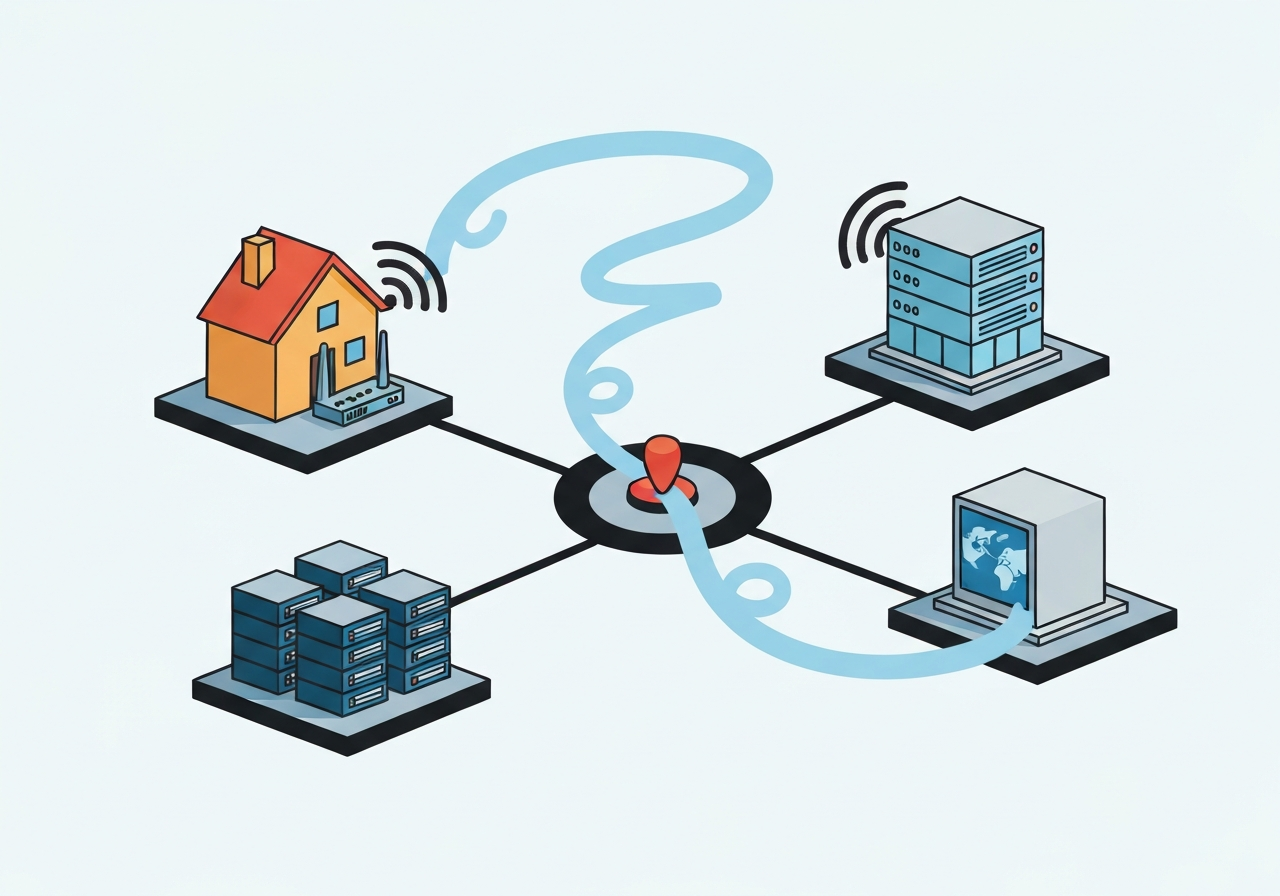
Lead: Researchers led by Xin’an Zhou unveiled a set of Wi‑Fi attacks called “AirSnitch” at the 2026 Network and Distributed System Security Symposium that can defeat client isolation in home, office, and enterprise networks. The techniques exploit desynchronization between the physical (Layer‑1) and link (Layer‑2) layers to mount a bidirectional man‑in‑the‑middle (MitM) capable of viewing and modifying traffic. Tests show vendors including Netgear, D‑Link, Ubiquiti and Cisco — and firmware builds such as DD‑WRT and OpenWrt — are affected. Some vendors have released mitigations, but researchers warn complete fixes may require changes at the silicon level.
Key Takeaways
- AirSnitch leverages cross‑layer identity desynchronization at Layers 1 and 2 to nullify client isolation and enable full bidirectional MitM attacks.
- Researchers demonstrated attacks against 11 devices/vendors, including Netgear R8000, D‑LINK DIR‑3040, Ubiquiti AmpliFi, Cisco Catalyst 9130, DD‑WRT and OpenWrt; every tested device was vulnerable to at least one variant.
- Attacks can redirect downlink traffic by ‘‘port stealing’’ (MAC‑to‑port remapping) and then restore mappings to avoid detection, allowing prolonged interception and injection of frames.
- Consequences include cookie theft, DNS cache poisoning, plaintext credential capture and the potential to exploit unpatched application‑layer bugs; Google estimates 6% (Windows) and 20% (Linux) of pages can still load without HTTPS, increasing exposure.
- Some mitigations are available via firmware updates, but researchers say fundamental fixes may require silicon changes from chipset vendors and broader industry standards for client isolation.
- AirSnitch generally requires some network access (same SSID, another SSID on the same AP, or in some setups even Internet‑facing access), so it’s not purely a radio‑range only threat like earlier WEP breaks.
- VPNs can reduce risk but have known leaks (DNS/metadata); zero‑trust architectures are more robust but hard to deploy for consumer and many small business networks.
Background
Wi‑Fi now underpins billions of devices globally: the industry group reports more than 48 billion Wi‑Fi‑enabled devices shipped since the late 1990s and an estimated 6 billion individual users. Over decades the protocol has accumulated significant security incidents — from early ARP‑spoofing chaos to systemic breaks such as WEP in 2007 and the KRACK disclosures in 2017/2019 — driving the development of cryptographic protections and client isolation features on modern access points.
Client isolation is a common router feature that is intended to prevent direct client‑to‑client traffic on the same wireless network by isolating link‑layer flows. Vendors have implemented multiple, nonstandard mechanisms to achieve this across consumer and enterprise products. Those mechanisms assume a consistent binding of a device’s identity across protocol layers and across distribution infrastructure; AirSnitch shows that assumption can fail when low‑level behaviors are manipulated.
Historically, breaking Wi‑Fi protections often focused on flaws in encryption schemes or protocol handshakes. AirSnitch differs by targeting the interplay between Layer‑1 (physical radio and port mappings) and Layer‑2 (MAC addressing and switching) to create an attack surface that encryption alone does not close. That cross‑layer vector reopens an older class of exposures that many administrators thought had been closed by client isolation.
Main Event
The attack family begins with a technique the researchers call port stealing: the attacker modifies the Layer‑1 mapping that ties a MAC address to a logical port (BSSID/channel) by associating the victim’s MAC with the attacker’s port. By completing a Wi‑Fi four‑way handshake on an AP radio the target is not actively using, the attacker can take over the downlink path for packets intended for the victim.
Once downlink traffic is redirected to the attacker, the attacker must avoid leaving the target completely disconnected. AirSnitch uses a restoration trick: an ICMP echo from a fake MAC wrapped with the shared Group Temporal Key prompts replies that cause the distribution switch or AP to restore the original MAC mapping. By flipping mappings back and forth, the attacker sustains a transparent, bidirectional MitM.
Because many deployments tie multiple SSIDs and APs into the same wired distribution system, the team showed the attack can escalate beyond a single radio: by hijacking MAC‑to‑port mappings at the distribution switch level, an attacker can intercept traffic for victims associated with different APs or SSIDs. The researchers even demonstrated methods to extract RADIUS packets and set up a rogue authentication server, enabling credential capture and rogue WPA2/3 access‑point setups.
In practical tests the researchers validated multiple variants across 11 devices and firmware builds. Some vendors moved quickly to patch specific behaviors; others indicated they may need silicon vendor cooperation to fully remediate the problem, reflecting that client isolation is implemented in varying ways across the industry.
Analysis & Implications
AirSnitch alters the Wi‑Fi threat model by shifting the focus from purely cryptographic or radio attacks to persistent, link‑layer manipulation that can survive encryption. Encryption protects content confidentiality between endpoints but does not, by itself, guarantee that traffic will be delivered only to the intended recipient when the MAC‑to‑port bindings can be forged or flipped.
For enterprises, the most troubling implications come from shared distribution systems and centralized authentication mechanisms. If APs share wired switches and a distribution fabric, the attack can cross AP boundaries, undermining the isolation assumption enterprise designers have relied upon. The researchers’ demonstration that RADIUS exchanges can be intercepted and used to stage rogue authentication infrastructure raises escalation risks beyond simple eavesdropping.
At the consumer level, AirSnitch is worrying but not identical to catastrophic past breaks. The 2007 PTW collapse of WEP left users with no practical protection, whereas AirSnitch generally requires the attacker to obtain some foothold on related SSIDs or infrastructure. That said, in some configurations attackers can reach victims from different SSIDs or even from the Internet, broadening the attacker’s options and making defenses like simple SSID separation less reliable.
Mitigation choices are imperfect. Firmware patches can close protocol‑level mistakes, but several vendors warn that some issues are rooted in silicon behavior, requiring chipset updates or hardware redesign. Network managers should prioritize firmware updates, segment critical services, monitor MAC‑to‑port anomalies, and accelerate adoption of zero‑trust principles where feasible. For end users, choosing strong, unique passphrases, avoiding unknown guest networks, and using trusted VPNs for sensitive work remain pragmatic steps.
Comparison & Data
| Device / Build | Vendor | Test Result |
|---|---|---|
| Nighthawk x6 R8000 | Netgear | Vulnerable to at least one AirSnitch variant |
| RX2 Pro | Tenda | Vulnerable |
| DIR‑3040 | D‑LINK | Vulnerable |
| Archer AXE75 | TP‑LINK | Vulnerable |
| RT‑AX57 | ASUS | Vulnerable |
| DD‑WRT v3.0‑r44715 | Community firmware | Vulnerable |
| OpenWrt 24.10 | Community firmware | Vulnerable |
| AmpliFi Alien / Router HD | Ubiquiti | Vulnerable |
| LX‑6500 | LANCOM | Vulnerable |
| Catalyst 9130 | Cisco | Vulnerable |
That table summarizes the test set reported by the research team. Device families, vendor implementations and deployment topologies influence which AirSnitch variants succeed; no single vendor‑level patch will uniformly eliminate all variants without coordinated silicon and firmware remediation.
Reactions & Quotes
“AirSnitch breaks worldwide Wi‑Fi encryption, and it might have the potential to enable advanced cyberattacks,”
Xin’an Zhou, lead author (research interview)
Zhou framed the research as a cross‑layer discovery that gives attackers primitives to launch cookie theft, DNS poisoning and other higher‑layer exploits.
“This work is impressive because unlike other frame injection methods, the attacker controls a bidirectional flow,”
HD Moore, security researcher and runZero founder
Moore compared AirSnitch to older client‑to‑client attack surfaces, noting the research restores exposures many operators assumed had been resolved.
“Even when the guest SSID has a different name and password, it may still share parts of the same internal network infrastructure as your main Wi‑Fi,”
Xin’an Zhou (research paper)
Zhou emphasized that SSID separation alone can be insufficient when underlying distribution systems are shared.
Unconfirmed
- Whether every model from the listed vendors worldwide is vulnerable — researchers tested representative devices, but vendor model diversity leaves some coverage gaps.
- If and when silicon vendors will issue hardware‑level changes; several manufacturers say full fixes may require chipset updates but timelines are unclear.
- How quickly automated exploit tooling will be developed and circulated; today the attack needs technical effort but could be simplified in future.
- The exact prevalence of enterprise deployments where guest and production SSIDs share distribution fabrics in ways that permit cross‑AP escalation is not fully measured.
Bottom Line
AirSnitch is a significant technical finding because it shifts the security conversation toward cross‑layer behavior rather than only cryptographic flaws. The attacks defeat client isolation guarantees by exploiting how physical and link layers are bound in real equipment and infrastructure, enabling MitM and injection capabilities with practical consequences like cookie theft and DNS poisoning.
Practical exposure varies: consumer networks with weak access controls or shared infrastructure are most at risk; properly segmented, patched enterprise networks are less so but not immune. Network operators should prioritize firmware updates, log and monitor MAC‑to‑port anomalies, consider zero‑trust segmentation for sensitive assets, and treat client isolation as a feature that must be validated against their specific distribution architecture.
For most users, measured caution remains the best short‑term posture: avoid unknown guest networks, use trusted VPNs for sensitive tasks, tether when feasible, and watch for vendor advisories. Expect a mix of firmware patches, vendor guidance, and longer‑term hardware conversations with chipset suppliers as the community works toward durable mitigations.