
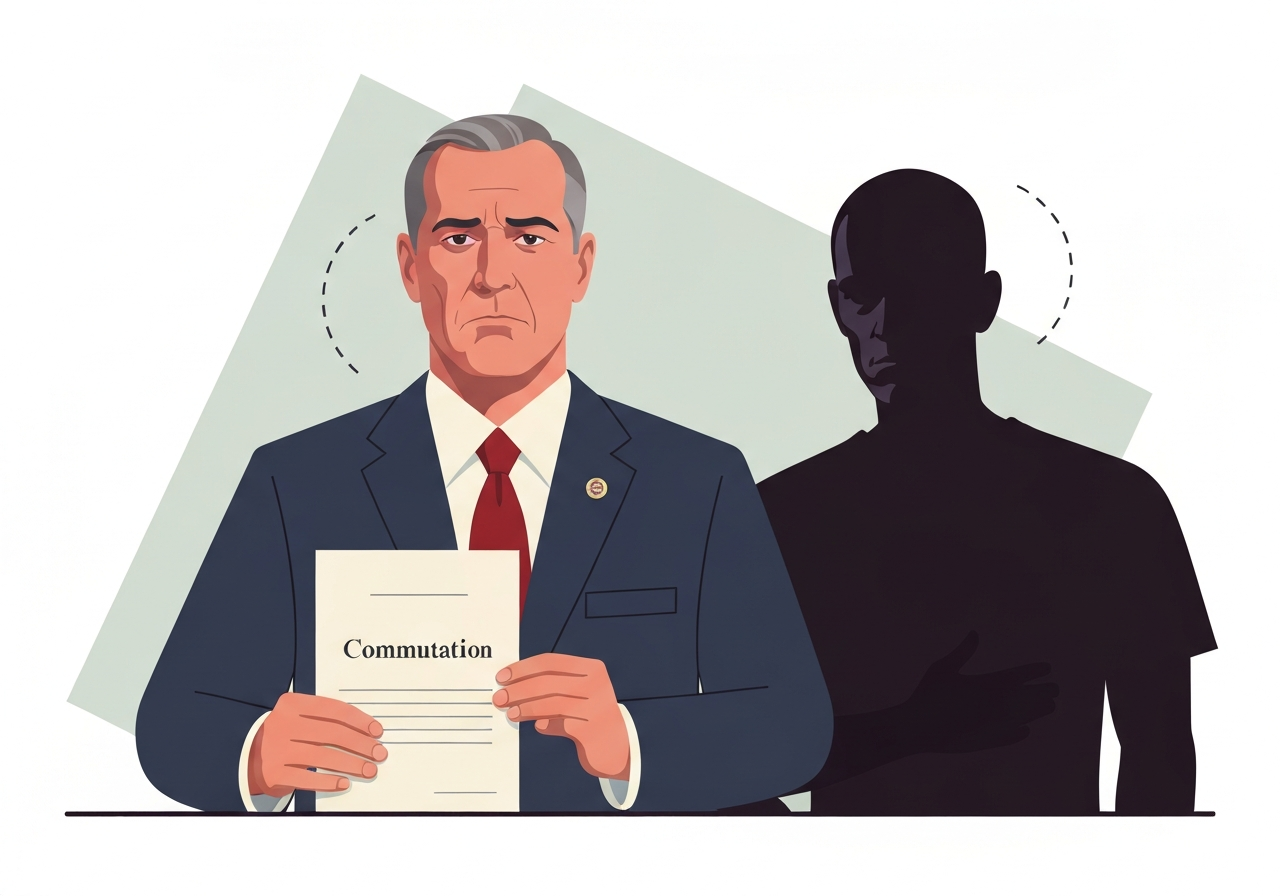
Lead: Alabama Gov. Kay Ivey on Tuesday commuted the death sentence of 75-year-old Charles “Sonny” Burton, who had been scheduled for execution this week despite not being inside the store when the victim was killed. The change reduced Burton’s punishment to life without parole and marks only the second time Ivey has granted clemency to a death-row inmate since taking office in 2017. Burton had been convicted in the 1991 AutoZone robbery in Talladega during which customer Douglas Battle was shot; another participant, Derrick DeBruce, fired the fatal shot. Ivey said her decision hinged on fairness and proportionality in how capital punishment is applied.
Key Takeaways
- Governor Kay Ivey commuted Charles Burton’s death sentence to life without parole on Tuesday; Burton is 75 years old and was scheduled for execution later this week.
- Burton was convicted for his role in the Aug. 16, 1991, AutoZone robbery in Talladega in which Douglas Battle was shot in the back; DeBruce fired the fatal shot after other robbers, including Burton, left the store.
- Derrick DeBruce’s death sentence was previously reduced on appeal to life in prison; Burton’s commutation drew attention to the disparity between the two outcomes.
- This marks the second clemency action by Ivey toward a death-row inmate since 2017, despite her having overseen 25 executions while governor.
- Supporters, several jurors from the 1992 trial, and family members urged clemency; Burton’s daughter expressed relief and gratitude after the announcement.
- Attorney General Steve Marshall publicly criticized the commutation, arguing Burton organized the robbery and held a gun to a store manager’s head.
- Burton told reporters he did not know anyone had been shot until after leaving the scene and said he wanted to apologize to the victim’s family.
Background
The case dates to Aug. 16, 1991, when an armed robbery at an AutoZone store in Talladega, Alabama, ended with customer Douglas Battle shot in the back. Charles “Sonny” Burton was convicted at a 1992 trial for his role in organizing and participating in the robbery and was ultimately sentenced to death. Court testimony indicated Burton had left the store before the fatal shot was fired by another participant, Derrick DeBruce, who later had his death sentence reduced on appeal to life in prison.
Governor Kay Ivey, a Republican who has overseen 25 executions since taking office in 2017, has maintained public support for capital punishment as a policy. Clemency powers remain a rare use of executive authority in Alabama; Ivey’s decision to commute Burton’s sentence is only the second time she has granted such relief to a person on death row. The case attracted advocacy from Burton’s family, defense attorneys, and several jurors from the original trial, who urged mercy in light of Burton’s limited presence at the scene and his age and health.
Main Event
On Tuesday, Ivey announced she would commute Burton’s death sentence to life without parole, halting an execution that had been scheduled for Thursday night by nitrogen hypoxia. Her statement framed the action as one taken because of concerns about proportionality: she concluded that executing Burton while the shooter had received a lesser punishment would be unjust. The decision followed formal pleas from jurors, family members, and legal advocates who emphasized Burton’s peripheral role and advanced age.
Burton, 75, is sometimes confined to a wheelchair, and supporters highlighted both his health and long incarceration. Members of his legal team and family members, including his daughter Lois Harris, reacted emotionally when told of the commutation; Harris told reporters she was overcome with tears of joy. Defense attorneys had argued that Burton’s role did not make him the triggerman and pushed for sparing his life on both legal and moral grounds.
Not all officials agreed. Alabama Attorney General Steve Marshall issued a statement sharply criticizing the commutation, pointing to Burton’s role in organizing the robbery and asserting Burton bore responsibility for Douglas Battle’s death. The move comes amid ongoing debate in Alabama and nationally over equity in capital sentencing and whether co-defendants receive consistent punishments.
Analysis & Implications
The commutation highlights tensions in the criminal-justice system about joint enterprise liability: when multiple participants engage in a crime but only some directly commit lethal acts, states must decide how to assign the most severe punishments. Ivey’s action signals executive willingness to intervene when proportionality between co-defendants appears starkly uneven, even in a state that routinely enforces capital sentences.
Practically, the ruling spares Burton immediate risk of execution and converts a death-row case into a life-sentence case, shifting legal and correctional planning for both the individual and the state. Politically, it may prompt renewed scrutiny of jury instructions, prosecutorial charging decisions, and appellate review in cases where accomplices play varying roles. Defense teams and innocence/mercy advocates may view this as precedent to press for commutations in similar circumstances.
For victims’ families, outcomes like this can generate mixed responses: some see commutation as an affront to final accountability, while others who supported clemency in this case questioned whether equal justice requires identical outcomes for non-trigger participants. The Attorney General’s public rebuke underscores that state officials may continue to press for strict accountability in violent-crime prosecutions.
Comparison & Data
| Item | Burton | DeBruce |
|---|---|---|
| Crime date | Aug. 16, 1991 | Aug. 16, 1991 |
| Conviction | Participation in armed robbery (death penalty) | Fatal shooting (sentence later reduced) |
| Original sentence | Death (commuted to life w/o parole) | Death (reduced on appeal to life) |
The table summarizes the differing legal outcomes for two participants in the same crime. Such divergence—one defendant ultimately spared capital punishment while another was sentenced to death and later had that sentence reduced—illustrates why executive clemency discussions often focus on proportionality and the specific conduct of each defendant.
Reactions & Quotes
Supporters and family members celebrated the commutation, emphasizing mercy and Burton’s limited role at the scene. Several jurors from the 1992 trial had publicly urged clemency in the weeks before the governor’s decision.
“I’m just so happy, so happy. It’s just tears of joy.”
Lois Harris, Burton’s daughter
National clemency advocates also praised the move as measured and humane, framing it as an example of executive discretion used to correct an apparent inequity.
“By commuting the death sentence of Charles ‘Sonny’ Burton, she ensured that justice — not technicalities — guides the most serious decision a state can make.”
Alice Marie Johnson, clemency advocate
State officials who prosecuted the case criticized the decision, stressing Burton’s organizational role in the robbery and arguing accountability remains essential for violent crimes.
“There has never been any doubt that Sonny Burton has Douglas Battle’s blood on his hands.”
Attorney General Steve Marshall
Unconfirmed
- Whether Burton had advance knowledge that a co-defendant intended to use lethal force has not been independently established in new public records released since the commutation.
- Longer-term effects on Alabama capital-sentencing practice—such as changes to charging patterns or plea recommendations—remain speculative and unconfirmed at this time.
Bottom Line
Governor Ivey’s commutation of Charles Burton’s death sentence resolves an imminent execution and spotlights questions about fairness when co-defendants receive different ultimate punishments. The decision reflects a narrow exercise of clemency grounded in proportionality concerns rather than a broad policy shift against the death penalty in Alabama.
Expect continued debate: prosecutors and victims’ advocates are likely to emphasize accountability, while defense and clemency supporters will point to disparities among co-defendants as grounds for mercy. The case may prompt lawyers, jurors, and legislators to reassess how jointly committed crimes are prosecuted and sentenced when lethal outcomes are involved.
Sources
- The Associated Press (news report)
- Office of the Governor of Alabama (official website)
- Alabama Department of Corrections (official agency)