
Lead
On Dec. 19, 2025 in Norman, Okla., No. 9 Alabama overcame a 17-point deficit to defeat No. 8 Oklahoma 34-24 in the first round of the College Football Playoff. The Tide’s comeback featured 232 passing yards and two touchdowns from Ty Simpson and a 50-yard interception return by Zabien Brown that tied the game late in the first half. Freshman Lotzeir Brooks—who had no regular-season touchdowns—caught two scoring passes and set season bests with five receptions for 79 yards. The win sends Alabama (11-3) to a Rose Bowl quarterfinal against No. 1 Indiana and Heisman Trophy winner Fernando Mendoza on Jan. 1.
Key Takeaways
- Final score: Alabama 34, Oklahoma 24; the Tide erased a 17-point deficit to advance in the CFP first round on Dec. 19, 2025.
- Ty Simpson completed for 232 yards and two touchdowns, supplying the offensive spark the team lacked early.
- Zabien Brown’s 50-yard interception return late in the first half tied the game at 17 and shifted momentum to Alabama.
- Freshman Lotzeir Brooks scored two touchdowns, posting season highs with five catches and 79 receiving yards after entering with zero regular-season TDs.
- A nine-play, 75-yard touchdown series that included a fourth-down conversion was pivotal in reversing Alabama’s offensive output.
- A blocked punt led to a position the Tide converted into a 35-yard field goal by Conor Talty, extending the comeback.
- The result sets a Jan. 1 Rose Bowl quarterfinal between Alabama and No. 1 seed Indiana, featuring Heisman winner Fernando Mendoza.
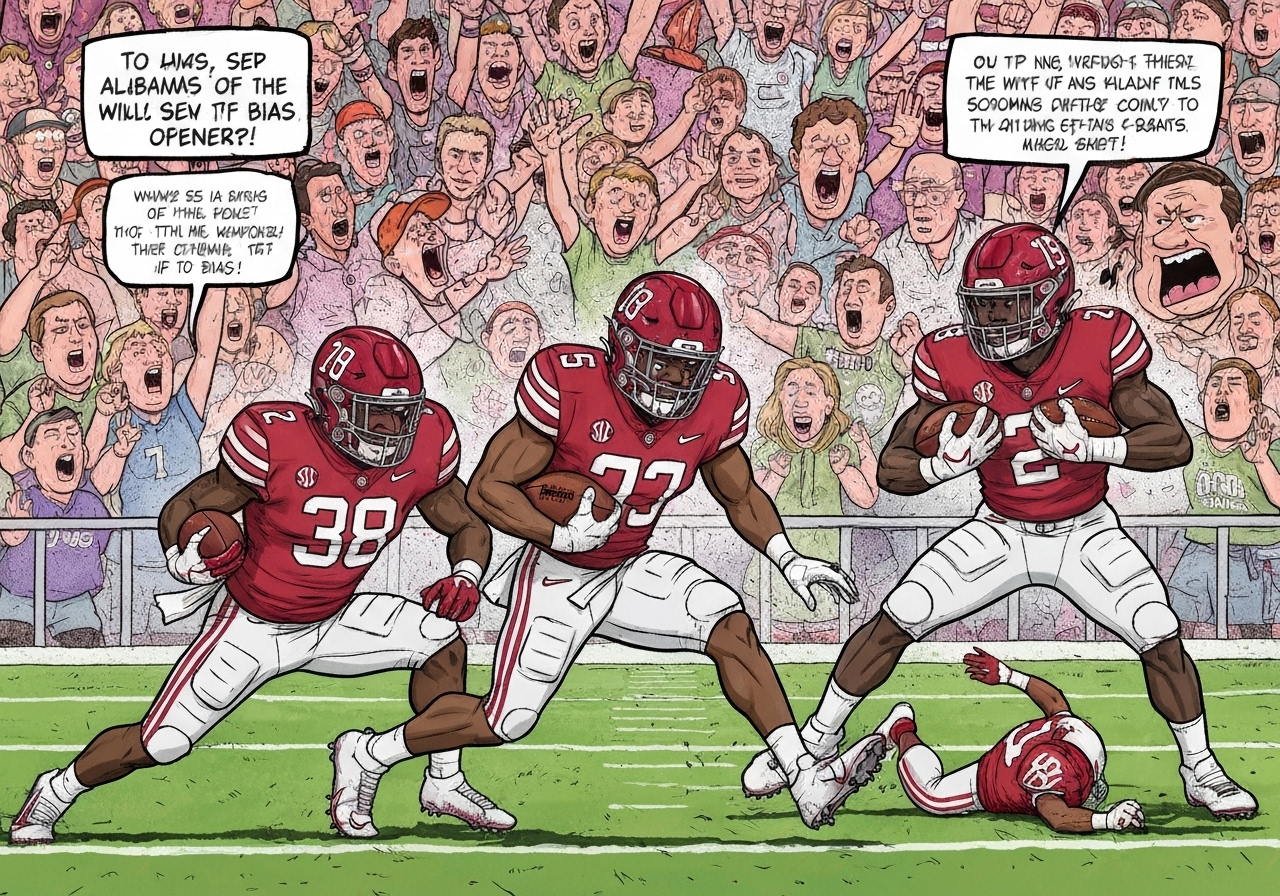
- Social media reaction ranged widely, with many fans accusing the CFP selection process of favoring the SEC after seeding choices and game narratives surfaced.
Background
Alabama’s appearance in the 2025 College Football Playoff marked the first postseason berth for the program under coach Kalen DeBoer, who took over from Washington two years earlier. The Crimson Tide finished the season 11-3 and entered the bracket as the No. 9 seed, paired against No. 8 Oklahoma in Norman. The CFP selection and seeding process has drawn scrutiny in recent seasons, with critics and some fans alleging regional or conference advantages when matchups and home sites are set.
Those longstanding debates framed Thursday’s matchup: Alabama carried the legacy of a program accustomed to deep playoff runs, while Oklahoma arrived with an early-game surge that exposed Alabama’s sluggish start. Off-field storylines—committee decisions, perceived conference clout and fan expectations—amplified social-media attention and shaped postgame narratives as much as the on-field plays themselves.
Main Event
The game opened with a rapid exchange of scoring that produced two 17-point runs and left the teams tied 17-17 at halftime. Oklahoma’s early efficiency was stark: at one point the Sooners had 17 points while Alabama had only 12 offensive yards. That mismatch underscored the Sooners’ ability to capitalize on short fields and an energized home crowd.
Alabama’s turnaround began with a nine-play, 75-yard touchdown drive that included a successful fourth-down conversion and materially increased the Tide’s offensive production. Special teams then swung the game further: Alabama blocked a punt, setting up field-goal range and a 35-yard Conor Talty kick that put Alabama ahead. Those momentum-changing plays reduced Oklahoma’s margin for error and energized the visiting sideline.
Zabien Brown’s interception return for a touchdown—50 yards to the end zone with 1:18 remaining in the first half—was the single defensive play that erased the early deficit and tied the game at 17. In the second half Ty Simpson sustained drives through the air, finishing with 232 passing yards and two scoring throws. Lotzeir Brooks, a freshman without a regular-season touchdown prior to the game, caught two TDs and produced a 79-yard receiving day.
Oklahoma managed to remain competitive late but could not overcome Alabama’s combined offensive adjustments and game-changing special teams and defensive plays. The final possessions featured Alabama protecting the lead through clock management and key defensive stops that sealed the 34-24 result.
Analysis & Implications
On-field, the game highlighted Alabama’s ability to adjust after a poor start: the offense responded with a methodical long drive and higher third-down efficiency, while the defense produced a turnover swing that directly generated points. Individually, Ty Simpson’s performance under pressure and Brooks’ unexpected scoring presence broaden Alabama’s offensive options heading into the Rose Bowl.
Off-field, the outcome reignited familiar questions about the CFP selection and seeding framework. Fans and commentators pointed to seed placement and site selection as evidence—anecdotal and circumstantial—of an institutional tilt toward teams from the Southeastern Conference. Whether those perceptions change committee behavior depends on future transparency and the consistency of decision-making across seasons.
For Indiana and Fernando Mendoza, Alabama presents a different stylistic test than Oklahoma: the Rose Bowl quarterfinal will match Mendoza’s Heisman-caliber passing and his team’s scheme against a Tide outfit that regained balance with timely defense and special-teams plays. The matchup will also be a gauge of how Alabama’s roster depth and in-season development under DeBoer translate against a top-seeded opponent on Jan. 1.
Comparison & Data
| Item | Alabama | Oklahoma |
|---|---|---|
| Seed | No. 9 | No. 8 |
| Final score | 34 | 24 |
| Leading passer | Ty Simpson — 232 yards, 2 TDs | John Mateer — (team passing) |
| Key defensive play | Zabien Brown — 50-yd INT return | — |
The table above isolates core game facts: seeds, final score, the Tide’s passing leader and the decisive defensive turnover. While Oklahoma dominated early statistical lines for yardage and momentum, Alabama converted situational plays—fourth-down and special teams—into a points advantage. Those discrete episodes, rather than sustained dominance, defined the final outcome and will be focal points in tape study ahead of the Rose Bowl.
Reactions & Quotes
Public reaction was immediate and polarized: many fans celebrated Alabama’s resilience while others used the result to critique the CFP process. Social platforms lit up with both praise for the comeback and renewed accusations about perceived institutional advantages.
“CFP is biased toward the SEC”
Fan posts on social media (various)
“A momentum-shifting turnover and special-teams play turned the game.”
Sports commentators (postgame analysis)
“The comeback showed depth and resolve as the postseason begins.”
Postgame summaries and team reports (various)
Unconfirmed
- Direct evidence that the CFP committee intentionally favored SEC teams in this particular seeding is not confirmed; allegations are based on perception and pattern observation rather than documented committee statements.
- Specific social-media posts cited in some commentary have not been verified for authorship or context; viral messaging aggregated public sentiment but may not represent verified sources.
- Any internal team or committee discussions about site assignment or seeding beyond public releases remain private and unconfirmed.
Bottom Line
Alabama’s 34-24 win over Oklahoma on Dec. 19, 2025, was a comeback defined by a timely interception return, special-teams impact and improved offensive execution after halftime. The Tide will face No. 1 Indiana and Heisman winner Fernando Mendoza at the Rose Bowl on Jan. 1, a matchup that will test whether Alabama’s in-game adjustments can be sustained against top-seeded opposition.
Off the field, the game renewed scrutiny of the College Football Playoff selection and seeding process: social-media reaction and pundit commentary resurrected long-running claims of conference favoritism. Those claims remain assertions until the CFP committee increases transparency or provides specific rationale tied to the contested decisions made this season.