
Lead
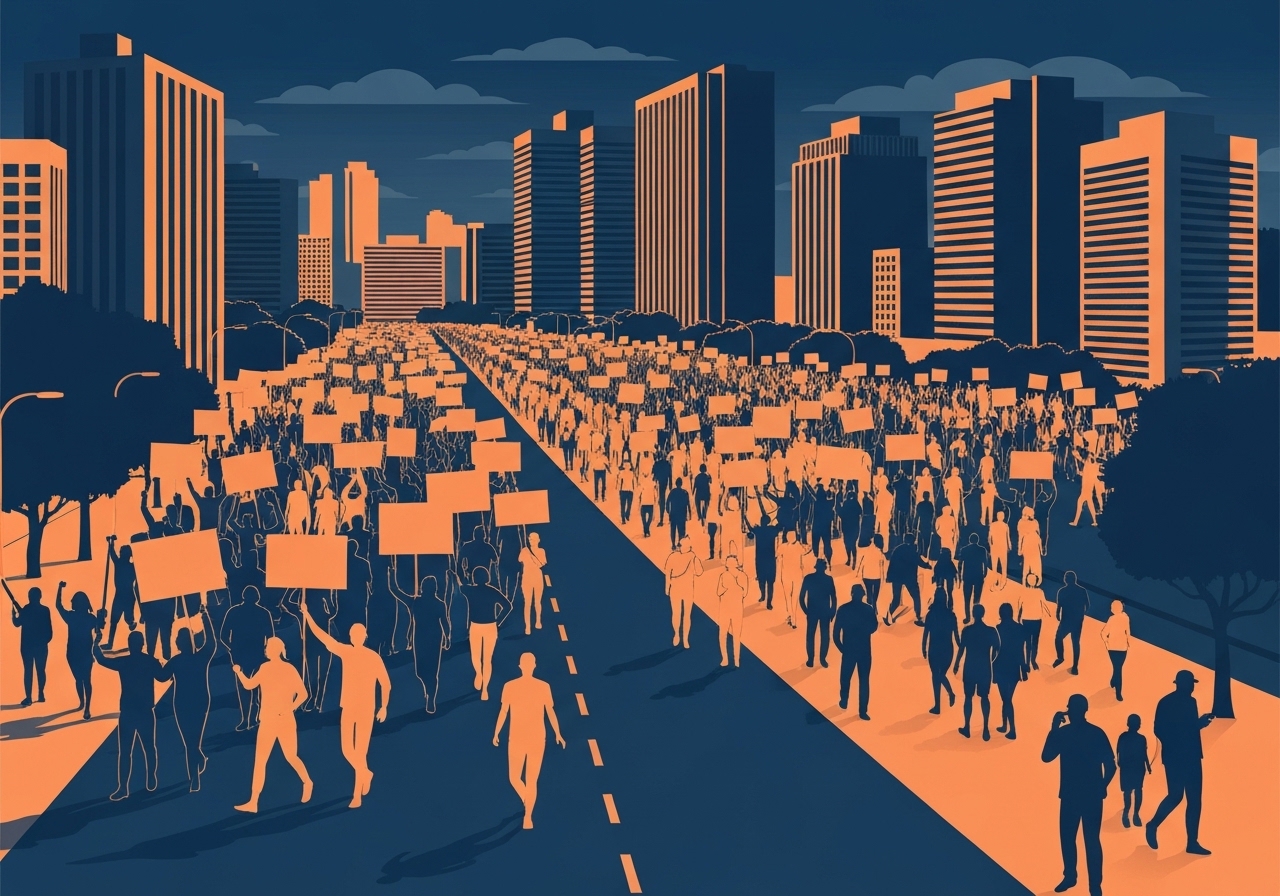
On Saturday, 24 January 2026, large demonstrations spread across multiple US cities after 37-year-old Alex Pretti, a registered nurse from Minneapolis, was fatally shot by federal agents. Protests took place in Minneapolis, New York City, San Francisco, Boston, Providence and Washington, D.C., as crowds rallied against Immigration and Customs Enforcement (ICE) and federal enforcement tactics. The demonstrations followed a separate, large march in Minneapolis the previous day and were marked by chants, banners and cold-weather vigils at the site of the shooting. Organizers and residents said the mobilizations were both a reaction to Pretti’s death and to a recent influx of immigration agents in the city.
Key takeaways
- Alex Pretti, 37, an intensive-care nurse at the Minneapolis VA Health Care System, was shot multiple times during an encounter with federal law enforcement on 23–24 January 2026.
- Protests were reported in at least six cities: Minneapolis, New York City (Union Square), San Francisco, Boston, Providence and Washington, D.C., with crowd sizes described variously as hundreds to thousands.
- Video circulated online shows officers wrestling Pretti to the ground, spraying a chemical agent, and footage analysts say may show a firearm being taken from him before shots were fired; other evidence and official accounts are in dispute.
- The Department of Homeland Security (DHS), and its secretary, Kristi Noem, said Pretti “approached US border patrol officers with a 9mm semi-automatic handgun” and that officers attempted to disarm him; available footage reportedly shows Pretti without a gun in his hand.
- Brian O’Hara, Minneapolis police chief, confirmed Pretti was a lawful gun owner with a permit to carry; Minnesota permit law allows public carry and does not mandate concealment.
- Protest slogans ranged from calls to abolish ICE to demands for accountability for earlier deaths, including that of Renee Good, another Minneapolis resident killed by an immigration officer earlier this month.
- Demonstrators braved extreme cold; community businesses provided warm shelter, water and snacks at memorial vigils in Minneapolis.
Background
Tensions in Minneapolis have grown in recent weeks after the arrival of federal immigration personnel to the city, a development organizers and some residents say has heightened fears and led to more confrontations. Local groups had already organized large marches and demonstrations opposing ICE enforcement practices; thousands marched through Minneapolis one day before the wave of protests on Saturday. The city has experienced at least two recent deadly encounters involving immigration officers, including the killing of Renee Good earlier this month, which has become a rallying point for critics of federal tactics.
Federal immigration enforcement operations have long been contentious in US cities, producing clashes between local officials who prioritize community policing and federal agents who carry out deportation and immigration-control missions. Minneapolis sits at the center of this debate now because of the visible presence of agents and the fatal shooting of a local health-care worker, which has intensified scrutiny of coordination, rules of engagement and oversight. Stakeholders include city leaders, the Department of Homeland Security, local law enforcement, immigrant-rights organizations and medical staff who worked with Pretti.
Main event
On Saturday night, hundreds to thousands of people assembled across downtown Minneapolis at the location where Pretti was shot. As daylight faded, a growing memorial gathered flowers, candles and signs reading “Justice for Alex Pretti.” Organizers described the mood as a combination of grief and anger; participants chanted Pretti’s name and the name of Renee Good. Nearby businesses stayed open to offer warmth, water and snacks to demonstrators enduring subzero temperatures.
In New York City, footage from Union Square showed large crowds chanting against ICE and calling for systemic change. One livestream captured chants of “Say it once, say it twice, we will not put up with ICE!” and speeches from local elected officials. According to the crowd and video posts, City Council member Chi Ossé urged bold action against the agency and criticized its role in recent deaths.
Washington, D.C., saw a sizable demonstration outside DHS headquarters, where protesters gathered after dark and repeatedly shouted “shame” toward the building. In San Francisco and Providence, several hundred people assembled in downtown districts, carrying signs and banners demanding accountability and justice. In Boston, marchers chanted against ICE detention and called for an end to what they described as state-sanctioned terror and hate.
Analysis & implications
The protests highlight an escalating national friction between communities and federal immigration enforcement. The killing of a medically employed, licensed gun owner—according to local officials—by federal agents raises urgent questions about rules of engagement, de-escalation practices and the use of force by officers operating in civilian settings. If independent review corroborates footage that contradicts official accounts, federal agencies may face intensified legal and political pressure.
Politically, the incident amplifies calls from activists and some elected officials for sweeping reforms or abolition of ICE. Local leaders who denounce federal tactics may seek formal inquiries, civil litigation, or changes in federal-local cooperation agreements. Conversely, federal officials who emphasize officer safety and justify force will likely resist rapid operational changes without a full investigation, framing their stance around protecting agents and public safety.
For Minneapolis specifically, the shooting compounds a fragile trust between immigrant and nonimmigrant communities and law enforcement. Hospitals, veterans’ services and public institutions that employed or served Pretti may face internal and public scrutiny over community safety and staff protection. The incident may also shape advocacy and electoral mobilization in municipal and federal contests, particularly where immigration enforcement is a top voter concern.
Comparison & data
| City | Reported crowd size |
|---|---|
| Minneapolis | Thousands (day and following night) |
| New York City (Union Square) | Thousands |
| San Francisco | Hundreds |
| Washington, D.C. | Hundreds |
| Providence | Hundreds |
| Boston | Droves / hundreds |
The estimates above are drawn from on-the-ground reporting and footage posted by participants and outlets; they reflect sizes described in public reports rather than official crowd counts. While sustained activity occurred in multiple cities on the same weekend, the scale ranged from a few hundred to several thousand people depending on location and time. Earlier this month, Minneapolis also experienced a large march against ICE, indicating heightened and continuing mobilization rather than an isolated event.
Reactions & quotes
Local officials, protesters and federal representatives offered sharply different accounts of the shooting and its implications. The following excerpts capture central responses and the context in which they were delivered.
“We need Nuremberg trials for the people of ICE, for the people who are committing crimes against humanity here in our country.”
Chi Ossé, New York City council member (addressing Union Square crowd)
Ossé’s remarks came amid chants calling for abolition of ICE and greater accountability; his speech was delivered in subzero temperatures and framed the agency as responsible for systemic harm, rhetorically equating its actions with international crimes to stress the perceived gravity.
“Shame.”
Demonstrators outside DHS headquarters, Washington, D.C.
Hundreds gathered outside the Department of Homeland Security after dark, repeatedly chanting and holding signs. Protesters used the DHS building as a focal point to demand institutional accountability and policy change.
“He was a lawful gun owner with a permit to carry.”
Brian O’Hara, Minneapolis police chief
Chief O’Hara’s statement confirms that Pretti held a valid permit under Minnesota law, a point raised by advocates to question whether legal gun ownership should have affected the officers’ decision-making during the encounter.
Unconfirmed
- Whether Pretti had a handgun in his hand at the moment of the shooting: available video reportedly shows him unarmed, but DHS asserts he approached officers with a 9mm; this remains contested.
- Analysts have suggested footage may show a firearm removed from Pretti before shots were fired; that interpretation has not been independently verified.
- Official DHS and agency internal accounts differ from bystander and livestream footage on key details of the interaction; a full, independent investigation has not been completed.
Bottom line
The death of Alex Pretti has catalyzed a nationwide wave of protests that crystallize broader grievances about federal immigration enforcement and use of force in civilian contexts. Public footage, official statements and community testimony are at odds on central facts, making an independent, transparent inquiry essential to determine what happened and to rebuild trust.
In the near term, expect continued demonstrations, calls for investigations and intensified political debate over ICE’s role and oversight of federal agents operating in local communities. Longer term outcomes will depend on the findings of inquiries, possible legal actions, and whether federal agencies change operational practices in response to public pressure and judicial or legislative decisions.
Sources
- The Guardian — major news outlet, original reporting on protests and the shooting.