
Lead
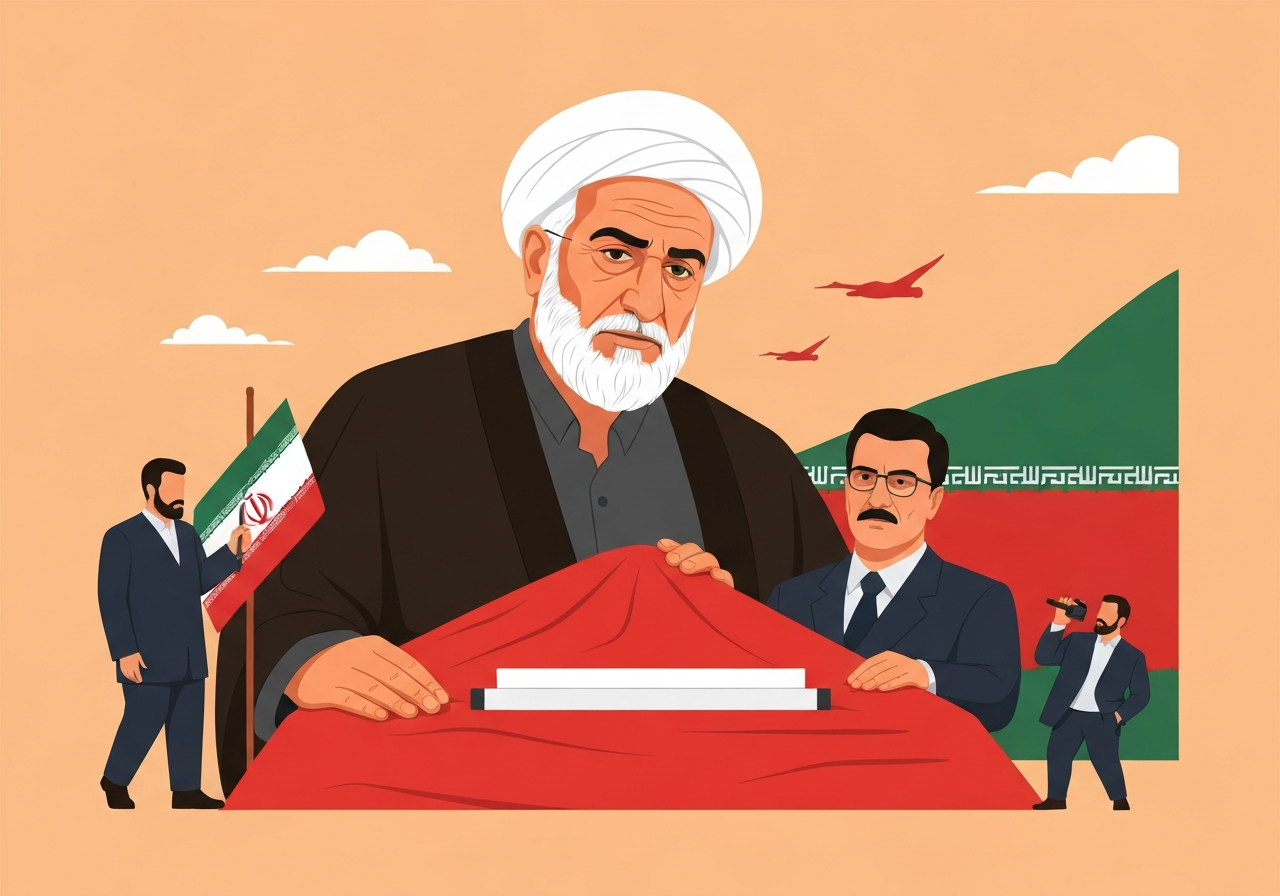
Ali Larijani, Iran’s top national security official and a longtime power broker, was reported killed on , according to the Israeli military and Iranian state media. He was 67. Iranian and foreign statements say he died in an Israeli airstrike amid a broader campaign of attacks that began on . Larijani had played a central role in managing Iran’s internal factions and led recent security operations that suppressed nationwide protests.
Key Takeaways
- Age and death: Ali Larijani, 67, was reported killed on March 17, 2026; Israeli military and Iranian state outlets both reported his death.
- Position: At the time of his death Larijani served as Iran’s senior national security official and was a close confidante of senior clerical leadership.
- Crackdown role: He oversaw a violent crackdown on widespread protests earlier in 2026, operations that rights groups and officials say left thousands dead.
- Diplomacy and influence: Larijani led Iran’s engagement with Russia and China, managed nuclear negotiation channels, and acted as an emissary to Gulf mediators like Oman and Qatar.
- Recent visibility: He was last seen publicly on Friday before his death at a Tehran rally for Quds Day, a government-backed demonstration held at the end of Ramadan.
- Wider context: Larijani is among several senior Iranian figures reported killed since the U.S. and Israeli military campaign began on Feb. 28, including top military leaders and, by some accounts, the former supreme leader.
Background
Larijani hailed from one of Iran’s established political and clerical families and rose through institutions that bind the country’s theocratic and state structures. Over decades he occupied senior roles—parliament speaker, diplomat and negotiator—building ties across the Islamic Revolutionary Guard Corps, elected officials and the office of the supreme leader. His posture combined hard-line security instincts with a reputation for pragmatic deal-making, which made him a broker between Iran’s rival factions.
Iran in 2026 was marked by large-scale protests against Islamic rule that escalated into sustained unrest. Security forces mounted a forceful response that international observers and local sources say resulted in thousands of deaths. The unrest and the government’s reaction reshaped Tehran’s internal politics and elevated security figures who could both coordinate suppression and manage external relations.
Main Event
On March 17, 2026, Israeli military spokespeople publicly reported that Larijani had been killed in an airstrike; Iranian state media subsequently confirmed his death. Official statements from both sides described the event as part of the ongoing cross-border campaign that began with strikes and counterstrikes after Feb. 28. Tehran’s state outlets named Larijani and acknowledged the loss, while Israeli messages framed the strike as targeting senior actors in Iran’s security apparatus.
Larijani had appeared at a government-organized Quds Day rally in Tehran the previous Friday, a high-profile event intended to demonstrate domestic support as the country faced external military pressure. After his public appearance he remained a focal point of media and official attention until the conflicting parties reported his death within days. Iranian authorities also placed Larijani among several senior figures killed in the same period, a list that observers say includes top military leaders.
The killing removes a figure who combined domestic reach and foreign access: he had led negotiations with Western interlocutors on nuclear issues, and he maintained direct channels to Russia, China and regional intermediaries. That mix of internal influence and external contacts made him a central node in Iran’s policy network and a high-priority target in any campaign aimed at degrading Tehran’s command and control.
Analysis & Implications
Domestically, Larijani’s death creates an immediate power vacuum in Iran’s security architecture. He was broadly seen as a connector across the clerical establishment, the Revolutionary Guards and elected bodies; removing that link raises the risk of intensified competition among hard-line actors and the emergence of less-moderating figures. Succession in security leadership will be contested, and rapid personnel shifts could produce gaps in coordination at a time of active hostilities.
Regionally, the loss of a senior emissary complicates Iran’s external diplomacy. Larijani had special relationships with Russia and China and served as a backchannel to Gulf mediators in places like Oman and Qatar. Without his convening role, channels for de-escalation may be less accessible, increasing the likelihood of miscalculation between Tehran and states pursuing or supporting kinetic responses.
On the strategic front, the strike—if confirmed as an intentional targeting of senior decisionmakers—signals a campaign to decapitate Iran’s security leadership. That approach may degrade some operational coordination in the short term but risks provoking retaliatory escalation. It may also harden internal narratives in Iran linking external aggression to domestic repression, strengthening hard-line constituencies that favor forceful responses over negotiation.
Comparison & Data
| Date | Individual | Position | Reported Cause |
|---|---|---|---|
| Feb. 28, 2026 onwards | Multiple senior figures | Heads of IRGC, armed forces, defense minister | Killed in military campaign (reported) |
| March 17, 2026 | Ali Larijani | Senior national security official | Reported Israeli airstrike |
The table summarizes publicly reported deaths among Iran’s senior leadership since Feb. 28. Independent verification on the ground is limited and casualty lists have been issued by both state outlets and foreign militaries; these sources sometimes conflict on names, dates and circumstances. Analysts caution that the immediate tally may change as more reliable confirmation emerges.
Reactions & Quotes
Government and foreign responses arrived quickly after reports of Larijani’s death. Tehran framed the loss as a sacrifice in the face of foreign aggression, while outside capitals offered a mix of cautious statements and calls for de-escalation.
We confirm the strike targeted a senior figure involved in directing operations, and it was carried out as part of a broader campaign begun on Feb. 28.
Israeli military (official statement)
The Israeli military statement emphasized operational intent and placed the strike within a wider campaign; analysts note such framing is intended to underline a strategy of targeting leadership nodes. Iranian state broadcasters, citing official briefings, acknowledged Larijani’s death and presented it as a consequence of foreign aggression that will not go unanswered.
He was a central security official who coordinated both domestic measures and Iran’s diplomatic outreach; his loss will be deeply felt.
Senior Iranian official (reported)
Experts outside Iran warned that his death could reduce the number of interlocutors available for behind-the-scenes de-escalation, increasing the danger of misread signals. Public reaction within Iran varied from state-organized expressions of mourning to social-media posts reflecting fear about further instability.
Unconfirmed
- The precise operational details of the strike—exact time, munitions used and the full target set—remain unverified by independent on-the-ground sources.
- Attribution of intent behind the strike beyond the Israeli military’s statement (for example, whether it was aimed solely at Larijani or part of a larger command-targeting series) has not been independently corroborated.
- How Tehran’s succession process for the national security post will unfold and who will immediately assume Larijani’s responsibilities are not yet clear.
Bottom Line
The reported killing of Ali Larijani on March 17, 2026 removes a central node in Iran’s security and diplomatic network at a moment of intense external and internal pressure. His dual role as an enforcer of domestic order and a pragmatic interlocutor abroad meant he both directed harsh internal measures and kept lines open to foreign partners.
In the short term, expect jockeying inside Iran’s security establishment and a narrowing of available diplomatic channels for quiet de-escalation. Regionally, the move raises the risk of reciprocal actions and further instability; internationally, it will test the ability of outside powers to restrain escalation and to protect remaining diplomatic conduits.
Sources
- The New York Times — media report summarizing events and official statements.
- Israeli Defense Forces — official military statements and press releases.
- IRNA (Islamic Republic News Agency) — Iranian state media reporting official confirmations.
- The Associated Press — international news agency coverage and photographic reporting.