
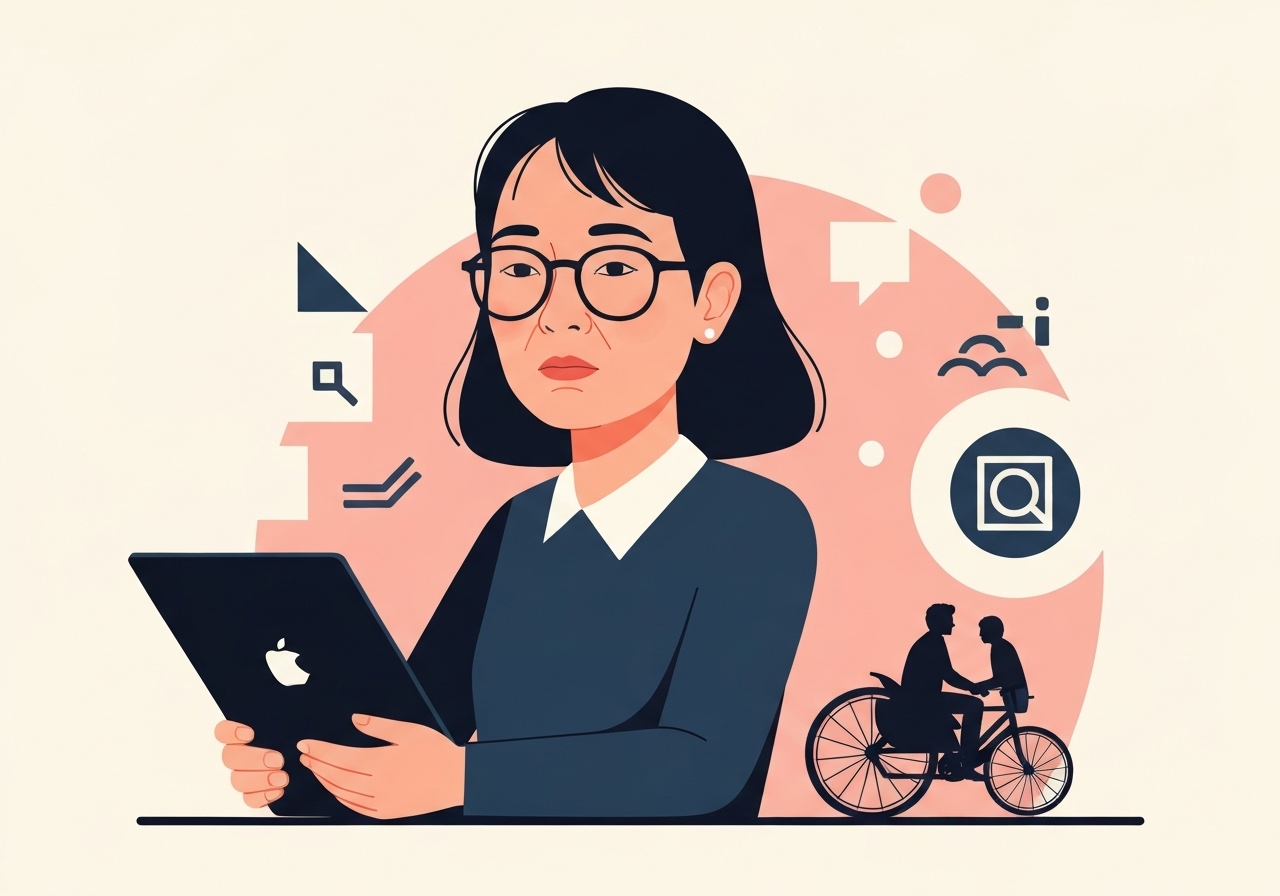
Alice Wong, a prominent disabled activist, writer and founder of the Disability Visibility Project, has died. Friends and family told NPR she was 51 and died of an infection at the University of California, San Francisco hospital; NPR published the report on Nov. 15, 2025. Wong built a national platform amplifying disabled voices, blending grassroots organizing, digital storytelling and cultural critique to challenge ableist systems in the United States.
Key Takeaways
- Alice Wong, 51, died of an infection at UCSF hospital; her death was reported to NPR by fellow activist Sandy Ho and confirmed by family statements.
- She founded the Disability Visibility Project in 2014 to center disabled storytelling across oral histories, essays and social media.
- Wong won a MacArthur Fellowship and published a memoir, Year of the Tiger, in 2022; she also edited and contributed to numerous disability publications.
- She served on the National Council on Disability from 2013 to 2015 and attended the White House ADA 25th anniversary in 2015 via a telepresence robot.
- Wong co-founded the nonpartisan online initiative #CripTheVote in 2016 to connect disabled voters and policymakers.
- After medical emergencies in 2022 she adopted text-to-speech technology and described herself in her memoir as a “disabled cyborg” dependent on technology to live.
- Her writing and organizing combined cultural work, direct advocacy and digital community-building to change public conversations about disability.
Background
Alice Wong was born in 1974 to parents who had immigrated from Hong Kong and grew up in suburbs of Indianapolis, Indiana. Diagnosed at birth with muscular dystrophy, doctors reportedly told her parents she might not survive to 18; she nonetheless completed a bachelor’s degree at Indiana University–Purdue University Indianapolis and later a master’s degree from the University of California, San Francisco. Her upbringing as a disabled Asian American in largely non-disabled classrooms shaped both her politics and her early need to self-advocate with teachers and medical professionals.
Wong spent more than a decade working as a staff research associate at UCSF while developing an influential online presence. In 2014 she launched the Disability Visibility Project, first as an oral-history collaboration with StoryCorps, to document the ordinary and extraordinary lives of disabled people. Over the following decade she expanded DVP into an editorial and archival hub for essays, interviews and cultural commentary on disability culture and policy.
Main Event
Friends and colleagues notified the media of Wong’s death in mid-November 2025. Sandy Ho, a fellow activist, emailed NPR to report that Wong died of an infection at UCSF; the family posted remembrances on social media the next day describing her as a “fierce luminary in disability justice.” Those messages quoted Wong’s own prose from Year of the Tiger and underscored the personal and communal networks she cultivated.
Wong’s public profile combined memoir, policy engagement and viral digital organizing. She used platforms from Twitter to long-form editing to foreground disabled narratives and critique policies that ignore everyday access needs. Her campaigns addressed issues from health-care masking enforcement to debates around bans on single-use straws, arguing that some well-intentioned environmental rules had failed to consider disabled people’s needs.
Her political work included advising at the federal level: she served on the National Council on Disability at the invitation of President Barack Obama from 2013 to 2015. She attended a White House event marking the 25th anniversary of the Americans with Disabilities Act in 2015 through telepresence technology, a widely reported moment that illustrated both the potential and limits of remote representation.
Analysis & Implications
Wong’s death removes one of the most visible organizers who bridged cultural production and concrete policy advocacy in disability spaces. Her model combined lived experience, editorial framing and digital organizing to shift public discourse; that combination is difficult to replace. Organizations and movements she nurtured—most notably the Disability Visibility Project and #CripTheVote—now face the task of sustaining momentum without her public leadership.
Her work also highlighted structural gaps in U.S. institutional responses to disability issues. By elevating personal narratives alongside policy demands, Wong reframed access as a matter of civil rights and cultural recognition rather than charity. That framing has influenced media coverage, advocacy campaigns and academic work in disability studies, increasing pressure on institutions to adopt more inclusive practices.
On a practical level, Wong’s approach showed how digital tools can both empower and expose disabled people. Her adoption of text-to-speech and telepresence technologies illustrated new modes of participation for people with complex health needs, even as it underscored persistent gaps in health care, housing and public infrastructure. Policymakers who want to improve inclusion will need to translate cultural shifts into enforceable standards and funding commitments.
Comparison & Data
| Year | Event |
|---|---|
| 1974 | Born to immigrant parents in Indianapolis suburbs |
| 2013–2015 | Served on the National Council on Disability |
| 2014 | Founded Disability Visibility Project (DVP) |
| 2015 | Attended White House ADA 25th anniversary via telepresence |
| 2016 | Co-founded #CripTheVote |
| 2022 | Published memoir Year of the Tiger and began using text-to-speech after medical emergencies |
| 2025 | Died at age 51; reported Nov. 15, 2025 |
The timeline shows how Wong’s public interventions accelerated after 2013, with sustained output in online and offline organizing. The DVP, launched in 2014, became a durable platform that curated oral histories and editorial projects, while her policy appointments and national visibility drew institutional attention to disability voices.
Reactions & Quotes
Friends, colleagues and organizations reacted quickly, describing both personal loss and the broader implications for disability advocacy.
“Alice Wong was a hysterical friend, writer, activist and disability justice luminary whose influence was outsized,”
Sandy Ho, fellow activist (email to NPR)
Ho’s message to NPR framed Wong as both a personal confidant and a public figure whose projects reshaped cultural conversations about disability. It underscores how Wong’s relationships fused emotional labor with political strategy.
“She will be remembered as a fierce luminary in disability justice, a brilliant writer, editor and community organizer,”
Family statement (social media)
The family statement quoted passages from Wong’s memoir to emphasize the connective networks she prized; it also communicated immediate plans for remembrance and the family’s framing of her life work.
“Being able to use my privilege to pass on opportunities to other disabled people… brings me so much joy,”
Alice Wong, Year of the Tiger / KQED interview
Wong’s own words highlight a deliberate ethic of mutual aid and cultural stewardship that guided many of her projects, from editorial work to small acts of care like cooking for family.
Unconfirmed
- The precise medical details surrounding the infection leading to Wong’s death have not been independently released by UCSF; reporting to NPR cited a friend and family statements.
- Some online accounts have described Wong as the “first” person to visit a U.S. president via telepresence; this characterization appears in Popular Science reporting but has not been verified by an official White House chronology.
Bottom Line
Alice Wong built a singular cultural and political platform that reframed disability as an axis of identity and a set of policy demands. Her combination of storytelling, editorial work and digital organizing changed how media and policymakers hear disabled voices, creating institutional pressure for inclusion and new public narratives about access.
The organizations and movements she helped create will now test whether they can preserve her vision at scale without her daily stewardship. For advocates and institutions alike, Wong’s work is a call to convert cultural recognition into durable policy change and to invest in leadership that centers disabled people’s self-determination.
Sources
- NPR — U.S. public radio report summarizing friend and family statements (news)
- Disability Visibility Project — Official project site and archive (organization)
- StoryCorps — Oral-history partner for DVP (nonprofit)
- MacArthur Foundation — Fellowship information and awardee listings (foundation)
- KQED — Local NPR member station interviews and reporting referenced in coverage (public media)
- Popular Science — Coverage noting telepresence White House visit (science and technology magazine)