
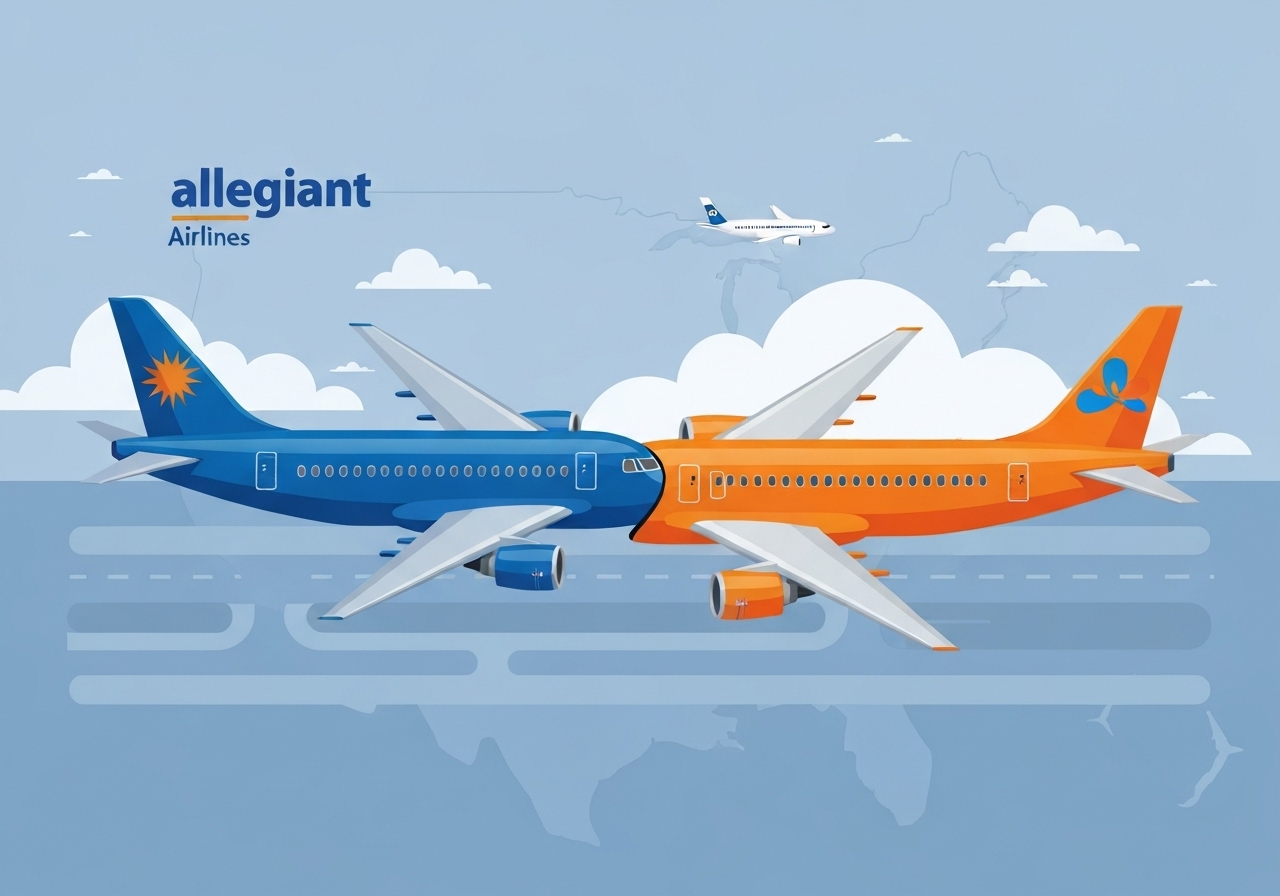
Lead: Allegiant will acquire Sun Country in a cash-and-stock deal announced January 11, 2026, creating a larger U.S. leisure-focused carrier that will serve roughly 22 million annual passengers from nearly 175 cities. The transaction values Sun Country at about $1.5 billion including $0.4 billion of net debt and gives Sun Country shareholders 0.1557 Allegiant shares plus $4.10 cash per share. Management expects the combined airline to operate about 195 aircraft across more than 650 routes and to realize $140 million of annual synergies by year three, with EPS accretion in year one post-close. The companies are targeting a close in the second half of 2026, subject to regulatory and shareholder approvals.
Key Takeaways
- The deal was announced January 11, 2026; Sun Country shareholders will receive 0.1557 Allegiant shares and $4.10 cash per share, implying $18.89 per Sun Country share and a 19.8% premium to the Jan 9 close.
- The transaction values Sun Country at approximately $1.5 billion inclusive of $0.4 billion in net debt and would leave Allegiant shareholders with ~67% and Sun Country shareholders with ~33% of the combined company on a fully diluted basis.
- The combined network will cover more than 650 routes (551 Allegiant routes, 105 Sun Country routes), reach about 18 international destinations, and serve nearly 175 cities with ~22 million annual passengers.
- On close the combined airline is expected to operate roughly 195 aircraft, with 30 on order and 80 options, and to leverage both Airbus and Boeing types for operational flexibility.
- Management forecasts $140 million of annual synergies within three years and EPS accretion beginning in year one post-close; Net Adjusted Debt / EBITDAR is expected to be below 3.0x at close.
- Sun Country’s long-term charter and Amazon Prime Air cargo agreements and Allegiant’s charter business create a diversified revenue mix intended to smooth seasonality and strengthen margins.
- Leadership will be led by Allegiant CEO Gregory C. Anderson as CEO of the combined company; Sun Country CEO Jude Bricker will join the board and act as an advisor during integration.
Background
Allegiant Air, founded in 1999 and based in Las Vegas, has focused on linking small and mid-sized communities to leisure destinations via a point-to-point model and a largely owned 737 MAX fleet and order book. The airline has emphasized low base fares and ancillary revenues while building a network of roughly 551 routes targeted at underserved markets. Sun Country, based in Minneapolis-St. Paul and with a 43-year history, operates a hybrid low-cost model combining scheduled leisure service, charter flying and cargo operations, including a multi-year Amazon Prime Air freighter agreement.
The two carriers have long served complementary market niches: Allegiant’s footprint centers on smaller origin points feeding vacation destinations, while Sun Country flies larger city markets and a broad international leisure footprint across Mexico, Central America, Canada and the Caribbean. Both carriers report durable margins from ancillary revenue streams and contract flying, and both have pursued fleet strategies intended to optimize year-round utilization. Against a U.S. airline industry that has consolidated over past decades, this transaction follows a pattern of carriers combining route networks and non-ticket revenue streams to achieve scale and smoother cash flow through seasonal cycles.
Main Event
On January 11, 2026, Allegiant and Sun Country announced a definitive agreement under which Allegiant will acquire Sun Country in a cash-and-stock transaction. The consideration is 0.1557 Allegiant shares plus $4.10 in cash per Sun Country share, valuing Sun Country at roughly $1.5 billion inclusive of $0.4 billion net debt. The boards of both companies unanimously approved the transaction; closing is expected in H2 2026, conditional on U.S. antitrust clearance, other regulatory approvals, and stockholder votes.
Company statements emphasize complementary networks and fleet diversity as primary strategic rationales. Allegiant highlighted its extensive small- and mid-market origins and order book for 737 MAX aircraft, while Sun Country emphasized its international leisure routes, charter business and narrow-body freighter operations tied to Amazon and other long-term contracts. Combined, management says the airline will be more agile on scheduling and capacity, better able to match peak leisure demand and to leverage charter and cargo contracts year-round.
Leadership and governance arrangements were outlined: Allegiant will remain the publicly held parent, headquartered in Las Vegas, with Gregory C. Anderson as CEO of the combined company and Robert Neal as President and CFO. Jude Bricker will join the board and act as an advisor during integration. Both airlines said they will continue separate operations until a single FAA operating certificate is obtained, and there will be no immediate changes to ticketing, schedules or the Sun Country brand.
The companies set a public timetable for outreach, including an investor conference call and webcast on January 12, 2026, and a joint website (SoaringForLeisure.com) to house transaction materials. Financial and legal advisors were disclosed: Barclays and Skadden for Allegiant; Goldman Sachs and Milbank for Sun Country.
Analysis & Implications
The combination addresses several structural challenges for leisure carriers. First, scale across origin markets can improve aircraft utilization: Allegiant’s smaller-city feed complements Sun Country’s larger-market and international flows, enabling more nonstop leisure pairings and potentially higher ancillary revenue capture per passenger. The combined network also gives the new airline greater leverage in procurement and crew scheduling, which drives the $140 million synergy target.
Second, diversification into long-term cargo and charter contracts provides revenue stability that can dampen seasonality. Sun Country’s agreements—most notably its Amazon Prime Air relationship and recurring sports and government charters—transfer some fuel and demand risk to contract partners and create predictable flying that smooths otherwise cyclical leisure demand.
Third, regulatory risk and integration execution are material near-term uncertainties. The deal requires U.S. federal antitrust clearance and other approvals; regulators will scrutinize route overlaps, competitive effects in local markets, and potential impacts on fares and service. Integration complexity—combining scheduling systems, crew agreements, maintenance practices and safety protocols under a single FAA operating certificate—will also determine whether synergies are realized within the planned three-year horizon.
Finally, shareholder value depends on execution and cost of capital. Management projects EPS accretion in year one, but accretion assumptions rely on timely synergy capture and disciplined capital allocation, including managing the combined company’s debt metrics. The companies project Net Adjusted Debt to EBITDAR below 3.0x at close, a level intended to preserve financial flexibility during integration.
Comparison & Data
| Metric | Allegiant | Sun Country | Combined |
|---|---|---|---|
| Annual passengers | — | — | ~22 million |
| Cities served | — | — | Nearly 175 |
| Routes | 551 | 105 | >650 |
| Aircraft (on close) | — | — | ~195 (30 on order, 80 options) |
| Transaction value | — | — | ~$1.5 billion (incl. $0.4B net debt) |
| Targeted annual synergies | — | — | $140 million by Year 3 |
The table aggregates headline figures released by the companies and provides context for evaluating scale. While Allegiant previously emphasized smaller-city origins and a largely 737 MAX order book, Sun Country contributes international routes and cargo/charter contracts; the combined data show a clear shift toward scale and diversified revenue.
Reactions & Quotes
Management framed the combination as complementary and customer-focused, stressing benefits for travelers and employees while underscoring financial discipline.
“This combination is an exciting next chapter in Allegiant and Sun Country’s shared mission in providing affordable, reliable, and convenient service from underserved communities to premier leisure destinations,” said Allegiant CEO Gregory C. Anderson, highlighting fleet ownership and expected resilience as key advantages.
Gregory C. Anderson, Allegiant CEO (company statement)
Sun Country leadership emphasized brand heritage and the opportunity for shareholders and employees under the combined company.
“Today marks an exciting next step in our history as we join Allegiant to create one of the leading leisure travel companies in the U.S.,” said Jude Bricker, noting Sun Country’s diversified model of scheduled, charter and cargo services and the value delivered to shareholders.
Jude Bricker, Sun Country President & CEO (company statement)
Investor and labor stakeholders will watch integration details and regulatory reviews closely; both companies said they will work with unions and preserve existing collective bargaining agreements while engaging stakeholders throughout the transition.
Unconfirmed
- Regulatory conditions that U.S. authorities might impose are not yet known; any remedies or divestitures, if required, remain uncertain until formal review is complete.
- The exact timeline to obtain a single FAA operating certificate and the detailed sequencing of integration steps have not been disclosed and could extend beyond current estimates.
Bottom Line
This transaction combines two leisure-focused U.S. carriers with complementary route networks, a mix of scheduled, charter and cargo operations, and a stated plan to capture $140 million in annual synergies by year three. If regulators approve the deal and integration proceeds as planned, the combined airline could offer broader destination choice, a larger loyalty program, and greater resilience to seasonality via contracted flying.
Risks remain material: regulatory scrutiny, integration execution, and the pace of synergy realization will determine whether the promised financial benefits materialize. Market participants should monitor regulatory filings, the joint proxy and registration statements to be filed with the SEC, and the companies’ subsequent updates for details on projected savings, fleet deployment, and the path to a unified operating certificate.