
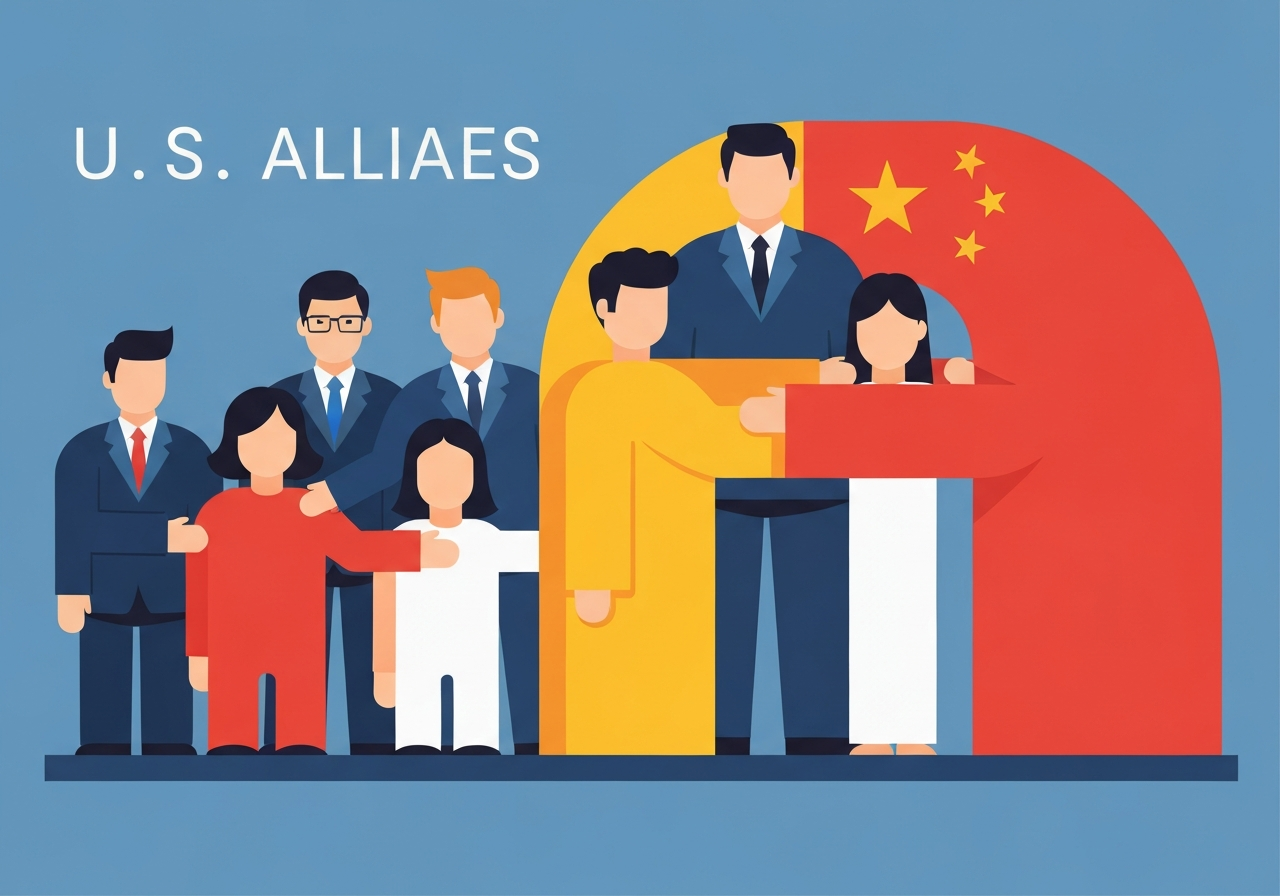
Lead: On Jan. 31, 2026, a wave of European and Canadian leaders traveled to Beijing as Washington’s trade moves unsettled partners and opened diplomatic space for China. Prime Minister Keir Starmer visited Shanghai on Friday, becoming the first British leader to make an official trip to mainland China since 2018. Rather than offering concessions on human rights, security or trade, Beijing has pursued a pressure-and-persuasion strategy—combining economic threats with targeted outreach—that appears to be producing closer ties from some U.S. allies. The result is a reordering of practical engagements: deeper economic and diplomatic contact with China without major policy shifts on the thornier issues that once divided them.
Key Takeaways
- Jan. 31, 2026: Keir Starmer visited Shanghai, the first U.K. prime ministerial trip to China since 2018, signaling renewed high-level engagement.
- 2025: President Trump’s “Liberation Day” tariffs and related U.S. trade measures disrupted traditional trade patterns and prompted allied reassessments.
- Beijing publicly threatened retaliation against countries implementing joint restrictions and unveiled a plan to limit rare-earth exports that targeted global markets, not only the U.S.
- Analysts at institutions such as Brookings say China’s patient strategy aims to make partners more dependent and more likely to accommodate Beijing’s preferences.
- Despite deeper contacts, Beijing has so far made few substantive concessions on human rights, espionage complaints, election interference allegations or structural trade imbalances.
- President Trump issued a public warning on Friday that closer ties between Britain/Canada and China could be “dangerous,” underscoring U.S. concern over allied recalibration.
- The diplomatic shifts raise immediate economic questions—particularly around supply chains for strategic inputs like rare earths—and longer-term alliance cohesion issues in Europe and North America.
Background
Since the United States introduced broad new tariffs and trade measures in 2025, alliances that traditionally coordinated closely with Washington have faced difficult choices about trade, security cooperation and public alignment. Those measures—labelled by the U.S. administration as “Liberation Day” tariffs—reordered incentives for partner capitals grappling with domestic economic pressures, supply disruptions and political pushback at home. China responded not by offering easy accommodation but by signaling costs for countries that aligned too closely with U.S. containment steps, including public warnings and policy tools that could limit exports of strategic inputs.
That posture built on a longer arc of economic statecraft in Beijing: using market access and regulatory levers to shape foreign behavior while preserving core policy positions on sovereignty, human rights and national security. Many allies, especially in Europe and Canada, entered 2026 with unresolved tensions—balancing economic opportunity in the world’s second-largest economy against longstanding democratic norms and security obligations to the United States. The visit by Britain’s prime minister—coming eight years after the last comparable trip—illustrates how quickly diplomatic rhythms can shift when major economic shocks unsettle the status quo.
Main Event
Prime Minister Keir Starmer’s visit to Shanghai on Friday was the high-profile focal point of recent outreach. U.K. officials described the trip as an attempt to secure investment and trade opportunities while reaffirming that differences on rights and security remain. London’s public posture emphasized pragmatic engagement on economic matters, accompanied by private reassurances to Western partners about allied commitments.
Across Europe and Canada, leaders have queued for meetings in Beijing with similar dual messages: pursue economic ties while not abandoning core values. Chinese leaders, including President Xi Jinping, have reciprocated with a mixture of diplomatic hospitality and firm red lines, stressing noninterference and economic reciprocity but resisting substantive concessions on human rights, allegations of espionage, or electoral interference accusations.
Beijing’s economic tools proved salient: announcements about potential restrictions on rare-earth exports signaled that China could weaponize supply-chain chokepoints if pushed, and public statements warned countries that partnership with Washington on restrictive measures would carry costs. Those signals appear to have contributed to the recent wave of visits from allied capitals seeking to hedge risk and preserve market access.
Analysis & Implications
China’s approach can be read as strategic patience: apply pressure where possible, create economic pain points for third parties that cooperate with U.S. pressure, and wait for those parties to seek accommodation. If allies accept closer economic ties without pressing Beijing on governance questions, China gains leverage over policy choices that extend beyond trade—affecting technology standards, security cooperation and international institutions.
For the United States, the diplomatic drift poses a twofold challenge. First, it complicates efforts to build coordinated responses to strategic competition—when partners seek bilateral relief, U.S.-led coalitions weaken. Second, reliance on China for critical inputs such as rare earths increases the economic costs of confrontation and narrows policy options. Washington faces pressure to balance near-term alliance cohesion with longer-term measures to diversify supply chains and reassure partners.
For Europe and Canada, closer economic ties to China bring immediate commercial benefits but also strategic trade-offs. Governments must weigh growth and investment against political costs at home and the durability of security guarantees with the United States. Domestic political dynamics—public opinion, industry lobbying and parliamentary scrutiny—will shape how far leaders can go to deepen ties without provoking backlash.
Comparison & Data
| Year | Notable Diplomatic Event | U.S.-China Economic Flashpoint |
|---|---|---|
| 2018 | Last U.K. prime ministerial visit to China before 2026 | Ongoing trade frictions, pre-2025 status quo |
| 2025 | U.S. imposes “Liberation Day” tariffs | Major trade disruption prompting allied recalibrations |
| 2026 (Jan. 31) | Keir Starmer visits Shanghai; other European/Canadian leaders follow | China signals rare-earth export limits and warns of retaliation |
The table above highlights three pivot points: the long gap since a British leader last visited China (2018), the disruptive U.S. trade measures in 2025, and the renewed high-level diplomacy in early 2026. These moments together show how economic tools and diplomatic signaling interact to reshape alliances and incentives.
Reactions & Quotes
Experts and politicians offered contrasting interpretations of the recent visits and Beijing’s posture.
“China chose to accentuate rather than alleviate the pressure on the allies to force them to tilt closer to Beijing’s position.”
Jonathan Czin, Brookings Institution (researcher, former CIA analyst)
Jonathan Czin framed Beijing’s actions as deliberate strategic pressure meant to change allied behavior over time rather than immediate conciliation.
“It is dangerous for Britain and Canada to look to China as the answer to their economic woes,”
Donald J. Trump (statement, Jan. 31, 2026)
President Trump’s public warning on Friday underscored Washington’s unease with allied engagement, portraying deepened ties with Beijing as a strategic misstep that could undermine Western cohesion.
Unconfirmed
- That Beijing intentionally orchestrated threats to all allies solely to force a coordinated tilt; analysts describe this as a plausible motive but direct evidence of a single, unified plan is not public.
- Reports that specific concessions are being quietly promised to visiting leaders have circulated in some briefings, but no independently verified documents confirming quid pro quo arrangements are available.
- The precise form and timing of any Chinese restrictions on rare-earth exports remain partially public and subject to change; leaked drafts and statements indicate intent but not final policy details.
Bottom Line
Early 2026 diplomacy shows that economic shocks—here, U.S. tariffs in 2025—can rapidly alter the incentives facing allied capitals and open space for a rival power to expand influence without altering its foundational policy positions. China’s mix of pressure and engagement appears to be producing more visits and warmer economic ties, yet Beijing has not conceded on core disputes over human rights or security, leaving a brittle equilibrium in place.
For Washington, the choice is stark: tighten coordination with partners through reassurance and shared economic alternatives, or risk a gradual loosening of unified policy toward Beijing. For allies, the calculus will be pragmatic and domestic: preserve market access and economic benefits now while weighing the strategic risks over the longer term. The next steps—concrete supply-chain diversification, explicit alliance reassurances, or reciprocal concessions—will determine whether this period becomes a durable realignment or a temporary hedging cycle.
Sources
- The New York Times — News analysis and reporting on leader visits and diplomatic context (media).
- Brookings Institution — Analysis and expert commentary on Chinese strategy and allied responses (think tank).