
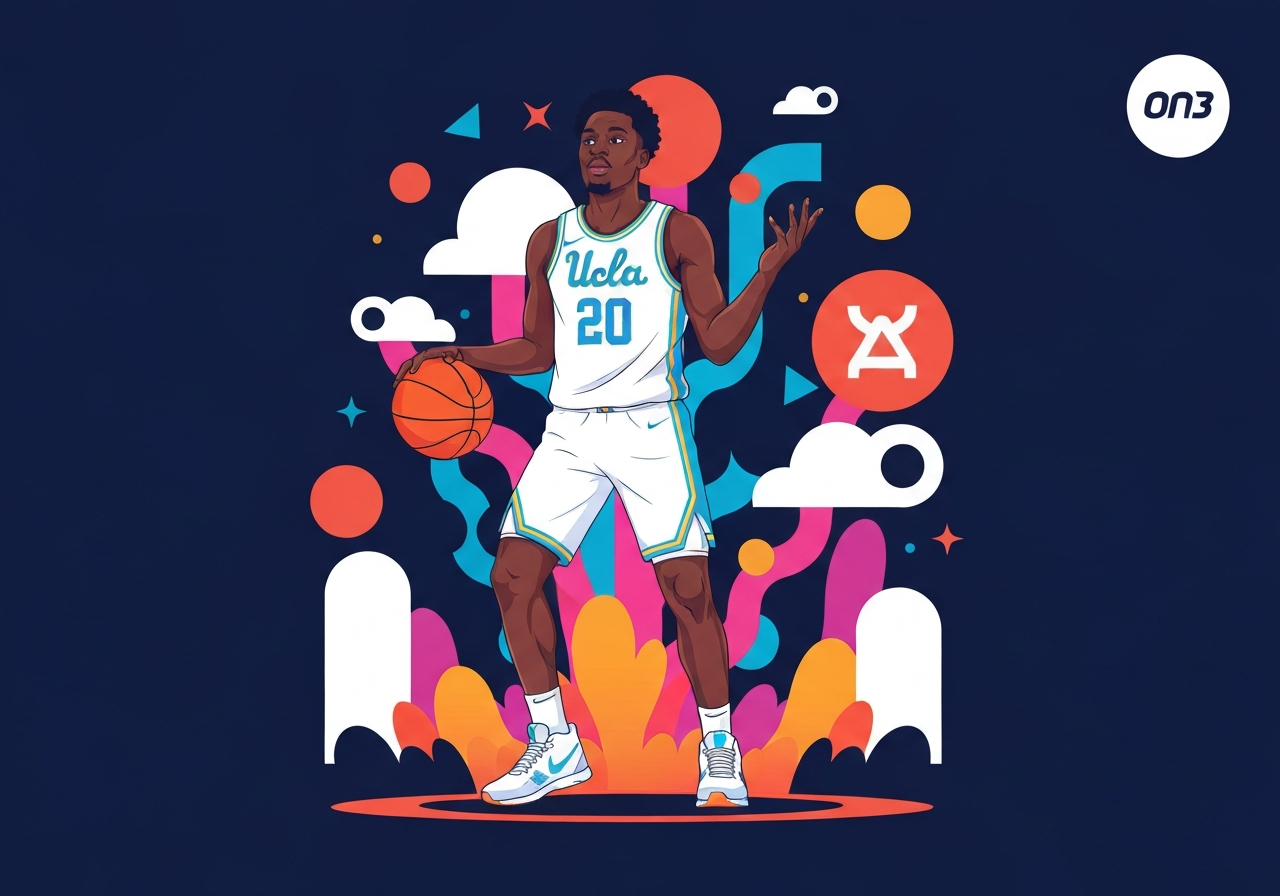
Former UCLA guard Amari Bailey has informed multiple outlets that he is pursuing a return to college basketball after spending time in the NBA and G League. Reports first surfaced via ESPN’s Dan Murphy and were confirmed by On3’s Joe Tipton, saying Bailey aims to be among the first players to regain collegiate eligibility after appearing in NBA games. Bailey, 21, played at UCLA in 2022–23, then entered the 2023 NBA Draft and was selected No. 41 overall by the Charlotte Hornets; he later signed with the Brooklyn Nets on Sept. 21, 2024, and was waived on Oct. 19. He says his goal is to play for a team that can compete for a national championship and to demonstrate growth on and off the court.
Key Takeaways
- Amari Bailey played one season at UCLA (2022–23), averaging 11.2 points, 3.8 rebounds and 2.2 assists while shooting 49.5% FG and 38.9% 3PT.
- Bailey was a first-year pro after the 2023 NBA Draft when Charlotte selected him No. 41 overall; he made 10 NBA appearances and averaged 2.3 points in 6.5 minutes per game.
- He signed with the Brooklyn Nets on Sept. 21, 2024, and the team waived him on Oct. 19, 2024; his professional contracts totalled $565,000, per his statement to ESPN.
- Bailey has played in the G League for Greensboro Swarm, Long Island Nets and Iowa Wolves while exploring a path back to college eligibility.
- His attorney, Elliot Abrams, who previously aided restoration efforts for other athletes, has said the NCAA lacks strong justification to deny Bailey eligibility.
- Charles Bediako, another 2023 draftee who never appeared in an NBA game, recently secured a temporary restraining order to regain eligibility at Alabama — a precedent cited in discussions about Bailey.
Background
Amari Bailey arrived at UCLA as a five-star recruit and the No. 12 prospect in the 2022 class, according to Rivals Industry Rankings. He started for the Bruins in 2022–23, earned All-Pac-12 honors and helped the team reach the NCAA Sweet Sixteen before declaring for the 2023 NBA Draft. After being chosen 41st overall by the Charlotte Hornets, Bailey logged limited NBA minutes and spent time in the G League as he continued his professional development.
The NCAA’s eligibility rules and recent legal challenges have drawn renewed attention amid a handful of cases where players who entered professional ranks later sought reinstatement to college programs. The situation sits at the intersection of evolving amateurism policy, expanded name-image-likeness (NIL) rules and legal strategies that have allowed some athletes to argue for restored eligibility under court orders or negotiated settlements.
Main Event
On report by ESPN’s Dan Murphy and confirmation from On3’s Joe Tipton, Bailey is actively pursuing reinstatement to play college basketball again. He has publicly framed the effort as a serious move to improve his game and to change outside perceptions, saying he does not want to delay a return to college-level competition until his late 20s. Bailey emphasized that this is not a publicity stunt but a deliberate plan to develop and compete for a national title.
Bailey’s professional timeline is concise: after the 2022–23 collegiate season he declared for the 2023 NBA Draft, was selected by Charlotte at No. 41, and made 10 appearances in his rookie season. He later signed with Brooklyn on Sept. 21, 2024, but the Nets waived him on Oct. 19; he has since played in the G League for Greensboro, Long Island and Iowa as he seeks additional opportunities.
His attorney, Elliot Abrams, who assisted in eligibility matters for other collegiate athletes, has indicated confidence in the legal and regulatory arguments for reinstatement. Bailey has told reporters the only professional contract he had was worth $565,000 and that he will begin contacting college programs about joining them next season if cleared by the NCAA or a court.
Analysis & Implications
If Bailey secures reinstatement, the case could establish or strengthen a pathway for other players who briefly turned professional before seeking college eligibility again. That would intensify discussions about the boundaries between professional compensation and retained amateur status, especially as NIL and alternative compensation models shift the economics of college recruiting.
Granting eligibility to a player who logged NBA minutes would also raise practical roster and scholarship questions for NCAA programs — from scholarship counting and roster management to competitive balance and recruiting fairness. Coaches and compliance offices would need clear guidance on how to treat prior professional compensation and service time relative to NCAA bylaws.
From the NBA and G League perspective, a precedent permitting returns to college could change how late second-round picks and two-way players view early pro decisions: some prospects might weigh the option to leave and return as part of a longer development plan. Teams could also reconsider contract structures and guarantees for two-way or minimum deals if a return-to-college route becomes viable.
Comparison & Data
| Context | Per-Game | Key Percentages / Notes |
|---|---|---|
| UCLA (2022–23) | 11.2 PPG, 3.8 RPG, 2.2 APG | 49.5% FG, 38.9% 3PT; All-Pac-12; Sweet Sixteen |
| NBA (Charlotte, rookie season) | 2.3 PPG, 6.5 MPG (10 games) | No extended NBA season minutes; later G League assignments |
The numbers show a clear gap between college production and limited NBA sample minutes; the college season demonstrates on-court scoring efficiency and perimeter shooting that could interest NCAA programs if eligibility is restored. Contextual factors — role, minutes and competition level — explain some variance between college and NBA figures.
Reactions & Quotes
College and legal observers have watched Bailey’s filings and public statements closely, noting both the legal precedent of recent reinstatement cases and the NCAA’s discretion in eligibility rulings. Athletic departments will monitor any formal decision for its compliance and roster implications.
“Right now I’d be a senior in college… I’m not trying to be 27 years old playing college athletics. No shade to the guys that do; that’s their journey.”
Amari Bailey (to ESPN)
Bailey framed his move as a development-focused choice rather than a publicity effort, stressing urgency to return earlier in his athletic career. Legal counsel has signaled a measured strategy aimed at securing prompt eligibility clearance if the NCAA doesn’t provide a straightforward administrative route.
“I don’t believe the NCAA has any real justification for not granting eligibility.”
Elliot Abrams (attorney for Bailey)
Abrams has prior experience assisting athletes with eligibility disputes, and his statement highlights a likely legal strategy: press the NCAA to issue a clear, legally defensible decision or face a court challenge that could produce temporary relief similar to other recent cases.
Unconfirmed
- Whether the NCAA will grant Bailey immediate eligibility is not yet determined and may require a legal filing or administrative exemption.
- It is unconfirmed which college programs, if any, have been contacted by Bailey or his representatives about roster spots for next season.
- The exact contractual details and timing that the NCAA would consider disqualifying remain subject to interpretation and have not been publicly adjudicated in Bailey’s case.
Bottom Line
Amari Bailey’s pursuit of a college return after playing in NBA games poses a potentially consequential test of current eligibility rules and legal pathways. If the NCAA permits his reinstatement, the decision could open a novel route for certain players to combine brief professional stints with subsequent collegiate competition, forcing policy clarifications and administrative adjustments.
Observers should watch for formal filings, any temporary court orders, and statements from the NCAA or prospective schools; those moves will determine whether Bailey’s case becomes a singular instance or a precedent-setting example. Regardless of outcome, the episode underscores the evolving boundary between professional and collegiate sports in the post-NIL era.