
Lead
At the 2026 Winter Olympics in Milan, American figure skater Amber Glenn delivered a flawed individual free skate yet stood amid jubilation as the United States secured the team gold. Glenn, 26, landed a triple Axel but finished with a 138.62 free-skate score on Sunday, short of her season best of 150.50 at the World Championships. She described physical discomfort during her routine and acknowledged intense online backlash after speaking about LGBTQ+ treatment in the U.S. The day closed with mixed emotions: personal disappointment, gratitude for her teammates and a spotlight on the reaction to her public comments.
Key Takeaways
- Amber Glenn scored 138.62 in the women’s free skate in Milan on Feb. 8, 2026, about 11.88 points below her World Championships free-skate of 150.50 earlier this season.
- Glenn finished third in the free skate portion that contributed to the U.S. winning the Olympic team gold; her score left the U.S. level with Japan before Ilia Malinin secured the title.
- Japan’s Kaori Sakamoto outscored Glenn by roughly 10 points in the free skate (about 148.62), a margin that highlighted inconsistencies in Glenn’s performance.
- Glenn landed a triple Axel in Milan but described feeling unwell and tentative, citing physical malaise rather than attributing the result to external factors.
- At 26, Glenn is the oldest U.S. Olympic singles skater in nearly a century and remains one of the few women consistently landing a triple Axel.
- She reported receiving substantial online backlash, including threats, after commenting on the state of the LGBTQ+ community under President Donald Trump; she announced a temporary social-media break on Instagram.
- Ilia Malinin landed five quadruple jumps in the men’s segment that followed, clinching gold and completing the U.S. team victory.
Background
Amber Glenn entered Milan riding a strong recent record: she won three consecutive U.S. national titles, the first woman to do so since Michelle Kwan, and posted a 150.50 free skate at the World Championships earlier in the season. Her athletic profile is defined by technical difficulty, notably the triple Axel, which places her among the sport’s most capable jumpers. The U.S. team arrived in Milan with high expectations across both the men’s and women’s fields, aiming to reclaim Olympic prominence in team competition.
The Olympic team event compresses individual performances into a collective score, magnifying the impact of every skater’s short and free programs. That structure can amplify pressure: one subpar outing can force teammates into clutch situations. For the U.S. in 2026, that dynamic played out visibly when Glenn’s mixed free skate left the closing burden on Ilia Malinin, who responded with an extraordinary five-quad performance.
Main Event
Glenn’s free skate began with a successful triple Axel, and she wore a shimmery navy one-shoulder costume as she skated to music titled “I Will Find You, The Return.” Early in the program she showed signs of struggle—hesitations and less confident transitions—which judges reflected in element and component marks. By the program’s midpoint she was visibly tense, and although she completed several elements, the overall execution fell short of the level she displayed at Worlds.
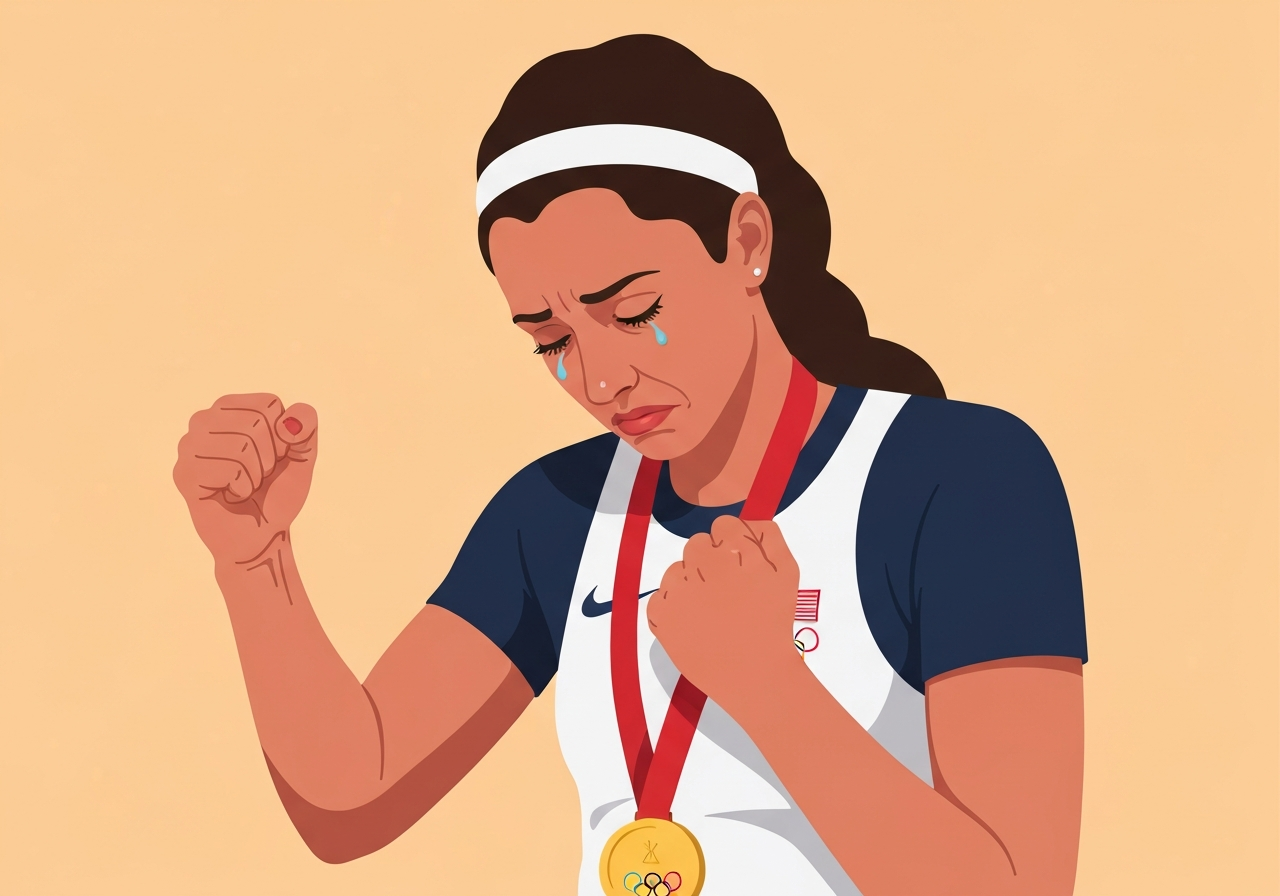
After her program, Glenn bowed her head and held a private, emotional moment on the ice as the packed Milano Ice Skating Arena watched. Teammates quickly rallied: Ellie Kam and others offered comfort in the immediate aftermath, and later the team celebrated collectively on the podium, raising the American flag while singing the national anthem. Glenn stood beside Malinin in the victory moment, sharing in the team’s joy despite personal disappointment.
In post-skate comments, Glenn said she did not feel physically well during the free skate and emphasized mental growth in how she managed the routine under duress. She also addressed public reaction to comments she made before the Olympics about the LGBTQ+ community’s situation in the United States, saying the response had forced her off social media and led to threats that she described as disturbing.
Analysis & Implications
Glenn’s Milan performance underlines a key tension in elite sport: technical capacity does not always translate to clean outcomes under Olympic pressure. Her ability to land a triple Axel keeps her in contention for individual medals, but the gap between her World Championship free-skate (150.50) and the Olympic free-skate (138.62) indicates inconsistency that rivals can exploit in the upcoming individual event. For U.S. women aiming to end a two-decade individual Olympic medal drought, consistency across short and free programs will be decisive.
The team format both masked and magnified Glenn’s result. It masked the immediate consequence—because the U.S. still won team gold—but magnified the emotional stakes for teammates called upon to compensate. Ilia Malinin’s five-quad routine is a reminder that team depth can absorb individual errors, yet it also places psychological weight on each skater to perform when the team needs them most.
Glenn’s public comments on LGBTQ+ issues and the subsequent online backlash raise broader questions about the intersection of athlete expression, social media and competition. Athletes now navigate high visibility statements that can draw partisan responses; the intensity of online reaction may affect mental preparation and wellbeing. National governing bodies and teams will likely reassess support structures—media coaching, mental-health resources and digital-safety measures—to protect athletes who speak publicly on social issues.
Comparison & Data
| Event | Free-Skate Score |
|---|---|
| Milan Olympics free skate (Feb. 8, 2026) | 138.62 |
| World Championships (earlier 2026 season) | 150.50 |
| Japan’s Kaori Sakamoto (Milan free skate) | ~148.62 (≈10 points ahead of Glenn) |
The table highlights a nearly 12-point drop from Glenn’s Worlds performance to her Olympic free skate and shows that Kaori Sakamoto outscored her by about 10 points in Milan. Those differentials matter in both team and individual standings: single-digit deviations per element can cumulatively determine podium placements. Coaches and performance staff will review run sheets, element grades and program components to isolate where points were lost—transitions, GOE on jumps, or component scores tied to presentation and skating skills.
Reactions & Quotes
Teammates and officials combined relief at the team result with empathy for Glenn’s personal disappointment. The public reaction on social platforms split between support and harsh criticism, prompting Glenn to temporarily step back from Instagram.
“I couldn’t believe the outlandish backlash I’ve received for just supporting people.”
Amber Glenn
This comment summarized her response to the online fallout after she spoke about LGBTQ+ treatment in the U.S.; she said the volume and tone of messages included threats that she had not experienced previously. Teammates publicly embraced her in the arena and on the ice, offering visible, immediate comfort.
“I’m going to keep speaking my truth. I’m always going to speak my truth.”
Amber Glenn
Glenn emphasized that she intends to continue using her platform to support causes she believes in, even as she navigates the competitive calendar and media attention. Officials noted the team’s unity and highlighted Malinin’s closing performance as decisive for the gold.
Unconfirmed
- Independent verification of the precise number and content of alleged death threats Glenn reported has not been made public; the claim is based on her own statements.
- Whether the social-media backlash materially affected Glenn’s Olympic free-skate execution remains unverified; Glenn said it did not, but external confirmation is not available.
- Any private medical or physiological factors Glenn referenced (described as not feeling well) have not been independently disclosed by team medical staff.
Bottom Line
Amber Glenn’s day in Milan combined personal frustration with collective triumph: she underperformed relative to her season best yet helped secure a U.S. Olympic team gold thanks to deep performances across the roster, notably Ilia Malinin’s five quads. The gap between her Worlds free-skate and the Olympic free-skate will be a central focus for her coaching team as the individual event approaches.
Beyond the ice, the episode highlights how athlete speech and social media can shape an athlete’s Olympic experience. Teams and governing bodies should expect increasing pressure to provide rapid-response mental-health and digital-safety support to competitors who speak on public issues. For Glenn, the immediate challenge is sporting: convert technical ability into clean, composed Olympic performances while managing the off-ice scrutiny that has followed her statements.