
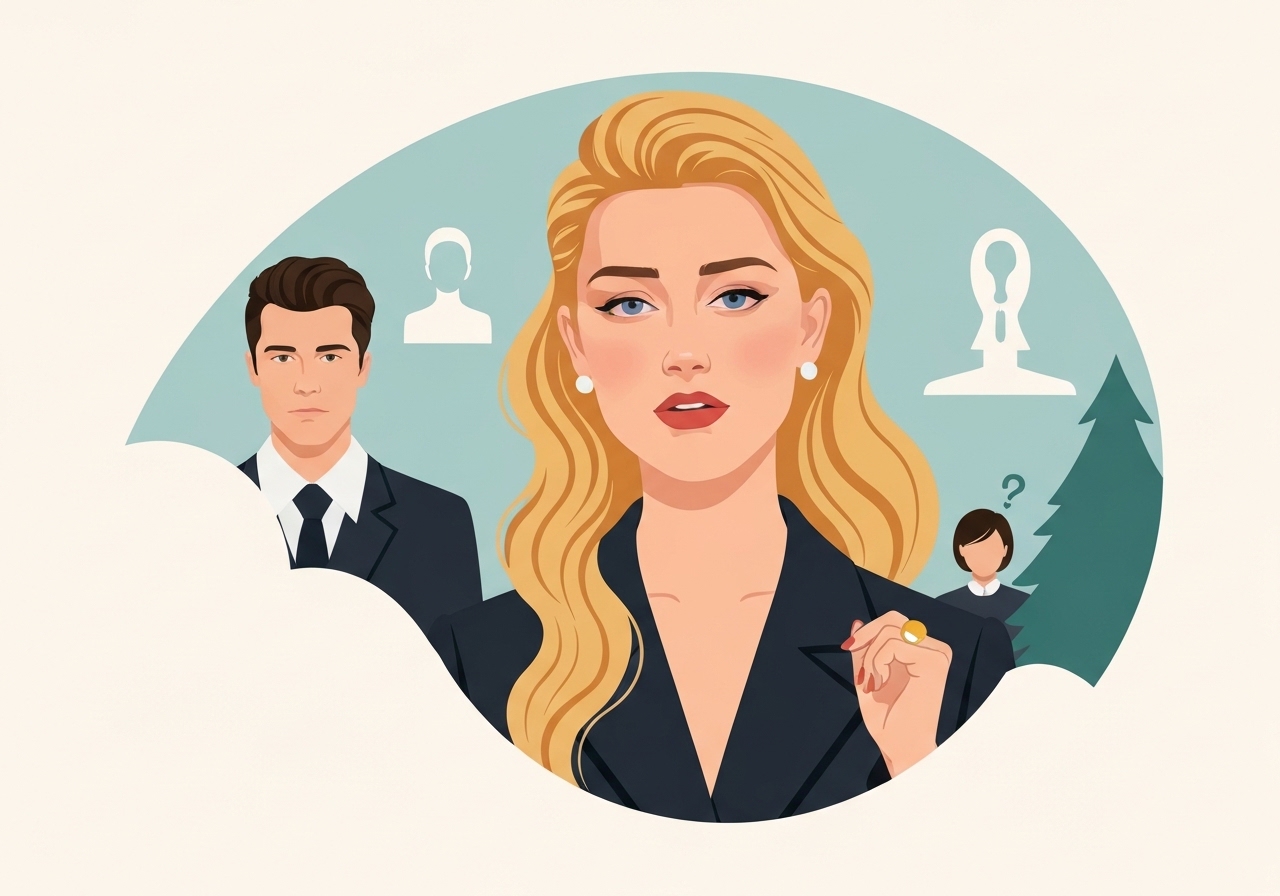
Amber Heard appears in Silenced, a new documentary that premiered in the World Cinema program at the Sundance Film Festival on Saturday, examining how high-value defamation lawsuits can be used to silence women who speak about abuse. Directed by Selina Miles and produced with international human-rights lawyer Jennifer Robinson, the film follows several women—including a journalist and public figures—whose attempts to seek accountability were impeded by nine-figure libel claims. Heard, whose participation came after Robinson worked with her during the 2018 Depp v. The Sun libel case, agreed to a filmed interview that frames her experience as part of a broader pattern. The film is currently seeking distribution.
Key Takeaways
- Silenced premiered in Sundance’s World Cinema strand on Saturday and was directed by Selina Miles with involvement from lawyer Jennifer Robinson.
- The film documents multiple women whose pursuit of justice was affected by large defamation suits, including claims reaching nine-figure demands.
- Jennifer Robinson advised Heard during the 2018 Depp v. The Sun libel trial, in which Depp sued The Sun over an article referencing Heard’s allegations of domestic violence.
- Heard sat for her first film interview since 2023’s Aquaman and the Lost Kingdom and emphasizes she joined to highlight systemic problems, not to relitigate her own case.
- Featured subjects include Brittany Higgins (alleged rape in Australian parliament), Catalina Ruiz-Navarro (sued by director Ciro Guerra), and attorney Sibongile Ndashe.
- Robinson warns the suits have a “chilling effect,” making it prohibitively expensive for many survivors to defend their speech in court.
- The film links individual stories to a wider post-#MeToo dynamic where public allegations can prompt costly counter-litigation.
Background
Since the #MeToo movement, many survivors have used public testimony as a route toward accountability, but some alleged perpetrators have responded with defamation or libel claims. Those countersuits are often framed as legal defenses of reputation yet can demand sums large enough to threaten the financial security of the defendant. Jennifer Robinson, an international human-rights lawyer featured in Silenced, has been involved in several high-profile libel defenses and frames the documentary around the legal and social costs of such litigation.
Amber Heard’s role in that broader story traces to the 2018 courtroom fight in England, when Johnny Depp sued The Sun over an article that questioned his casting in the Warner Bros. Fantastic Beasts films and referred to allegations Heard had made. Heard’s testimony and evidence were central to The Sun’s defense. The public attention around that case and the later, widely reported US trial between Depp and Heard turned both legal strategies and media scrutiny into a cautionary example for other survivors and journalists.
Main Event
Silenced follows several women whose public allegations led to counter-litigation that the filmmakers characterize as intended to intimidate and financially punish. Heard agreed to be interviewed for the film; she told director Selina Miles that her participation was not meant to refocus attention on her personal narrative but to illustrate a systemic problem. The documentary shows how the legal process and courtroom publicity affected Heard’s daily life and her ability to participate in public debate.
The film presents scenes from the Depp v. The Sun trial period as a case study: daily court appearances drew hostile crowds and public fury directed at Heard, with some observers dressing as Depp’s Pirates character and taunting her as she entered and left court. The filmmakers and contributors connect that spectacle to the broader phenomenon of public shaming that can accompany high-profile libel battles. Jennifer Robinson appears on camera explaining the strategic legal choices and the financial realities facing defendants who must prove truth as a defense.
Silenced also profiles others beyond Heard: Brittany Higgins, whose allegation of a rape by a senior staffer in the Australian parliament prompted political fallout; Catalina Ruiz-Navarro, editor of Volcánica, sued after publishing allegations against filmmaker Ciro Guerra; and Sibongile Ndashe, a human-rights lawyer who provides legal context. Each segment walks through the immediate legal motion, the media reaction, and the personal consequences for the women involved.
The film concludes its festival screening without a distributor in place and uses the cases to pose questions about access to justice, the economics of defense, and the long-term effects on those who speak out. It deliberately links courtroom mechanics to social consequences—legal fees, reputational harms, and the deterrent effect on future testimonies.
Analysis & Implications
Silenced argues that powerful libel and defamation claims can function as strategic tools to suppress allegations and public debate. When defendants must disprove charges in court to avoid crippling damages, the cost and complexity of litigation can foreclose their ability to continue challenging alleged misconduct. That dynamic raises questions about the practical meaning of free speech in cases where only one side can realistically sustain a protracted legal defense.
For institutions—media outlets, universities, employers—the film suggests a tension between protecting reputation and enabling accountability. Newsrooms that report allegations risk expensive suits even when journalistic methods are sound; smaller publications and individual journalists are especially vulnerable. The filmmakers and legal experts in Silenced urge consideration of policy responses, including funding models for defense, reform of libel damages, and procedural safeguards to prevent abuse of the courts as instruments of intimidation.
Politically, the film could influence debates about anti-SLAPP (strategic lawsuits against public participation) measures and the calibration of defamation law across jurisdictions. International differences—England’s historically claimant-friendly libel rules versus U.S. protections for speech—mean remedies and risks vary by venue, complicating cross-border cases. The documentary frames these differences as part of why access to effective defense varies widely and why outcomes can hinge on where a suit is filed.
Comparison & Data
| Subject | Case Type | Location | Notes |
|---|---|---|---|
| Amber Heard | Libel/defamation involvement (Depp v. The Sun) | UK/US | Court testimony central to The Sun’s defense; widely publicized |
| Brittany Higgins | Alleged sexual assault; political workplace | Australia | Political and public consequences within Australian parliament |
| Catalina Ruiz-Navarro | Defamation suit | Latin America | Sued by director Ciro Guerra after publishing allegations |
| Sibongile Ndashe | Human-rights legal advocacy | International | Provides legal analysis in film |
The table above maps the film’s principal participants and the legal contexts the documentary examines. While Silenced centers on a handful of widely reported cases, its makers connect them to a pattern of litigation that the film describes as capable of producing nine-figure exposure in some jurisdictions. That scale, the film contends, is an essential part of why defendants often choose silence over protracted legal defense.
Reactions & Quotes
Jennifer Robinson framed the film’s central legal concern at a Variety Studio conversation at Sundance, emphasizing how defamation litigation can chill speech by shifting burdens and costs. She described the post-#MeToo landscape as one in which public allegations are increasingly met with expensive counter-litigation.
“What does free speech mean if you can’t afford to defend it?”
Jennifer Robinson, international human-rights lawyer
Robinson’s comment captured the film’s normative question: whether legal systems unintentionally privilege those who can finance long defenses. The filmmakers and interviewees use on-camera testimony and courtroom scenes to illustrate that point rather than rely solely on abstract argument.
Amber Heard explained to director Selina Miles that her involvement was motivated by concern for others rather than a desire to retell her own story, and she described how public and legal scrutiny changed her relationship to speaking out.
Heard said she no longer feels she can use her voice in the same way and joined the film to highlight the broader issue rather than her private ordeal.
Amber Heard, actress
Her remarks in the film are framed as a personal account that resonates with the documentary’s line of inquiry rather than as legal testimony intended to reopen litigation. The filmmakers present her segment as one example among several.
Sibongile Ndashe and other legal contributors in the film stressed the deterrent effect of high-cost litigation, arguing that it can be deployed strategically to curtail public participation on matters of abuse and misconduct.
Such suits, they argue, often function less as neutral disputes about reputation and more as mechanisms that silence survivors and journalists.
Sibongile Ndashe, human-rights attorney (paraphrased)
The film juxtaposes those expert observations with the lived experiences of the women it follows to connect legal doctrine to everyday consequences.
Unconfirmed
- The film references several nine-figure claims; the precise settlement demands or judgments in each case are not fully documented on-screen and may vary by jurisdiction.
- Distribution outcomes after the Sundance screening remain undecided; the film is actively seeking a distributor but no deal has been publicly announced.
- Some legal repercussions described in the film relate to ongoing or multi-jurisdictional matters whose final judgments, appeals, or settlements were not all confirmed at the premiere.
Bottom Line
Silenced uses a mix of personal testimony and legal analysis to argue that expensive defamation litigation can act as a deterrent to reporting and testimony about abuse. By featuring high-profile and lesser-known cases, the film links courtroom strategy to broader social consequences, raising policy questions about how to preserve both reputation and the ability to speak out. Viewers should take the documentary as a prompt for discussion about legal reform, funding for defenses, and the role of media in covering allegations responsibly.
For policymakers, lawyers and advocacy groups, Silenced is likely to be a touchstone in debates over anti-SLAPP measures and cross-border libel standards. For audiences, the film reframes publicized trials as part of a larger ecosystem in which access to resources—financial, legal and institutional—often determines whose version of events can survive scrutiny. The festival premiere will likely help the film reach distributors and spark further public and legislative conversations.
Sources
- Variety (news outlet: coverage of Sundance premiere and interviews)