
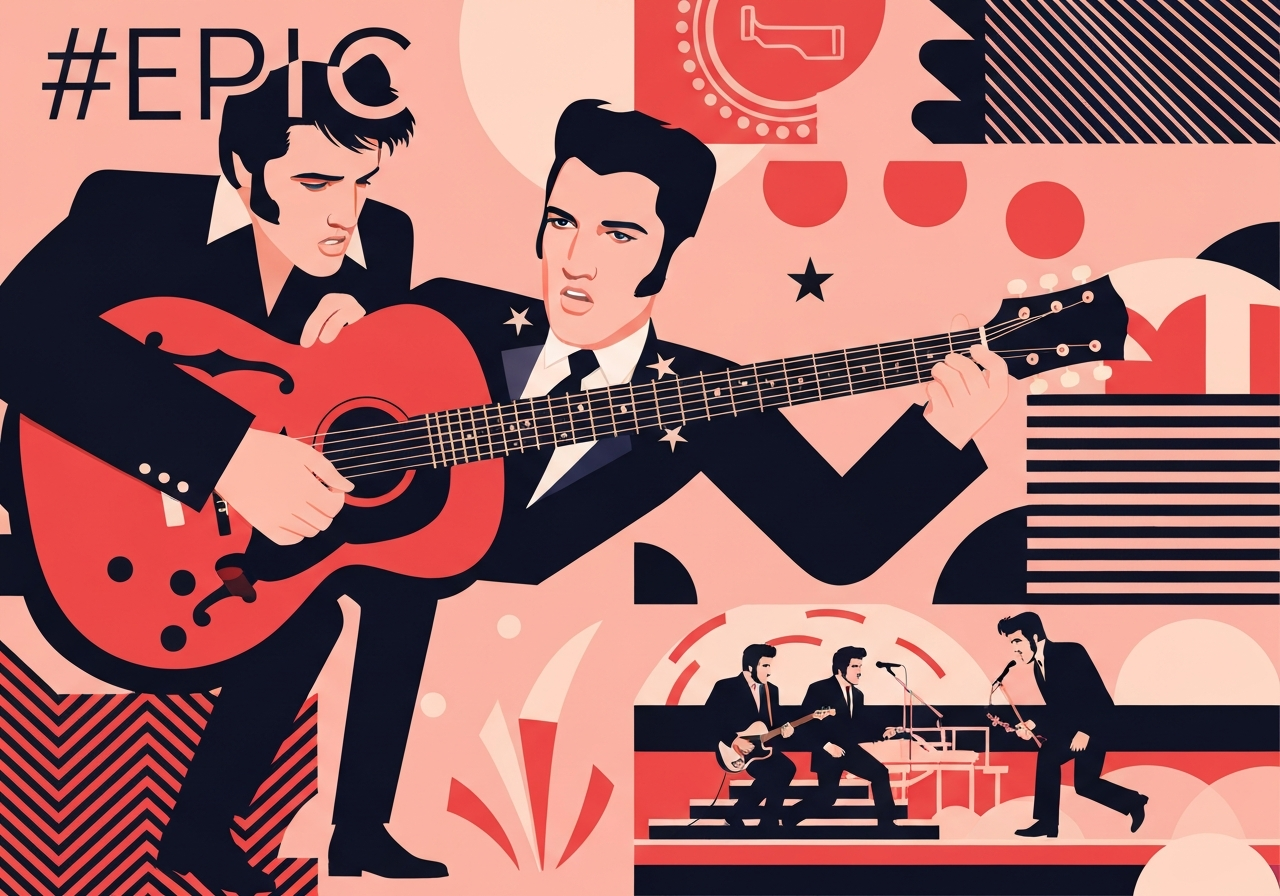
Lead: Baz Luhrmann’s concert film EPiC: Elvis Presley in Concert reintroduces Elvis Presley as a live, combustible musical force rather than a two-dimensional icon. Released amid a decade-long resurgence of Presley portraits, the film draws on 69 boxes and 59 hours of previously unseen 1969 rehearsal and concert footage restored by a Peter Jackson–affiliated team in New Zealand. Across the footage Elvis appears energized, candid and fiercely focused on music, recentering his art at age 34 as he returned to live performance. The result is a fresh explanation for why America’s fascination with Elvis endures seven decades after his rise.
Key Takeaways
- EPiC is built from 69 boxes containing 59 hours of lost reels, mainly outtakes from Elvis: The Way It Is and Elvis on Tour, restored for release.
- The film foregrounds Elvis’s 1969 return to the stage at 34, emphasizing performance moments rather than biographical scaffolding like drug use or family drama.
- Between 1969 and 1977 Elvis performed roughly 1,100 concerts, at times doing up to three shows a day.
- Luhrmann’s 2022 biopic prompted the discovery work; Jackson’s restoration team applied a ‘Get Back’-style approach to revive candid rehearsal material.
- EPiC reframes Presley as a musical innovator who fused blues, country and pop across eras, rebutting reductive caricatures of his later years.
- The film arrives during a broader Presley revival in the 2010s–2020s that includes documentaries, memoirs and dramatic portraits, shifting attention back to the music.
Background
Elvis Presley’s public persona has been continually remade since the 1950s, shifting from scandalized rockabilly outsider to Las Vegas spectacle and posthumous cultural totem. Early critics—TV hosts and mainstream commentators—lambasted him for his sexuality and style; later decades turned him into a symbol variously of excess, appropriation and nostalgia. That mutability has helped keep his image alive: each era finds a new Elvis to debate, praise or repurpose.
After his death, Presley’s estate and managers cultivated his afterlife in many forms, from merchandising to movie clips; the Colonel’s decision-making constrained the artist in life and structured his posthumous availability. In recent years filmmakers and writers have revisited Presley’s archive, and discoveries such as the Kansas-stored reels—kept since the making of concert films in the 1970s—have supplied fresh primary material for reassessment. EPiC emerges from that archival moment, aiming to shift discussion away from myth toward recorded performance.
Main Event
EPiC assembles rehearsal and concert footage from 1969 onward, presenting Elvis onstage and off in unvarnished moments. The film uses unheard rehearsal audio and minimal commentary so that Presley’s voice and presence drive the narrative: he reflects frankly on image and control, telling the camera that “Hollywood’s image of me was wrong, and I knew it.” Those candid moments reposition him as an artist defending his craft.
The soundtrack of EPiC emphasizes variety—Presley moves from raw rockers like “Polk Salad Annie” to contemplative covers such as “Bridge Over Troubled Water” and Beatles songs like “Something.” Performance highlights in the film include an electrifying “Suspicious Minds” and a rapturous “Burning Love,” both captured in kinetic live takes that show Presley engaging the crowd and directing band dynamics.
Luhrmann’s team avoids deep dives into tabloid elements—drug rumors, family disputes—and instead presents scenes of Presley interacting with fans and bandmates, trading jokes and musical ideas. That focus reveals how fans and celebrities alike responded to him: the film notes visits from figures such as Cary Grant and Sammy Davis Jr., underscoring Presley’s cross‑cultural appeal within midcentury show business.
The film closes by reminding viewers of Presley’s intensive touring schedule—about 1,100 concerts from 1969 to 1977—and with a coda that frames his career as both a musical trajectory and a social mirror. Bono’s epigraph—“Elvis made America before America made him”—is used as a poetic summation of Presley’s intertwined place in national myth-making.
Analysis & Implications
EPiC’s archival focus reframes Presley primarily as a working musician whose creative choices shaped popular music in tangible ways. By foregrounding rehearsal dialogue and tight live takes, the film pushes back against narratives that reduce him to spectacle or scandal and invites music historians to reexamine his late‑1960s artistic ambitions. For fans and scholars this recalibration matters: it shifts attention to song selection, arrangement and performance practice rather than celebrity alone.
Culturally, the film arrives when multiple publics are reanimating Presley for varied purposes—nostalgia, political symbolism, and artistic rehabilitation. The 2020s resurgence includes documentaries and dramatic works that reinterpret his life; EPiC’s success suggests audiences are receptive to an Elvis portrayed as dynamic and musically ambitious, not merely a kitsch figure. That matters for how future projects—tours, reissues, museum exhibits—position his legacy.
Economically, renewed attention tends to lift catalogue sales, licensing opportunities and tourism tied to Presley-related sites. If EPiC prompts renewed streaming and record purchases, it could accelerate estate-led projects and curated releases of unreleased live material. Politically, the film also complicates efforts to claim Presley as a straightforward emblem: his repertoire and public persona resist simple ideological capture.
Comparison & Data
| Archive Item | Detail |
|---|---|
| Found boxes | 69 boxes (concert outtakes) |
| Recovered footage | 59 hours of rehearsal and concert reels |
| Concerts (1969–1977) | Approximately 1,100 shows (≈122 shows/year average) |
The figures above show the scale of material EPiC had to integrate: dozens of film crates and nearly two days’ worth of footage required careful restoration and selective editing. The average concert rate between 1969 and 1977—roughly 122 per year—helps explain the film’s energy: Presley was a relentless live performer in his final decade, and that output is central to the film’s claim that his artistry lived in performance.
Reactions & Quotes
EPiC has elicited responses from musicians, critics and audiences who say the film restores Presley’s musical reputation. Below are representative statements and their contexts.
“Hollywood’s image of me was wrong, and I knew it.”
Elvis Presley, rehearsal audio featured in EPiC
This line, used without voiceover framing, anchors the film’s thesis: Presley perceived a gap between public image and private practice and the footage lets him articulate that tension directly.
“Elvis made America before America made him.”
Bono, epigraph in EPiC
Bono’s short appraisal is deployed as a poetic summation in the film’s closing, suggesting Presley’s career both prefigured and shaped American cultural narratives.
“The Elvis story continues to mutate, especially as more and more filmmakers come in to write the story in their own way.”
Greil Marcus, cultural critic (commentary cited in contemporary coverage)
Marcus’s observation—echoed in recent interviews—helps explain why EPiC appears now: archival access plus diverse filmmakers have allowed successive reinventions of Presley’s public meaning.
Unconfirmed
- Rumors that Elvis staged his death or permanently faked public appearances are cultural folklore; no credible evidence supports the claim.
- Speculation that Presley would have immediately launched a global tour if not for Colonel Tom Parker’s constraints is plausible but cannot be proven; the film and existing records show intent but not the unrealized logistics.
Bottom Line
EPiC re-centers Elvis as an artist whose public afterlife has often obscured his musical choices. By privileging rehearsal audio and restored live footage, the film offers a corrective: a portrait of a performer who was still inventing and persuading crowds in 1969. That emphasis reframes Presley from cultural caricature back to creative agent.
For audiences and cultural institutions, EPiC’s success could recalibrate future Presley projects toward archival performance and listening experiences rather than pure nostalgia. Whether that leads to more curated releases, scholarly work or reinterpretations, the film underlines a simple fact: America’s appetite for Elvis keeps changing, and the music—when shown plainly—still has the power to explain why.