
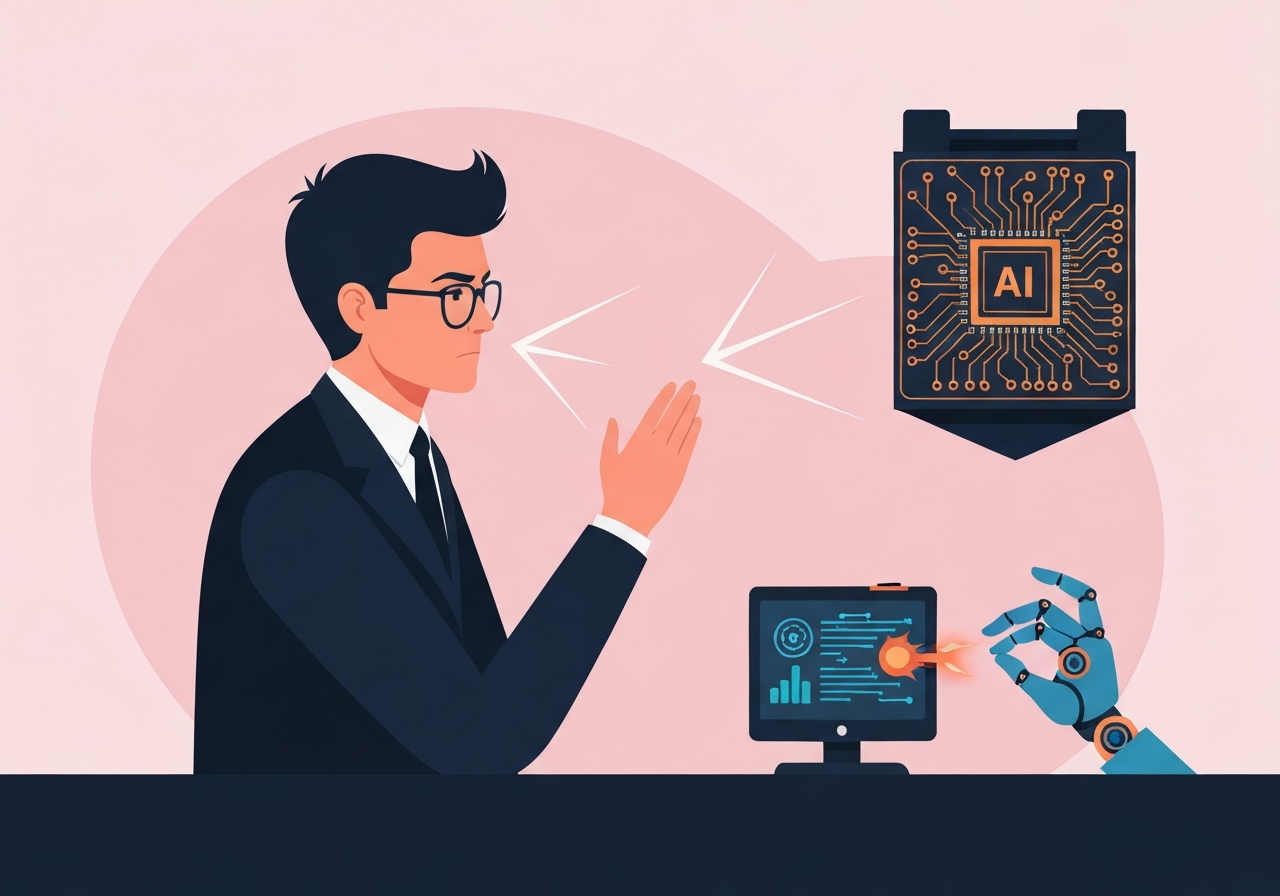
Anthropic has publicly rejected a Pentagon demand to remove limits on how the company’s AI model Claude can be used, setting up a confrontation that reached a Friday 5:01 p.m. ET deadline in Washington. The company’s CEO, Dario Amodei, said his team cannot in good conscience accept contract language that would allow safeguards to be ignored. Defense officials warned they could cancel Anthropic’s contract, label the company a supply-chain risk or invoke the Defense Production Act if it does not comply. The dispute highlights an escalating clash over how commercial AI systems should be governed when used in national security settings.
Key takeaways
- Deadline: Anthropic was given until 5:01 p.m. ET on Friday to accept new contract language or face potential consequences from the Pentagon.
- Company stance: CEO Dario Amodei said Anthropic will not agree to terms that would permit its safeguards to be overridden.
- Pentagon leverage: Officials signaled they could cancel contracts, designate Anthropic as a supply-chain risk, or use the Defense Production Act to expand military access.
- Scope of concern: Anthropic sought narrow assurances against mass surveillance of Americans and fully autonomous weapons; Pentagon has not publicly detailed intended operational uses.
- Industry ripple effects: OpenAI, Google and other AI firms also hold military contracts; some industry leaders and employees publicly supported Anthropic’s stance.
- Political friction: Senior Pentagon officials and some Trump-allied tech figures criticized Amodei, while other defense veterans and CEOs urged caution about heavy-handed measures.
Background
Anthropic was founded in 2021 by former OpenAI researchers and quickly grew into one of the most valuable AI startups, known for the chatbot Claude and a public emphasis on safety engineering. Over months of private negotiations, Anthropic and Pentagon officials discussed contract language that would define how Claude may be used in defense contexts. The company told the Pentagon it would accept narrow assurances to prevent Claude’s use for domestic mass surveillance or in fully autonomous weapon systems; military leaders sought broader rights to use the model for “lawful purposes.”
The talks turned public after Pentagon officials framed the issue as a national security imperative, and the dispute has taken on political overtones. Some defense officials criticized Anthropic’s resistance as obstructive to operations, while many in Silicon Valley expressed concern that forcing companies to abandon safety constraints would undermine industry trust. The debate echoes earlier clashes over commercial tech firms’ participation in defense projects and the limits of acceptable use for emerging systems.
Main event
In the final 24 hours before the deadline, Anthropic’s leadership released a firm statement rejecting the Pentagon’s latest proposed contract language, saying the terms paired a purported compromise with legal provisions that would permit safeguards to be disregarded. Pentagon spokesperson Sean Parnell said the military does not seek mass surveillance of Americans and does not want autonomous weapons without human involvement, but he also stressed the department’s need for flexibility to conduct operations.
Officials led by Defense Secretary Pete Hegseth warned that refusal could prompt several punitive steps: canceling the current contract, labeling Anthropic a supply-chain risk—a mark typically applied to foreign adversaries—and, as a last resort, invoking the Defense Production Act to compel broader access. Amodei countered that those threats are internally inconsistent: one action would brand Claude a security risk while another would treat it as essential to national security.
The public dispute sharpened when Emil Michael, the Pentagon’s undersecretary for research and engineering, criticized Amodei on social media, prompting a response of solidarity from employees at rival firms. OpenAI CEO Sam Altman, despite differences with Anthropic, publicly expressed trust in the company’s safety focus and questioned the Pentagon’s approach in an interview. The disagreement has also drawn commentary from defense veterans who urge nuanced solutions rather than escalatory labels or unilateral seizures.
Analysis & implications
The immediate operational consequence could be a loss of the current contract if neither side compromises; Anthropic says it can absorb such a loss, but the wider business impact could be deeper. A supply-chain designation could complicate Anthropic’s relationships with cloud providers, partners and customers that scrutinize vendor risk, while invocation of the Defense Production Act could force operational access to Claude even without the company’s consent.
At the industry level, the standoff tests where private-sector safety commitments meet government demand for operational control. If the Pentagon secures expanded rights from other providers, it risks incentivizing talent and startups to prioritize reputational safety guarantees over lucrative government work. Conversely, acquiescence could normalize government pressure to loosen guardrails on highly capable models.
Strategically, the episode may shape U.S. policy on commercial AI use in national security contexts. Lawmakers from both parties and former defense AI leaders have urged restraint and clearer guardrails, signaling that Congress may seek to clarify acceptable practices. Internationally, how the U.S. balances safety and access could influence allies’ procurement standards and adversaries’ incentives to pursue alternative suppliers.
Comparison & data
| Company | Known U.S. defense contracts | Public stance on safeguards |
|---|---|---|
| Anthropic | Yes | Refused contract language that could override safeguards |
| OpenAI | Yes | Leadership signaled support for industry safety limits; negotiating with Pentagon |
| Yes | In talks with Pentagon; employee-base has urged cautious approaches |
The table summarizes public positions and known contracts reported in recent coverage. While all three firms have worked with the military, their public-facing commitments to safety differ in wording and in how they respond to government pressure. These distinctions will matter in procurement decisions and in any legislative or regulatory responses that follow.
Reactions & quotes
“We have no interest in using AI to conduct mass surveillance of Americans… nor do we want to use AI to develop autonomous weapons that operate without human involvement.”
Sean Parnell, Pentagon spokesman (social post)
Parnell sought to reassure the public about legal limits and the Pentagon’s stated intent, while also emphasizing the department’s need to use Anthropic’s models for lawful purposes. He did not, however, provide details on specific operational uses the military envisions for Claude.
“For all the differences I have with Anthropic, I mostly trust them as a company, and I think they really do care about safety.”
Sam Altman, OpenAI CEO (CNBC interview)
Altman’s comment signaled an unusual cross-company alignment on safety boundaries, even as firms negotiate individually with the Pentagon. His stance complicates a simple industry-versus-government narrative by showing internal debate among tech leaders.
“Painting a bullseye on Anthropic garners spicy headlines, but everyone loses in the end.”
Retired Gen. Jack Shanahan (social post)
Shanahan, who previously worked on defense AI projects, urged a balanced approach and sided with reasonable safety concerns about deploying large language models in sensitive settings. His view reflects caution from some defense insiders who recall earlier controversies over tech-industry partnerships.
Unconfirmed
- The precise operational uses the Pentagon envisions for Claude remain unspecified publicly, including which classified or operational workflows would rely on it.
- It is not confirmed whether the Defense Production Act invocation is imminent or under formal legal review by Pentagon counsel.
- The long-term commercial impact of a supply-chain designation on Anthropic’s third-party partnerships and talent recruitment is uncertain.
Bottom line
The standoff between Anthropic and the Pentagon is a pivotal test of whether private AI safety commitments will hold when national security imperatives press for broader access. Short-term outcomes could include a contract cancellation or a negotiated compromise, but either path will set precedent for how the U.S. government engages commercially produced, high-capability AI models.
Stakeholders to watch in the coming days include congressional overseers, other AI vendors negotiating with the Pentagon, and defense officials who must balance operational needs with legal and ethical constraints. How this dispute resolves will influence procurement norms, industry safety practices and public confidence in the use of AI in national security.
Sources
- Associated Press (news media) — original reporting on the Anthropic–Pentagon dispute.