
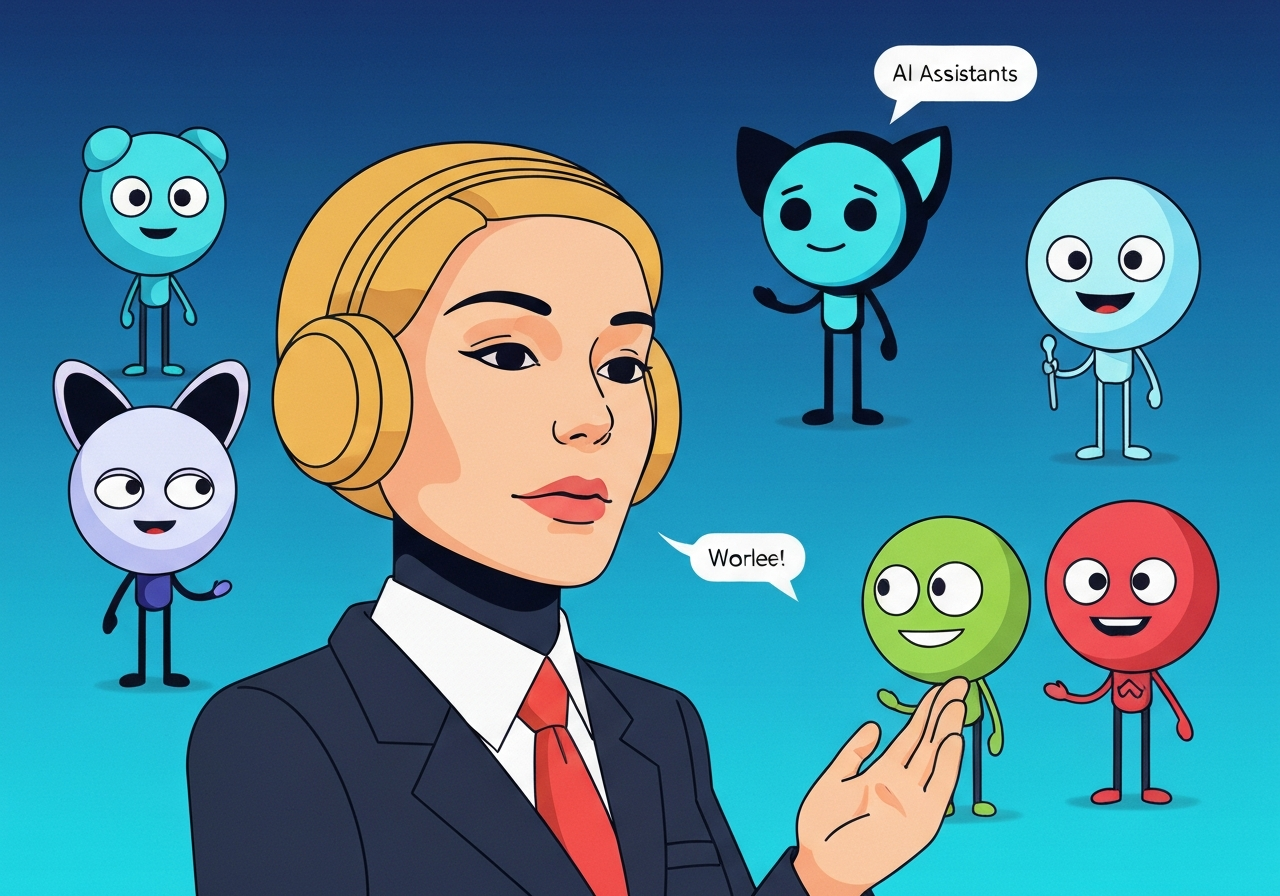
— Apple is preparing to let outside artificial intelligence assistants interact with Siri as part of a broader Siri overhaul in its forthcoming iOS 27 update, according to people with knowledge of the plan. The move follows Apple’s existing arrangement that allows Siri to reach ChatGPT through a partnership with OpenAI, and would permit competing AI services to integrate in similar ways. Sources say the change is intended to strengthen the iPhone’s position as a primary AI platform while addressing developer and regulatory pressure. Apple has not published final technical specifications or an official timetable for the feature.
Key Takeaways
- Apple plans to open Siri to third-party AI assistants in iOS 27, according to people familiar with the matter.
- Apple already enables Siri to access ChatGPT via an OpenAI partnership; the new policy would extend comparable access to rival services.
- The change is part of a broader Siri overhaul that Apple is developing for the iOS 27 release cycle.
- Sources describe the initiative as aimed at bolstering the iPhone as an AI platform and responding to competition and regulatory scrutiny.
- Details such as default-assistant behavior, API surface, and data-flow rules have not been finalized publicly.
Background
Since its 2011 debut, Siri has been Apple’s primary voice assistant, but its development trajectory lagged behind rivals in recent years as generative AI advanced rapidly. Apple has moved cautiously on large-language-model integrations, prioritizing privacy and on-device processing when possible. In 2023 and 2024, Apple signaled renewed focus on AI with selective partnerships and internal projects that aimed to improve Siri’s understanding and capabilities.
Regulatory pressure in the U.S., European Union and elsewhere has intensified around platform openness and competition, prompting major tech firms to reconsider restrictive default settings and API access. At the same time, competitors such as Google and Microsoft have been promoting assistant ecosystems that allow multiple third-party AI services to augment voice and chat interactions. Apple’s reported shift toward letting rivals plug into Siri can be read against that competitive and legal backdrop.
Main Event
People familiar with Apple’s plans told reporters that iOS 27 will include changes enabling external AI systems to respond to or augment Siri queries through documented interfaces. The company appears to be designing an integration layer that lets developers register assistant services and handle specific request types, while Apple retains control over core privacy and security constraints. The sources emphasized that engineering work is ongoing and that the final feature set could change before release.
Under the reported approach, third-party assistants could be invoked by Siri to perform tasks such as extended conversational responses, complex search, or specialized domain expertise that goes beyond Apple’s in-house models. The existing ChatGPT integration, created in partnership with OpenAI, is cited as a technical precedent: it routes certain Siri queries to OpenAI’s model under contractual and privacy terms. Apple’s new framework would aim to apply a similar model to other providers.
Apple’s public communications on the project have been limited; the company has not issued an official announcement tied to iOS 27. Internally, engineers and product teams are said to be balancing user experience consistency, developer access, app-store policies and privacy safeguards. Observers note that user controls—such as choosing a preferred assistant or limiting what data flows to external services—will likely be central to any rollout.
Analysis & Implications
Opening Siri to rival AI assistants would mark a material shift in Apple’s platform strategy. It could transform Siri from a predominantly Apple-driven experience to a more heterogeneous gateway that routes queries to specialized external models. For users, this promises broader capability and choice; for Apple, it raises complex questions about quality control, monetization and the user interface for selecting or defaulting assistants.
From a regulatory perspective, the move could help Apple address concerns about gatekeeping and interoperability that regulators in Europe and elsewhere have pressed. Allowing third-party assistants to integrate with a first-party interface may be seen as greater openness, but regulators will scrutinize whether Apple maintains advantages via API limits, review processes or default settings that favor its own services.
Privacy and data governance remain the most sensitive issues. Routing Siri queries to external providers requires clear rules on what user data is shared, how telemetry is handled, and where model inference occurs. Apple has emphasized privacy as a differentiator for years; any third-party integration must therefore reconcile external model access with Apple’s existing data-minimization and on-device processing commitments.
Comparison & Data
| Aspect | Current Siri (pre-iOS 27) | Reported iOS 27 Change |
|---|---|---|
| Third-party assistant access | Limited; selective partnerships (e.g., ChatGPT via OpenAI) | Open registration and integration for rival assistants |
| Default assistant control | Apple-controlled defaults; limited user override | Potential user choice or API-based delegation (unconfirmed) |
| Privacy approach | Emphasis on on-device processing and strict data sharing | New guardrails likely; external data flow rules under design |
The table summarizes the status quo and the reported direction for iOS 27. While the structure suggests greater openness, the exact mechanics—such as whether assistants can run on-device, require server-side inference, or need App Store distribution—remain to be clarified. Developers will be watching Apple’s developer documentation for API behavior, rate limits and review criteria.
Reactions & Quotes
Industry observers greeted the report as a potentially significant platform change but urged caution about execution and privacy controls.
“Opening Siri to external assistants would reshape the iPhone’s role as an AI hub, but the implementation details will determine whether it benefits users or fragments the experience.”
Industry analyst (summary)
The analyst’s point underscores a core tension: greater capability versus uniform user experience. Developers and users will look for predictable behavior when multiple assistants can provide answers to the same prompt.
“Allowing rival models into a system built around privacy promises requires rigorous technical and policy guardrails to prevent unexpected data exposure.”
Privacy researcher (academic)
Privacy experts emphasize that third-party model access must come with transparent controls and minimal data retention. How Apple enforces those controls—through on-device constraints, contractual terms, or App Store rules—will shape legal and public perception.
“Bloomberg’s reporting indicates Apple plans the change for iOS 27, though Apple has not confirmed specifics publicly.”
Bloomberg reporting (media)
Media coverage relies on people familiar with Apple’s plans; absent an Apple announcement, many specifics remain subject to change and dependent on Apple’s internal decisions.
Unconfirmed
- Whether iOS 27 will let users set a default third-party assistant system-wide is not confirmed.
- Specific API surface, rate limits, and commercial terms for third-party assistants have not been published.
- It is unconfirmed whether Apple will require third-party assistants to undergo App Store review or operate under a special certification process.
Bottom Line
If implemented as reported, opening Siri to rival AI assistants would be one of Apple’s most consequential platform shifts in years, moving the device closer to an AI orchestration layer rather than a closed, Apple-only assistant. The change could accelerate innovation and choice for users, but only if Apple provides clear controls, transparent privacy rules and a consistent user experience.
Watch for Apple’s developer documentation and any official iOS 27 announcements for definitive technical and policy details. Regulators and privacy advocates will likely scrutinize both the technical architecture and default behaviors, making the weeks ahead important for understanding how open the ecosystem will truly become.
Sources
- Bloomberg — media reporting based on people with knowledge of Apple’s plans.
- Apple Developer: SiriKit — official Apple developer documentation (official).