
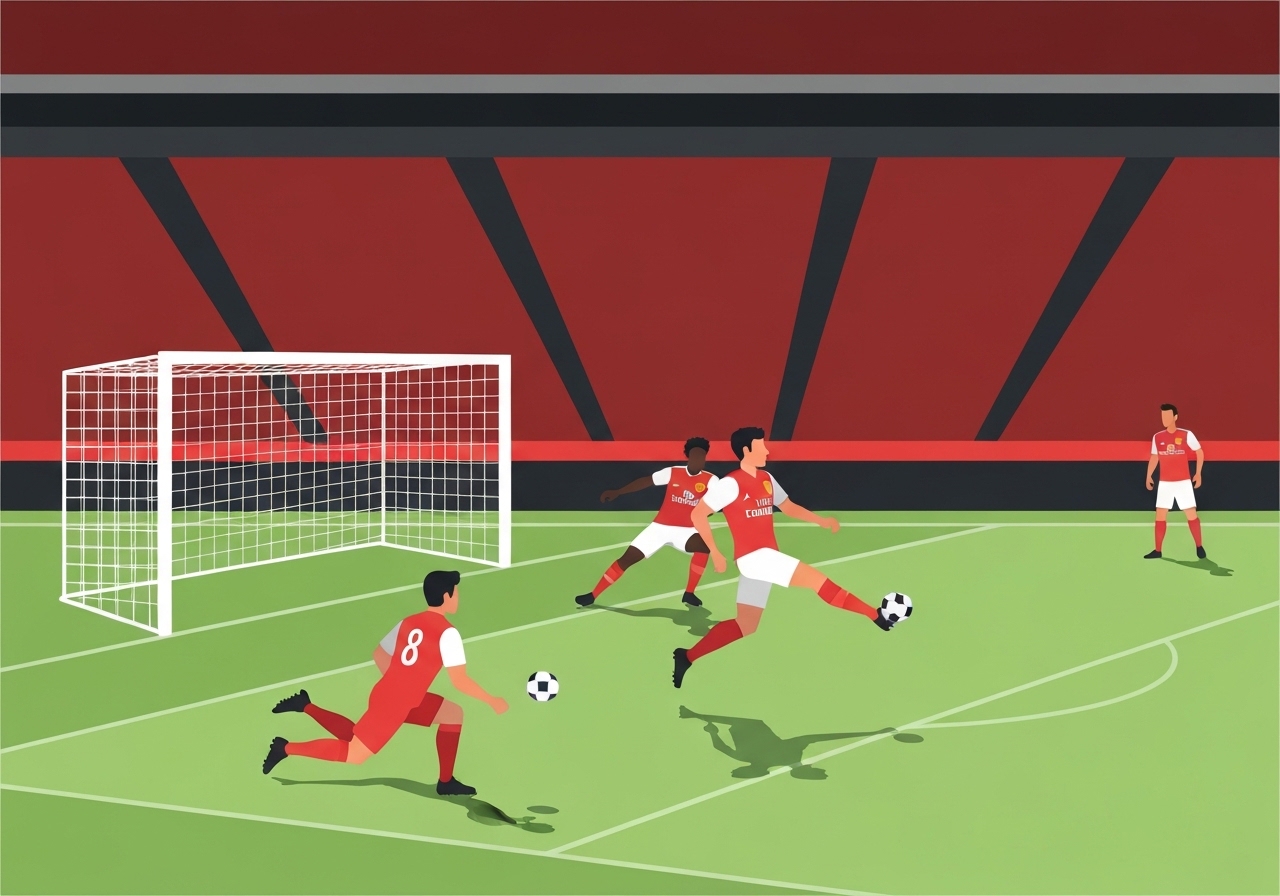
Lead: On 25 January 2026 at the Emirates Stadium, Arsenal beat Manchester United 1-0 courtesy of a 29th-minute own goal by Lisandro Martínez. The match, played in front of a lively north London crowd, followed an early period of Arsenal control and a key save from United goalkeeper Senne Lammens. The result left Arsenal in a strong position in the title race while offering Michael Carrick’s side lessons on transition and set-piece defence.
Key takeaways
- Final score: Arsenal 1–0 Manchester United; goal recorded as Martinez (own goal), 29′.
- Arsenal dominated territory early — by the 13th minute they had completed 22 successful final-third passes to United’s zero.
- Senne Lammens produced a notable fingertip save from a Martin Zubimendi header in the 18th minute to keep the game level.
- Set pieces remain Arsenal’s standout strength: the club has scored 17 of its 40 league goals from dead-ball situations this season.
- Mikel Arteta made four changes to the XI, with Gabriel Jesus making his first Premier League start since 4 January 2025.
- Michael Carrick named an unchanged United side from the win over Manchester City and again emphasised organisation and intensity.
- Referee Craig Pawson officiated the fixture.
Background
Arsenal entered the fixture as one of the teams leading the Premier League title race; a victory here would reinforce a gap at the top of the table and dampen the challenge from Manchester City. The fixture is one of English football’s traditional high-profile matches, and since 2022 Arsenal’s resurgence has meant these meetings often carry title implications rather than merely nostalgia.
Arteta’s side have been particularly effective from set plays this season, converting a large share of their goals from corners, free-kicks and penalties. Opponents have flagged how Arsenal’s routines and player movement make defending dead-ball situations unusually difficult. By contrast, Manchester United have been rebuilding momentum under interim coach Michael Carrick, whose recent tactical tweaks produced an eye-catching win over Manchester City, raising expectations for a similar response at the Emirates.
Main event
The match began with Arsenal asserting control: within the first ten minutes United had barely crossed the halfway line for sustained periods. Bukayo Saka’s movement and Leandro Trossard’s activity on the flanks forced repeated corners and pinned United back. Arsenal’s pressure culminated in a sequence where Saka’s delivery and sustained probing brought the crucial touch that produced the own goal in the 29th minute.
At 18 minutes, Rice delivered a whipped free-kick from the right that found the head of Zubimendi six yards out; Senne Lammens reacted sharply and tipped the header wide, a save that kept United in the contest. Earlier, William Saliba’s forward positioning—pressing Bruno Fernandes tightly—helped choke United’s build-up and opened spaces for Arsenal’s attackers to work in the final third.
United offered sporadic threat on the break and held more possession in midfield at intervals, but little of that control translated into clear chances. Several Arsenal crosses and near-post deliveries saw defenders scramble; Casemiro and Martínez were often involved in crowding the box to stem danger. As the game progressed, United tried to alter their approach with wider runs from Amad and Dorgu, but Arsenal’s defensive shape and set-piece organisation limited high-quality opportunities.
Analysis & implications
From a tactical standpoint, Arsenal once again demonstrated the double value of aggressive pressing and set-piece proficiency. Their ability to manufacture frequent corners—combined with rehearsed routines—forces opponents to allocate extra resources to defending dead balls, which in turn reduces numbers for open-play recovery. That proportional advantage has contributed directly to a significant share of Arsenal’s goals this season.
For Manchester United, the match underlined a core gap: possession statistics and midfield control did not yield clear-cut chances. Carrick’s side showed composure in parts and retained the transitional threat that troubled City, but they lacked the final-phase execution and aerial dominance to capitalise. The performance suggests United need either more incisive runners beyond the ball or a plan to disrupt Arsenal’s set-piece patterns.
In league terms, the result consolidates Arsenal’s standing at the top and increases the pressure on rivals to keep pace, especially given Arsenal’s recent run of two 0-0 draws before this win. For United, the fixture offered a check on progress: Carrick’s short-term improvements remain visible, but the squad’s consistency over the remaining fixtures will determine whether they can close the gap on Champions League places or mount a late-season surge in the top four.
| Team / Category | Set-piece goals | Total league goals | Share (%) |
|---|---|---|---|
| Arsenal (this season) | 17 | 40 | 42.5 |
| Premier League average | — | — | ~30 |
The table shows Arsenal’s set-piece conversion rate is well above the league average (approximately 30% of goals from set plays). That mismatch explains why teams facing Arsenal are often forced to defend corners and free-kicks as primary threats rather than relying solely on open-play containment.
Reactions & quotes
After the match Michael Carrick reflected on the balance between short-term progress and longer-term needs.
“I’m close with Ole and he’s been fully supportive,”
Michael Carrick, Manchester United interim head coach
Carrick used the comment to underline staff continuity and the wider coaching relationships at Old Trafford; he also praised his players for their application even as he acknowledged finishing quality remained an area for improvement.
Mikel Arteta spoke about focus and hunger amid title talk.
“Nobody is more driven than me to win the league,”
Mikel Arteta, Arsenal manager
Arteta’s remark echoed his message that internal standards, not external expectation, are the guiding principle for the squad as they manage the run-in.
Unconfirmed
- Long-term managerial plans at Manchester United beyond the interim phase remain speculative; no official appointment timetable has been published.
- Reports suggesting specific tactical changes for Arsenal in future away fixtures are circulating among pundits but lack confirmation from the club.
Bottom line
Arsenal’s narrow victory was emblematic of a team that controls games through structure and set-piece detail; even when open-play chances are limited, rehearsed dead-ball routines produce decisive moments. The result strengthens their position in the title race and reinforces the argument that opponents must prepare specifically for Arsenal’s corner and free-kick threats.
For Manchester United, the performance offered positives in temperament and midfield presence but also a clear to-do list: convert possession into higher-quality chances, develop strategies to disrupt set plays, and find consistent attacking finishing. How both clubs respond in their next fixtures will shape the remaining narrative of the season.