
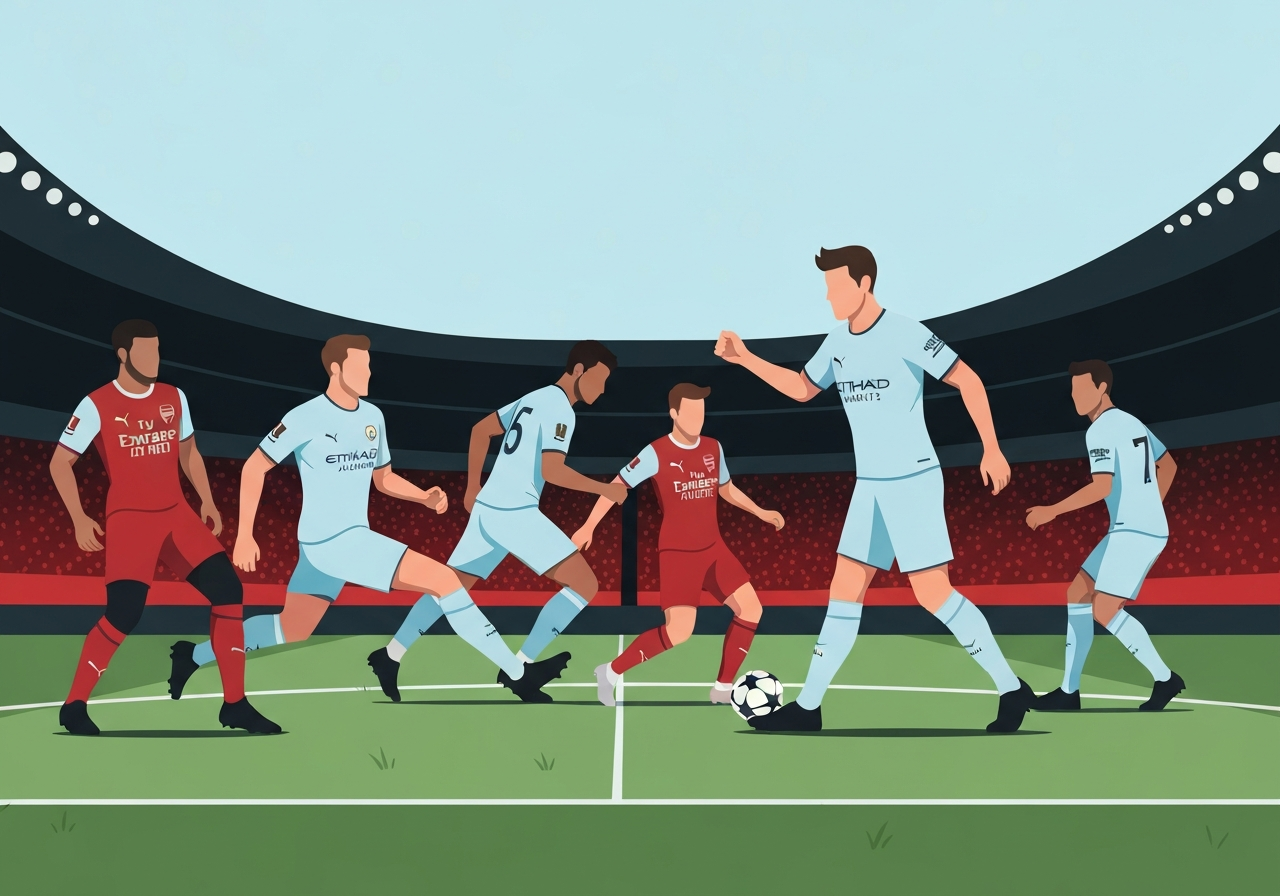
On 22 March 2026, Manchester City defeated Arsenal 2-0 in the Carabao Cup final. The match — played in front of a Wembley crowd — was scoreless at half-time before 21-year-old left back Nico O’Reilly struck twice after the break (60′, 64′). Arsenal made a pair of changes midsecond half but could not overturn the deficit; City secured the trophy with a composed second-half performance and a costly error from Arsenal’s goalkeeper.
Key takeaways
- Final score: Manchester City 2, Arsenal 0; both City goals came from Nico O’Reilly in the 60th and 64th minutes.
- O’Reilly, 21, scored a low header after a handling error by Arsenal keeper Kepa (60′) and later powered a header at the far post (64′).
- Half-time was 0-0; City controlled territory late in the first half and increased their intensity after the break.
- Arsenal introduced Calafiori and Madueke for Hincapié and Havertz in the 66th minute in an attempt to change the game.
- Disciplinary notes: Piero Hincapié was booked (16′), Arsenal keeper received a caution following a 50′ incident, and Ben White was booked in the 68th minute.
- Erling Haaland had several influential moments, including an aerial challenge on the cusp of half-time, but did not add to his scoring tally in the final.
- Tactical pattern: City pressed and probed down the flanks — particularly via Jeremy Doku — and found space to deliver the decisive crosses for O’Reilly’s goals.
Background
The Carabao Cup final between Arsenal and Manchester City arrived amid a season of high expectations for both clubs. Manchester City entered as an experienced cup side under Pep Guardiola, with a track record of turning big-match control into trophies. Arsenal, managed by Mikel Arteta, have invested in depth across the squad and arrived at the final relying on rotation and the fitness of key players.
Both managers have contrasting profiles: Guardiola favours positional fluidity and territorial control, while Arteta has emphasised organised pressing and a balance between youthful energy and experienced figures. Historically, City have leveraged squad rotation to maintain momentum across multiple competitions; Arsenal’s recent strategy of raising the team’s floor has produced resilience, but questions about a decisive match-winner remained a talking point going into the final.
Main event
The first half contained few clear-cut chances, with the match goalless at the break. Arsenal began brighter on occasion — a stretched save from Havertz produced one of the half’s clearer efforts — but by the final 25 minutes City had established territorial control without producing a high-quality opening. A notable half-time moment saw City sustain possession and circle the box, while Arsenal defended doggedly.
The breakthrough came early in the second half. In the 60th minute Bernardo Silva found Rayan Cherki, whose cross led to a goalmouth scramble when Arsenal keeper Kepa failed to hold a routine leap; Nico O’Reilly reacted fastest to guide a low header over the line. Four minutes later City extended the lead: Doku generated space down the left before moving inside and setting Nunes free on the right; his cross to the far post met O’Reilly’s run and powered home a headed finish (64′).
Arsenal responded with changes on 66 minutes, bringing on Calafiori and Madueke for Hincapié and Havertz, seeking width and greater dynamism. Despite those alterations and late pressure during set pieces, Arsenal could not fashion a sustained route back into the match, and City managed the closing stages to secure the cup.
Analysis & implications
Nico O’Reilly’s brace underlines two simultaneous trends: Manchester City’s capacity to develop young players who can contribute decisively on big occasions, and the thin margins that separate a routine defensive clearance from a decisive error. The first goal owed much to a goalkeeper mistake; the second was the product of sustained wing play and intelligent late runs into the box.
For Arsenal the final exposes a recurring issue: when their usual creative outlets are neutralised, they lack a single, clear-cut match-winning spark. Arteta’s midfield framework and rotation policy have improved squad resilience across a long season, but in one-off finals the absence of a consistent high-end chance creator can prove costly. The coaching remit now includes addressing both psychological resilience after individual errors and tactical options to unlock tightly structured defences.
From Manchester City’s perspective, this win reinforces Guardiola’s model of integrating younger players into high-stakes matches without sacrificing control. O’Reilly’s emergence is likely to prompt further selection debates and offers City an additional route to goal beyond their established attackers. Internationally, the result adds to City’s domestic cup haul and sustains momentum across competitions heading into the business end of the season.
Comparison & data
| Metric | Arsenal | Man City |
|---|---|---|
| Goals | 0 | 2 |
| Goal scorer(s) | — | Nico O’Reilly (60′, 64′) |
| Subs (noted) | Calafiori, Madueke (66′) | — |
| Notable bookings | Hincapié (16′), Kepa (50′), White (68′) | — |
The table above summarises the match’s decisive figures as recorded in live coverage: two late second-half goals, a pair of tactical substitutions by Arsenal, and a handful of bookings that punctuated an otherwise composed City performance. Without full match statistics (shots, xG, possession from an official provider) this high-level tabulation focuses on events that directly altered the scoreline and match narrative.
Reactions & quotes
City’s young full-back celebrated with obvious joy after the second goal; the moment was widely read as a declaration of the club’s development pathway paying off.
The Guardian (match reporter)
Several Arsenal supporters noted on the live blog that squad depth had carried the team through the season, but the final highlighted the club’s need for a consistent elite chance-creator.
The Guardian (reader emails)
Observers highlighted Pep Guardiola’s satisfaction at integrating youth into decisive phases of a cup final without ceding control of the match.
The Guardian (analysis)
Unconfirmed
- Any lingering knock or minor injury to Arsenal personnel reported during the game has not been officially confirmed by the club at the time of reporting.
- Speculation about long-term changes to Arsenal’s transfer strategy following this final remains unverified and dependent on end-of-season reviews.
Bottom line
Manchester City’s 2-0 win in the Carabao Cup final was settled by two swift second-half strikes from a 21-year-old full-back, illustrating both City’s ability to cultivate young match-winners and the fine margins that decide one-off finals. Arsenal’s defeat exposes a tactical and personnel question in decisive moments: they have depth, but not yet an indisputable, singular match-winner to tilt finals in their favour.
Looking ahead, City will carry confidence into the remainder of the season, while Arsenal must address how to convert midfield control and rotation into clearcut, high-quality scoring opportunities. The final also raises broader questions about the role of youth integration in elite squads and the readiness of emerging players to change outcomes on the biggest days.