
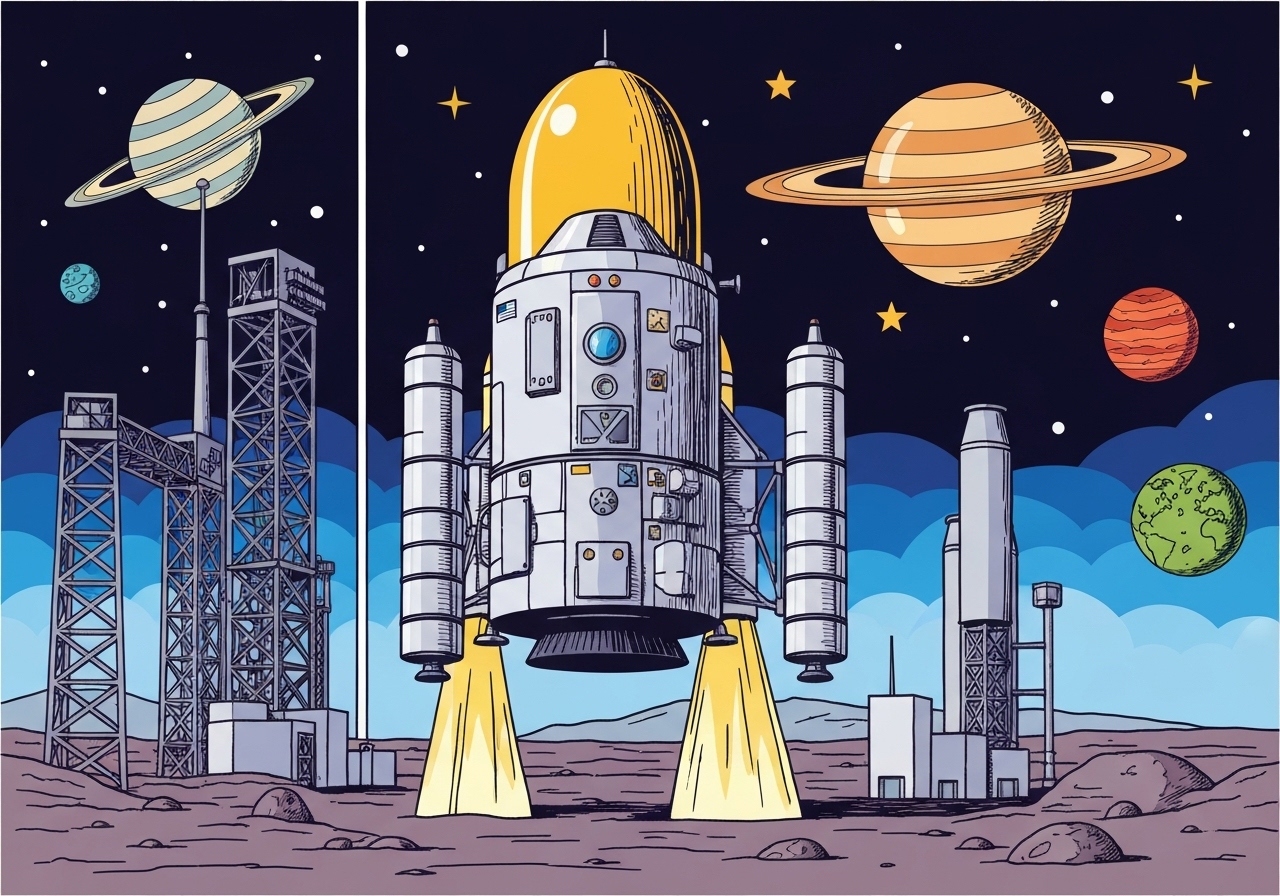
Lead: NASA is preparing Artemis II, a four‑person crewed flight that could lift off as soon as February 6, 2026, from Kennedy Space Center. The mission will send NASA astronauts Reid Wiseman, Victor Glover and Christina Koch along with Canadian Space Agency astronaut Jeremy Hansen on a roughly 10‑day loop around the moon — the first human journey beyond near‑Earth orbit since Apollo in 1972. Artemis II is designed primarily as a systems check of the Orion spacecraft and the Space Launch System (SLS) rocket while gathering human‑health and lunar science data to inform later landings, including a planned south‑pole touchdown later this decade.
Key Takeaways
- Launch window: NASA lists February 6, 2026, as the earliest possible liftoff date from Kennedy Space Center; the date remains contingent on final reviews and testing.
- Crew and duration: Four crew members (Wiseman, Glover, Koch, Hansen) will spend about 10 days on the mission, traveling roughly 238,900 miles (385,400 km) roundtrip.
- Historic context: Artemis II would be the first time humans travel beyond low Earth orbit since Apollo 17 in 1972, testing systems for future surface missions.
- Vehicle testing: Orion’s life‑support systems and heat shield — which experienced ablative chipping after Artemis I in 2022 — will be evaluated in a crewed reentry environment reaching temperatures above 5,000°F (≈2,760°C).
- Radiation and human biology: Experiments will monitor cognition, sleep, immune and cardiovascular responses; organ‑tissue chips will collect baseline data on deep‑space effects on human tissues.
- Trajectory and communications: Orion will perform a distant lunar free‑return loop rather than low‑lunar orbit; the crew expects a loss of signal (LOS) of roughly 45 minutes near closest approach.
- Geopolitics and strategy: Lawmakers frame lunar returns as strategic in light of China’s expanding space capabilities; Artemis II is a pathfinder toward an Artemis III surface landing at the lunar south pole.
Background
The Artemis program, announced in 2017, aims to return U.S. astronauts to the moon and to establish a sustained human presence there. The program has endured shifting priorities across administrations but has progressed with development of NASA’s SLS heavy rocket and the Orion crew capsule. Artemis I, an uncrewed flight that looped the moon in 2022, validated many systems but exposed areas needing improvement — most notably heat‑shield ablation during reentry.
Returning humans beyond low Earth orbit presents fundamentally different technical and physiological challenges than missions to the International Space Station. Stakeholders include NASA, international partners such as the Canadian Space Agency, Congress, defense planners and commercial suppliers; each influences schedule, funding and mission scope. The program also operates amid broader strategic concerns about competition in space, particularly from China’s expanding lunar and crewed programs.
Main Event
Artemis II will launch atop the SLS rocket with the crew seated in Orion. After ascent, Orion will separate from the rocket’s upper stage and execute burns that place it on a free‑return trajectory: a long, sweeping arc around the far side of the moon that uses lunar gravity to send the capsule back toward Earth if propulsion fails. The flight plan intentionally differs from Apollo’s low‑lunar‑orbit approach because Orion’s mass and design favor a distant loop.
During the multi‑day cruise, crew members will activate and monitor Orion’s environmental control and life‑support systems for the first time in space with humans aboard. The mission will include biomedical monitoring — cognitive tests, sleep and stress assessments, immune and cardiovascular measures — as well as small tissue‑chip experiments to measure radiation and microgravity effects at lunar distances. The crew will also photograph and document far‑side geologic features to inform future landing site selection.
Communications will fluctuate: controllers expect an approximately 45‑minute loss of signal while the spacecraft passes behind the moon. Reentry will subject Orion’s heat shield to extreme heating; engineers redesigned portions of the ablative material after Artemis I’s surface erosion to ensure crew safety. NASA officials say the improvements and additional testing support confidence in a safe return, but teams will be scrutinizing every telemetry point during the mission.
Analysis & Implications
Technically, Artemis II is less about exploration than verification: it must prove Orion’s crewed capabilities, life‑support reliability and reentry survivability under real conditions. Success would validate years of engineering and allow planners to proceed with Artemis III, which aims to land astronauts near the lunar south pole where permanently shadowed regions may hold water ice. Failure or significant anomalies would delay subsequent surface missions and trigger additional design changes and budgetary reviews.
Scientifically, the mission offers an opportunity to collect baseline human‑biology data at lunar distance — data that station‑based research cannot fully replicate because the ISS remains within Earth’s magnetic shielding. Results from organ chips and crew monitoring will directly inform radiation mitigation strategies, medical protocols and suit/vehicle design for longer surface stays and eventual Mars missions.
Politically, Artemis II occurs against a backdrop of congressional pressure and international rivalry. Advocates argue a visible, crewed mission strengthens U.S. leadership in human spaceflight and deepens partnerships; critics point to cost and schedule risks. Commercial partners and international agencies will watch the flight closely because its outcome will affect contracts, ride‑share opportunities and collaborative mission planning.
Comparison & Data
| Mission | Year | Crew | Type | Duration |
|---|---|---|---|---|
| Apollo 17 | 1972 | 3 | Low lunar orbit + landing | 12 days |
| Artemis I | 2022 | 0 | Uncrewed lunar loop (test) | ~25 days |
| Artemis II | 2026 (planned) | 4 | Crewed lunar free‑return loop (test) | ~10 days |
Context: Artemis II is shorter than many Apollo surface missions but carries greater emphasis on integrated system verification with humans aboard. Artemis I’s longer uncrewed flight validated many trajectory and heat‑shield behaviors but could not test life‑support or crew response to deep‑space radiation.
Reactions & Quotes
NASA and mission specialists have emphasized both caution and optimism while framing Artemis II as a critical step rather than an endpoint.
“How do we handle the unknown?”
Jeremy Hansen, Canadian Space Agency (crew member)
Hansen posed the question during a public briefing, underscoring the mission’s emphasis on refining procedures for unexpected situations in a deep‑space environment.
“For the 45 minutes we are closest to the lunar surface, we are also going to be out of contact.”
Victor Glover, NASA astronaut
Glover’s remark highlighted the crew’s awareness of communication gaps and the operational need for autonomous procedures during LOS. Public statements from NASA leadership have stressed procedural readiness for those intervals.
“We feel very confident that we are going to be able to bring our crew back safely for Artemis II.”
Lakiesha Hawkins, NASA official
NASA management has pointed to engineering fixes and additional oversight since Artemis I as the basis for that confidence, while also continuing end‑to‑end testing before committing to a firm launch date.
Unconfirmed
- The exact launch date remains provisional until final flight readiness reviews and ground testing are complete; February 6, 2026, is NASA’s earliest available date but could slip.
- Long‑term durability of the revised heat shield design under repeated crewed reentries has not been demonstrated in space beyond Artemis II.
- The degree to which organ‑chip and biomedical data from a single 10‑day flight will predict health outcomes for longer lunar surface stays and Mars transit remains limited and requires further study.
Bottom Line
Artemis II is a pivotal verification mission: it is not intended to land astronauts but to prove that Orion, its life‑support systems and reentry protections function with humans aboard at lunar distance. A successful flight clears a major technical and programmatic hurdle and paves the way for Artemis III’s planned south‑pole landing later this decade; anomalies would prompt additional testing, schedule changes and likely renewed congressional scrutiny.
Beyond hardware, Artemis II will deliver critical human‑biology and geologic observations that Earth‑orbit research cannot provide. That data will shape radiation mitigation, vehicle design and mission profiles for sustainable lunar operations and future deep‑space exploration, including potential crewed missions to Mars.
Sources
- CNN — news report summarizing mission status and interviews (news)
- NASA Artemis Program — official program pages and mission updates (official)
- Canadian Space Agency — agency information on Canadian astronaut Jeremy Hansen and CSA participation (official)