
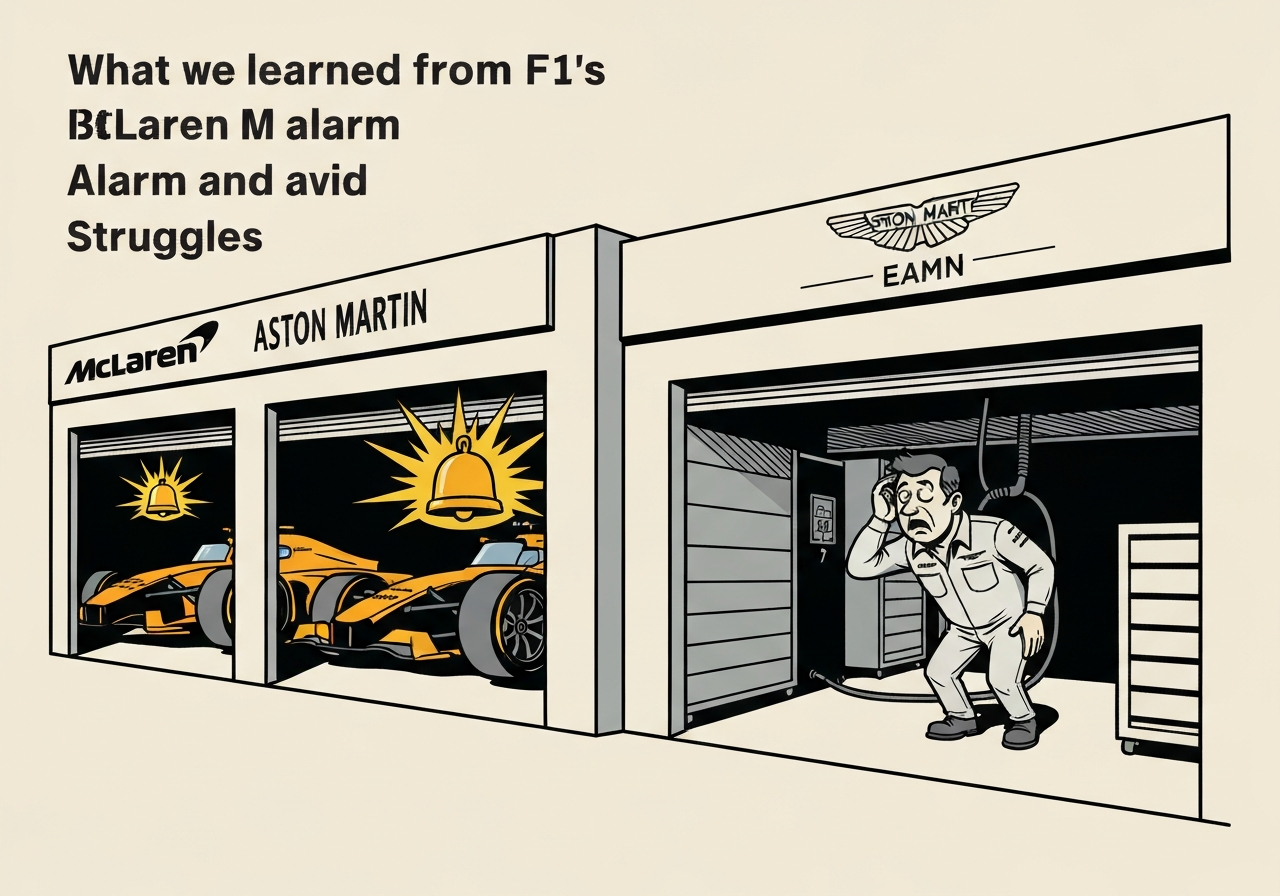
The second official preseason test in Sakhir, Bahrain, this week gave the paddock a clearer — if still incomplete — read on how 2026 might shape up. Across three dry days of running, all 11 teams exercised their new cars in conditions closer to what they will find in races, producing meaningful mileage and revealing reliability and performance signals. Mercedes finished the week with the outright fastest lap, while McLaren, Ferrari and Mercedes each topped a day; Aston Martin, by contrast, logged the fewest laps and sounded genuinely concerned. The session also highlighted engine progress for Red Bull’s Ford-supported program and fresh credibility for newcomers Cadillac and Audi.
- Mercedes ended the test fastest: Kimi Antonelli set a 1:33.669 in the final session, 0.2s quicker than George Russell’s best lap.
- Reliability varied: Aston Martin completed 206 laps — the fewest of any team — while Williams and McLaren each logged 422 laps, the most this week.
- Red Bull’s new Ford-supported engine ran reliably across tests and drew praise from drivers; Isack Hadjar described it as exceeding expectations.
- New entrants showed promise on mileage: Cadillac completed 320 laps and Audi 354, overcoming early teething problems.
- Drivers are still adapting: teams experimented with using first gear into slow corners and practice starts revealed turbo spool and start-procedure complications.
- McLaren raised safety and sporting concerns over starts, overtaking and energy-harvesting rules ahead of the season opener on Mar. 8 in Australia.
- Lance Stroll estimated Aston Martin’s AMR26 could be roughly four to 4.5 seconds off the top pace based on observed lap differentials between tests.
Background
Formula 1 held a closed test in Barcelona at the end of January, but Bahrain offered the first prolonged, public comparison of all 11 full-season teams on identical days and warmer conditions. The 2026 regulations represent a substantial technical reset, which has left many teams learning how to extract grip, manage cooling and adapt powertrain strategies under new turbo- and electrical-deployment rules. Historically, preseason testing in F1 features deliberate obfuscation: teams run different fuel loads, aero configurations and power profiles to shape rivals’ impressions. That gamesmanship, combined with fresh regulation and new powertrain projects, makes interpreting raw lap times difficult but still informative.
The sport’s competitive pecking order has roots in budget size, design continuity and operational experience; the so-called ‘big four’ (Red Bull, Mercedes, Ferrari, McLaren) entered the winter as favourites to occupy the front. New engine programs — most notably Red Bull’s Ford-supported package — and manufacturer entries from Cadillac and Audi add layers to this year’s technical narrative. Meanwhile, political and safety debates about starts, energy harvesting and deployment methods are resurfacing as teams prepare for the opening race in Melbourne on Mar. 8.
Main event
Running in Bahrain spanned three days and allowed teams to assemble significant mileage in race-like temperatures. Mercedes closed the test with the fastest lap overall when Kimi Antonelli posted a 1:33.669 in the final session; no other driver dipped under 1:34.0 during the week. Each day saw a different front-runner on top of the timesheets: McLaren, Ferrari and Mercedes each led a session, a reminder that single-session leadership can be fluid in testing.
Red Bull’s new engine program, supported by Ford, drew repeated attention for its unexpectedly strong reliability and performance in both Barcelona and Bahrain. Isack Hadjar — driving for a sister operation — said the package was “way beyond” his expectations, citing long running stints and consistent operation. That steadiness has soothed earlier concerns that Red Bull might lag while introducing a fresh power unit across a multi-year development program.
Aston Martin’s AMR26, produced under Adrian Newey’s design and with Honda works backing, did not make comparable progress. The team completed only 206 laps — the lowest tally this week — and drivers reported limited pace. Lance Stroll estimated a four-to-4.5-second deficit against the leaders when comparing Bahrain and Barcelona numbers, while Fernando Alonso warned the team was unlikely to be fastest in Melbourne and that performance gains would depend on an improved understanding of the car.
New manufacturer entries continued to make incremental progress: Cadillac completed 320 laps despite cooling issues and emphasised measured expectations for 2026, aiming to earn credibility across the grid. Audi, having taken over Sauber, recorded 354 laps and drew attention for its slim sidepod packaging and steady test mileage despite some initial teething problems.
Analysis & Implications
The immediate implication of the Bahrain test is that reliability — not just peak lap time — will be decisive early in the season. Mercedes’ session-topping time, Antonelli’s 1:33.669, and consistent long runs from several teams suggest those with mature chassis–powertrain integration will have an advantage when the championship begins. Conversely, teams that struggle for laps risk falling behind before aerodynamic and setup windows open fully at racing venues.
Aston Martin’s limited mileage and driver comments indicate a realistic risk of a tough start. A deficit of multiple seconds is frequently recoverable over a season, but it requires healthy testing time, strong correlation between track and wind-tunnel data, and trouble-free deployment of Honda power. If the AMR26 continues to struggle for running in race weekends, the team could spend the first rounds focused on reliability and baseline setup rather than aggressive development upgrades.
Red Bull’s engine progress narrows a previously perceived vulnerability. A dependable power unit short-circuits one large variable and lets chassis development take centre stage. That said, the true measure of an engine’s advantage or parity will appear under race conditions and varied circuits; deployment strategy (how and when teams use electrical boost) and fuel-flow management remain critical unknowns.
McLaren’s public push for rule changes on safety grounds — particularly around the start procedure, energy harvesting and deployment limits — could precipitate late technical or sporting clarifications if consensus emerges. Any amendments before Melbourne would need broad team support or a safety-driven fiat from the FIA; otherwise the sport risks contentious starts and possible hazardous pack dynamics until teams adapt.
| Team | Bahrain laps | Notable metric |
|---|---|---|
| Mercedes | — | Fastest lap: 1:33.669 (Antonelli) |
| McLaren | 422 | Tied for most laps |
| Williams | 422 | Tied for most laps (production delays resolved) |
| Aston Martin | 206 | Fewest laps; reported multi-second deficit |
| Cadillac | 320 | Good mileage despite cooling work |
| Audi (Sauber) | 354 | Slim sidepod design; solid running |
The table above captures the key mileage figures and standout metrics from Bahrain. While laps are an imperfect proxy for competitiveness — they reflect testing programs, reliability and troubleshooting — they still convey which teams managed to complete useful work. Teams with high mileage have been able to validate setups, test reliability fixes and gather data for Melbourne; teams with low mileage will need to play catch-up in the first races.
Reactions & quotes
Teams, drivers and technical leads offered measured but pointed assessments after running concluded. Below are representative remarks and the context around them.
“For a team that started the project three years ago, it’s very impressive.”
Isack Hadjar, driver (on Red Bull/Ford engine)
Hadjar’s comment underscored surprise at the new engine’s reliability and pace relative to expectations. The sentiment reflects internal and external relief that the power unit project appears to be delivering consistent operation across both Red Bull and its sister entry during early running.
“Right now, we look like we’re four seconds off the top teams, four and a half seconds.”
Lance Stroll, Aston Martin
Stroll’s estimate quantified Aston Martin’s concerns about pace after logging limited mileage. While such comparisons are influenced by differing run programs, the magnitude of his figure prompted an urgent tone within the team about finding performance before Australia.
“I think the starts are probably the most obvious one for now.”
Oscar Piastri / Andrea Stella (McLaren context)
McLaren’s principal and driver both highlighted practice-starts and energy-harvesting rules as safety priorities. Their public intervention aims to accelerate formal discussion at the upcoming F1 Commission meeting and push for mitigations before the season begins.
Unconfirmed
- The exact pecking order between the top four teams for the first race remains unclear because fuel loads and engine modes were mixed across sessions.
- The degree to which Red Bull’s engine confers a race-day deployment advantage over rivals has not been verified under competitive race conditions.
- Support level across the paddock for McLaren’s proposed procedural changes (starts and harvesting rules) is not confirmed ahead of the F1 Commission meeting.
Bottom line
Bahrain’s second preseason test clarified reliability winners and laggards more than it settled outright hierarchy. Mercedes’ best single lap and the steady mileage logged by several established teams suggest experience and integration remain decisive in 2026. Red Bull’s engine project looks credible early on, reducing one source of vulnerability for the team, while Cadillac and Audi have made constructive first impressions by combining mileage with incremental fixes.
Aston Martin’s low mileage and driver estimates of a multi-second gap create a realistic risk of a difficult start to the season, forcing the team to prioritise running and correlation work in the opening rounds. With the Australian Grand Prix on Mar. 8, the next three weeks will determine whether rule clarifications on starts and energy harvesting are introduced and whether any team can convert testing promise into immediate race competitiveness.
Sources
- The New York Times / The Athletic — media report summarising Bahrain test and direct driver comments.
- Formula1.com — official F1 site: session reports and technical summaries (official media/series resource).
- FIA — Fédération Internationale de l’Automobile: regulatory framework and safety guidance (official regulator).