
Lead
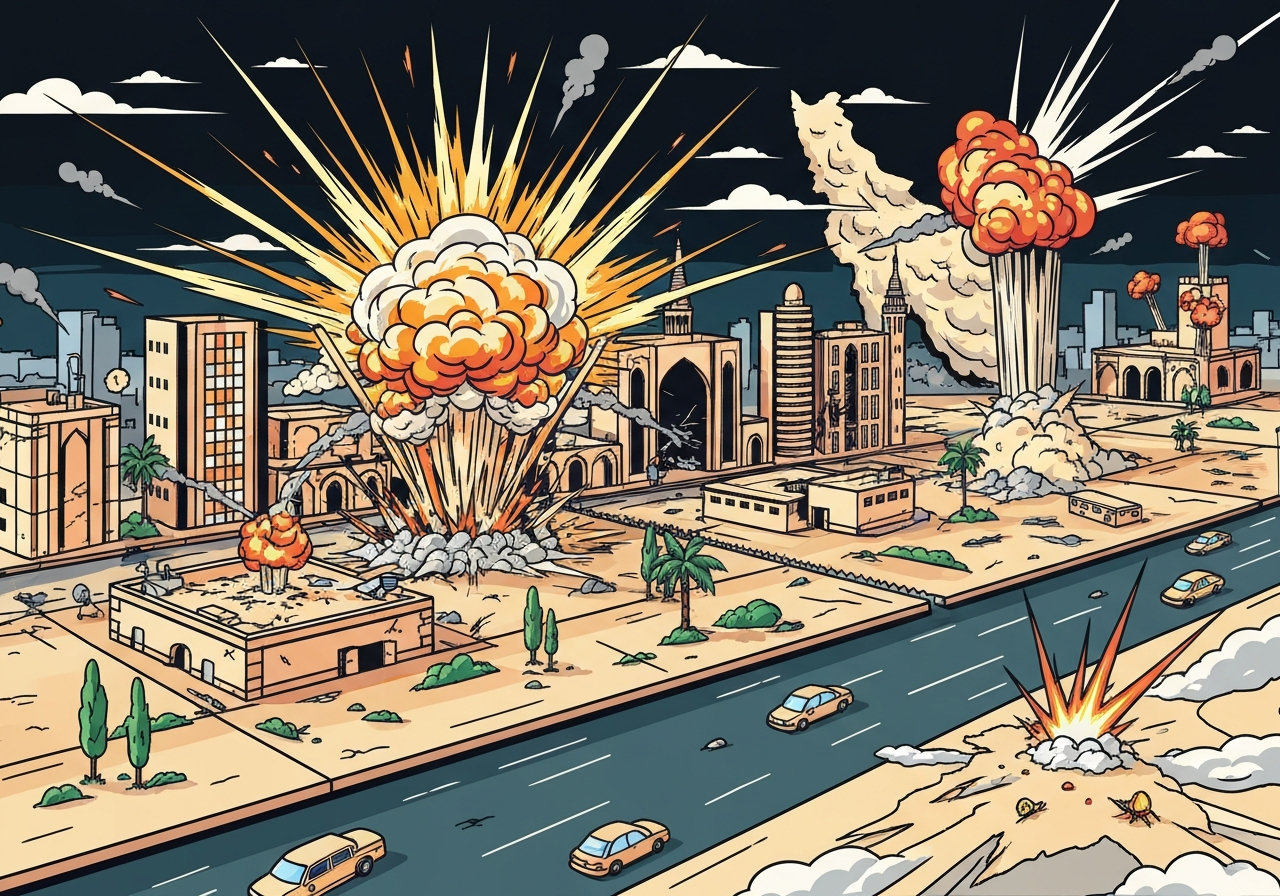
On 31 January 2026, a powerful explosion ripped through an eight‑storey residential building in the southern port city of Bandar Abbas, killing a four‑year‑old girl and injuring 14 people. Local emergency authorities said investigations are ongoing into the cause of the blast. In the hours that followed, reports and social‑media footage suggested explosions or large smoke plumes in several other cities, prompting mixed official explanations ranging from gas leaks to fires in reed beds. Conflicting claims about whether the site was military‑linked or targeted have amplified uncertainty.
Key Takeaways
- The Bandar Abbas blast occurred on 31 January 2026 in an eight‑storey residential complex; 14 people were injured and one child died, authorities said.
- Hormozgan’s Crisis Management Organisation confirmed an ongoing probe and described the building as a residential complex, while some videos showed barbed wire in the compound courtyard.
- Some unofficial accounts alleged the target was IRGC Navy commander Alireza Tangsiri; Tasnim News Agency (IRGC‑affiliated) called that claim “completely false.”
- Separate incidents were reported elsewhere: Khuzestan officials said a domestic gas explosion in Ahvaz left five dead and two injured, while local governors attributed smoke in Parand and Robat Karim to fires in reed beds.
- The IRGC Navy’s public relations office denied any drone attacks on its Hormozgan bases and said no force‑affiliated buildings were damaged.
- Israel, according to a Jerusalem Post report, denied involvement in the events; the claim remains unverified by Iranian authorities.
- Al Mayadeen reported the planned Iran‑China‑Russia joint naval deployment in the Strait of Hormuz had been postponed and that Beijing and Moscow would not send forces until at least mid‑February.
Background
Bandar Abbas is Iran’s primary southern port on the Strait of Hormuz and hosts a mix of civilian infrastructure and military facilities; it is routinely sensitive during regional tensions. The Islamic Revolutionary Guard Corps (IRGC), including its naval component, maintains an active presence in Hormozgan province. Over recent years incidents in or near strategic port cities have raised immediate regional security concerns and drawn rapid international attention.
Iran frequently reports accidental gas explosions and fires in residential and industrial settings, and such incidents are a known domestic safety issue. At the same time, the region has seen episodic strikes, sabotage claims, and naval posturing tied to tensions with Israel and Western states, making it difficult to separate criminal, industrial and security‑related causes without official findings. Multiple local authorities and state‑affiliated outlets provide differing narratives in the immediate aftermath of events, which complicates rapid verification.
Main Event
Early on 31 January, emergency services responded to a large explosion in an eight‑storey residential building in Bandar Abbas. Video clips shared minutes after the blast showed shattered windows and partial collapse on lower floors; rescue teams evacuated residents and treated the wounded. Hormozgan’s Crisis Management Organisation said 14 people were injured and a four‑year‑old girl died, while investigations into the cause were still ongoing.
Social videos of the site showed what appeared to be barbed wire on courtyard walls—an element more common at military compounds—feeding speculation about the nature of the building. IRGC Navy spokespeople countered those suggestions, saying no drone attack occurred and that no IRGC‑affiliated structures in Hormozgan were damaged. Tasnim News Agency explicitly denied claims the IRGC Navy commander Alireza Tangsiri had been targeted.
Meanwhile authorities and local officials reported explosions or smoke in other provinces. Khuzestan security officials said a domestic gas explosion in Ahvaz killed five people and injured two. Officials in Tehran province attributed smoke in Parand and Robat Karim to reed‑bed fires along the Shour River, and Qom’s fire chief said smoke over parts of the city came from a waste fire, not a military strike. East Azerbaijan officials denied any explosion in Tabriz after rumours circulated online.
Within hours there were additional reports that Iran’s planned joint naval drill with China and Russia in the Strait of Hormuz had been postponed; Al Mayadeen reported Beijing and Moscow would not deploy forces before mid‑February. U.S. Central Command (CENTCOM) had earlier urged the IRGC to refrain from provocative activity at sea as Tehran announced the exercise.
Analysis & Implications
The immediate uncertainty about cause—industrial accident, sabotage, targeted strike, or misattributed footage—illustrates how rapidly narratives can diverge in a high‑tension environment. If investigations confirm an accidental gas leak in one or more locations, the political fallout will differ sharply from a finding of hostile action. Either outcome will shape domestic perceptions of security and state competence, and could affect international responses.
Claims involving senior IRGC figures, even when denied by IRGC‑affiliated outlets, carry outsized signalling power. Allegations that a high‑profile commander was targeted would increase the risk of retaliatory rhetoric or escalation, while denials aim to limit that dynamic. Independent confirmation will be essential before other actors—regional states or global powers—adjust posture or policy.
The reported postponement or scaling back of a combined Iran‑China‑Russia naval deployment, if confirmed, would have strategic implications for presence in the Strait of Hormuz and for Tehran’s messaging about international backing. CENTCOM’s warnings and Tehran’s maritime manoeuvres are part of a larger pattern of naval signalling in the Gulf that affects commercial traffic, insurance costs, and energy markets. Even localized industrial accidents can therefore have outsized economic ripple effects in the short term.
Comparison & Data
| Location | Date | Reported Fatalities | Reported Injuries | Official Explanation |
|---|---|---|---|---|
| Bandar Abbas (Hormozgan) | 31 Jan 2026 | 1 (4‑yr‑old) | 14 | Under investigation; building described as residential |
| Ahvaz (Khuzestan) | 31 Jan 2026 | 5 | 2 | Described by local official as domestic gas explosion |
| Parand / Robat Karim (Tehran province) | 31 Jan 2026 | 0 | 0 reported | Smoke attributed to reed‑bed fires |
| Qom | 31 Jan 2026 | 0 | 0 reported | Smoke attributed to waste fire by fire chief |
The table above summarizes official casualty figures and immediate explanations provided by local authorities. Discrepancies between social‑media footage and official descriptions underscore the need for independent verification; casualty totals and causes could change as formal investigations conclude.
Reactions & Quotes
“Investigations into the Bandar Abbas incident are ongoing,”
Hormozgan Crisis Management Organisation (official)
“Claims that Commander Alireza Tangsiri was targeted are completely false,”
Tasnim News Agency (IRGC‑affiliated)
“We urge restraint and for the IRGC to avoid provocative behaviour at sea,”
U.S. Central Command (CENTCOM)
Unconfirmed
- That IRGC Navy commander Alireza Tangsiri was the specific target of the Bandar Abbas blast remains unverified.
- Videos circulating from Qom and Parand have not been conclusively geolocated or time‑stamped to prove they show the same day’s events.
- Al Mayadeen’s report that China and Russia will not deploy naval forces until mid‑February is not confirmed by official Chinese or Russian defence statements.
- Links between the Bandar Abbas blast and separate incidents in Ahvaz or other cities have not been established by independent investigators.
Bottom Line
The Bandar Abbas explosion on 31 January produced a confirmed local fatality and multiple injuries and triggered a flurry of conflicting accounts across Iran. Officials cite ongoing probes while state and social channels advance different explanations; that mix makes immediate attribution uncertain. For analysts, the priority is transparent technical investigation and independent verification to prevent misreading an industrial accident as a security strike or vice versa.
Regionally, the incident arrived amid heightened naval signalling and threat perceptions in the Gulf, including disputed reporting about a planned Iran‑China‑Russia exercise. Even if later ruled accidental, the blasts and fires will test how authorities manage information and public safety, and could influence both domestic stability and short‑term maritime risk perceptions.
Sources
- Euronews — international news outlet (original report summarising local statements and social‑media footage)
- Tasnim News Agency — IRGC‑affiliated news agency (denial of targeting claims)
- The Jerusalem Post — Israeli news outlet (reported Israel denied involvement)
- Al Mayadeen — regional broadcaster (reported postponement of joint naval deployment)
- U.S. Central Command (CENTCOM) — official military command (statements urging restraint)