
Lead
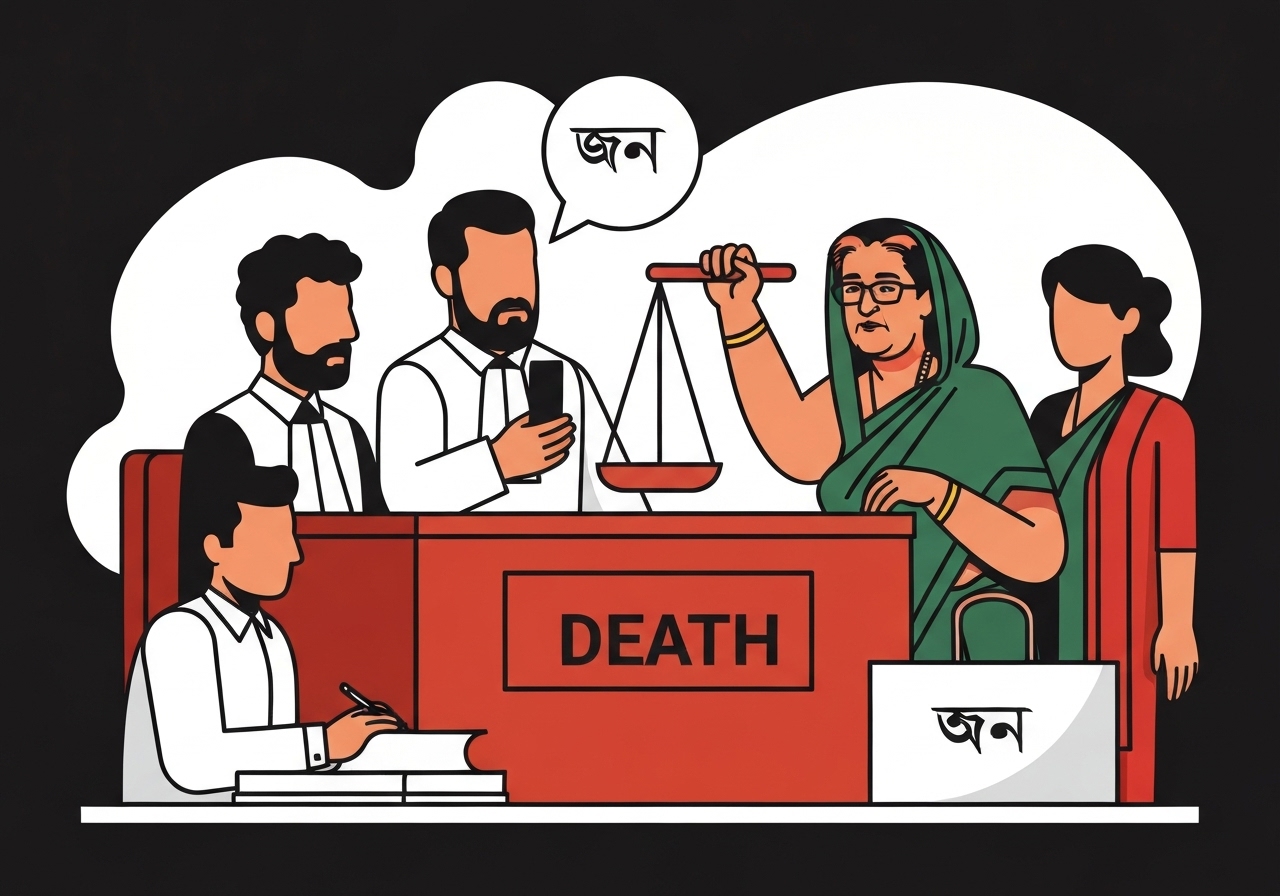
On Nov. 17, 2025, Bangladesh’s International Crimes Tribunal convicted former Prime Minister Sheikh Hasina in absentia and handed her a death sentence for crimes against humanity, including murder and ordering lethal force during a student uprising that toppled her government. The conviction is the first major legal move by the interim administration led by Nobel laureate Muhammad Yunus to hold senior officials accountable for the unrest. Ms. Hasina, who fled to India after protesters ousted her in August 2024, denies the charges and has criticized the court process. The verdict raises immediate questions about enforcement, extradition and the political future of Bangladesh.
Key Takeaways
- On Nov. 17, 2025, the International Crimes Tribunal in Dhaka sentenced former Prime Minister Sheikh Hasina to death after convicting her of crimes against humanity, including murder and ordering lethal weapons against protesters.
- The trial was held in absentia because Ms. Hasina fled to India following the August 2024 uprising that removed her from office.
- The tribunal’s ruling marks a fulfillment of a promise by the interim government led by Muhammad Yunus, the 85-year-old Nobel laureate tasked with stabilizing the country.
- Reports describe the uprising as a student-led movement that began peacefully and escalated after security forces used force; press accounts attribute the killings to actions taken during the suppression.
- Authorities and analysts note that India, which has close ties to Ms. Hasina, is unlikely to approve an extradition request, complicating immediate enforcement of the sentence.
- The conviction is likely to shape domestic politics, influence the timetable for free and fair elections under the interim government, and affect Bangladesh’s international relations, particularly with regional partners.
Background
The protests that culminated in the removal of Ms. Hasina began in 2024 as student demonstrations over political and social grievances. Initially peaceful, the movement escalated when security forces moved to disperse marches, and clashes left large numbers of civilians dead or injured. The period of violence and upheaval has been referred to domestically as the “July Revolution” and prompted the resignation and exile of Ms. Hasina in August 2024.
In the aftermath, the interim government under Muhammad Yunus took power with a mandate to restore order and prepare for new elections. One of its stated objectives was to investigate mass violence and hold accountable those responsible for unlawful killings and human rights abuses. The International Crimes Tribunal, already charged with adjudicating serious abuses, opened proceedings that culminated in the Nov. 17 verdict.
Main Event
The tribunal found Ms. Hasina guilty of ordering or otherwise authorizing the use of lethal weapons against protesters during the uprising. Prosecutors argued that state security forces acted on directives that led to widespread civilian deaths. Because Ms. Hasina was not in the country, the trial proceeded in absentia under Bangladeshi law, leading to legal and diplomatic obstacles around execution of the ruling.
Ms. Hasina has publicly denied responsibility for atrocities and criticized the fairness of proceedings, saying she was not involved in the violent acts attributed to her administration. Her departure to India after the government fell has put physical enforcement beyond the immediate reach of Bangladeshi authorities, and officials in Dhaka will likely have to seek international cooperation to take further steps.
Security was visible outside the Supreme Court in Dhaka on the day of the verdict as authorities prepared for possible unrest. The interim government described the ruling as part of a broader effort to address the bloodshed of the previous year and to demonstrate that senior leaders would be held accountable.
Analysis & Implications
Domestically, the sentence could deepen political polarization. Supporters of the interim government may view the conviction as a necessary step toward justice and rebuilding civic order, while supporters of Ms. Hasina and opposition factions could see it as victor’s justice, complicating reconciliation. The practical effect hinges on whether Bangladesh can secure Ms. Hasina’s return or India’s cooperation on extradition—both uncertain outcomes.
Internationally, the case places South Asian diplomacy under strain. India’s longstanding ties with Ms. Hasina and its stated reluctance to extradite make immediate enforcement unlikely and risk diplomatic friction with Dhaka. Other international actors will weigh human-rights concerns against regional stability when deciding whether to press for accountability or urge restraint.
From a rule-of-law perspective, the use of in absentia proceedings and a death sentence for a former head of government raises questions about due process and the robustness of legal protections during politically charged cases. Human-rights groups and legal experts will likely scrutinize court records and trial procedures for compliance with international fair-trial standards.
Comparison & Data
| Date | Event |
|---|---|
| August 2024 | Student uprising culminates in ouster and exile of Sheikh Hasina |
| Nov. 17, 2025 | International Crimes Tribunal convicts Hasina in absentia; death sentence issued |
| 2025 | Interim government led by Muhammad Yunus (age 85) pledges accountability and elections |
This timeline places the tribunal’s decision roughly 15 months after the August 2024 upheaval, reflecting an unusually rapid move to try a former prime minister for mass-atrocity charges. Exact casualty totals from the crackdown remain variably reported; official tallies and independent estimates have not converged on a single figure.
Reactions & Quotes
Ms. Hasina has denied involvement in atrocities and criticized the court proceedings, according to media reports covering her statements from exile.
The New York Times (press)
The interim administration framed the trial as part of its mandate to investigate the violence and hold those responsible to account while preparing for new elections.
Interim Government Statements (reported)
Observers and officials noted India’s close relationship with Ms. Hasina and signaled that extradition is unlikely, making immediate implementation of the sentence doubtful.
Regional analysts (reported)
Unconfirmed
- Precise casualty figures from the 2024 crackdown remain unsettled; public reports describe “hundreds” killed but do not provide a single, independently verified total.
- The likelihood and timing of any formal extradition request from Bangladesh to India and India’s final decision remain unconfirmed at this time.
- Whether the tribunal’s death sentence will be carried out, commuted, or overturned on appeal is unresolved and depends on future legal and diplomatic developments.
Bottom Line
The tribunal’s Nov. 17, 2025 death sentence for Sheikh Hasina is a landmark legal and political event that signals the interim government’s determination to address the violence that accompanied the 2024 uprising. However, the ruling’s immediate practical impact is limited by Ms. Hasina’s exile in India and the complex diplomatic and legal hurdles surrounding extradition and enforcement.
For Bangladesh, the verdict sharpens choices for the interim government: pursue accountability and risk deeper polarization, or seek broader reconciliation to stabilize the electoral transition. International observers will watch how Dhaka and key partners move next; their actions will shape whether the sentence becomes a turning point in consolidating rule of law or another chapter in a prolonged political confrontation.
Sources
- The New York Times — press report on tribunal ruling and statements
- NobelPrize.org — official profile of Muhammad Yunus (Nobel laureate)