
Lead
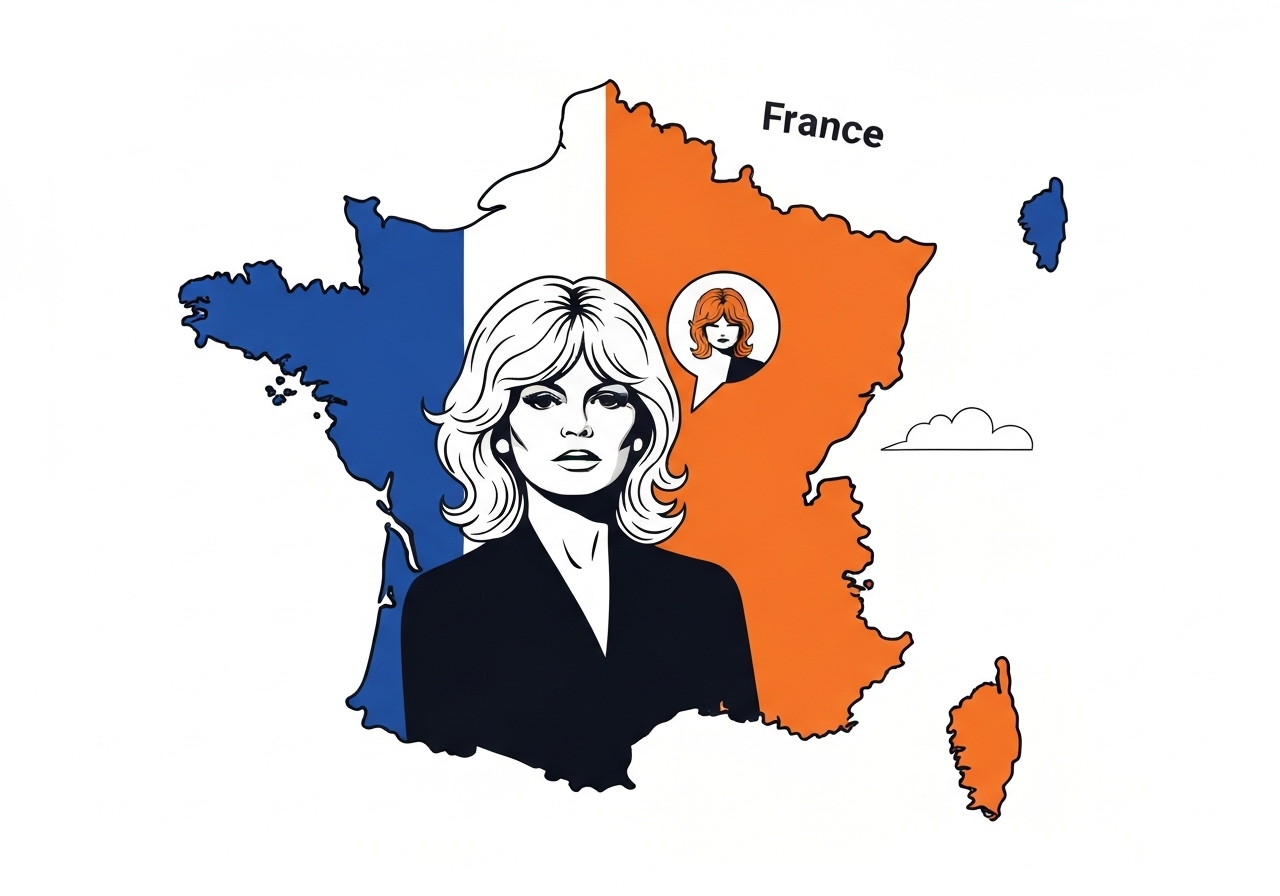
On Dec. 29, 2025, France confronted a public split over how to honor Brigitte Bardot, the screen legend who died at 91 at her home in the south of France. Celebrated for her 1956 breakthrough in And God Created Woman and a roughly 50‑film career, Bardot spent her later years campaigning for animal rights while embracing far‑right positions that led to five convictions for hate speech. Political leaders delivered sharply different responses: President Emmanuel Macron called her a “legend,” while many on the left urged caution over state‑level tributes. The debate has reopened questions about how democratic societies remember cultural figures with fraught political records.
Key Takeaways
- Brigitte Bardot died Dec. 29, 2025, at age 91 at her Saint‑Tropez home; her fourth husband Bernard d’Ormale was at her side.
- Bardot rose to fame with the 1956 film And God Created Woman and appeared in about 50 films before leaving cinema in 1973 to focus on animal rights.
- She was convicted five times under French laws for hate speech, largely for comments about Muslims and residents of Réunion.
- President Emmanuel Macron called her a “legend” of 20th‑century cinema; right‑wing figures including Marine Le Pen and Eric Ciotti urged public tributes.
- Left‑leaning politicians largely tempered praise; some, including Greens lawmaker Sandrine Rousseau, criticized the contrast between her animal activism and comments on migrants.
- Local officials in Saint‑Tropez said she will be buried in a seaside cemetery there; she had expressed a wish to be buried in her garden with a wooden cross.
- Eric Ciotti launched an online petition for a national farewell that had just over 7,000 signatures as of Monday.
Background
Born Sept. 28, 1934, in Paris to a traditional Catholic household, Bardot became one of France’s most visible film stars after her breakout role in 1956. Her celebrity grew through the 1950s and 1960s; she made roughly 50 films before retreating from the screen in 1973 and settling in Saint‑Tropez. That withdrawal marked a shift from acting to activism: Bardot devoted her later life to animal welfare, founding a foundation that became central to her public identity.
At the same time, Bardot cultivated outspoken, often inflammatory political views. She publicly supported far‑right causes and candidates, including Marine Le Pen in 2012 and 2017. French courts found her guilty of hate speech on five occasions, mostly for anti‑Muslim statements and derogatory remarks about inhabitants of the island of Réunion — convictions that complicated how political and cultural leaders responded to her death.
Main Event
News of Bardot’s death spread internationally, with images and tributes appearing across global media and mourners leaving flowers, photographs and stuffed animals outside her La Madrague home in Saint‑Tropez. Bruno Jacquelin, a representative of her animal foundation, said she died “before dawn” and that she whispered a word of love to her husband, Bernard d’Ormale, shortly before passing. Local officials confirmed she will be buried in a seaside cemetery, though they gave no date for funeral arrangements.
Political reaction was immediate and divided. President Emmanuel Macron praised her as a 20th‑century cinema “legend” who “embodied a life of freedom,” while far‑right figures fast offered tributes that framed Bardot as a symbol of French identity. Marine Le Pen called her “incredibly French: free, untameable, whole,” and Eric Ciotti proposed a national farewell similar to the one organized for musician Johnny Hallyday, circulating a petition that drew thousands of signatures.
Many on the left responded more cautiously. Philippe Brun, a senior Socialist deputy, acknowledged Bardot’s cinematic stature but said political aspects of her life would need to be debated in the coming days. Communist leader Fabien Roussel described her as divisive while still recognizing her contribution to French cinema. Greens lawmaker Sandrine Rousseau contrasted Bardot’s fervent animal advocacy with her indifference, in her view, to the deaths of migrants in the Mediterranean.
Analysis & Implications
Bardot’s death has highlighted a recurrent dilemma in democratic memory: how to honor artistic achievement when it coexists with condemnable political speech. For many voters and politicians on the right, Bardot’s cultural contributions and later activism are inseparable from national identity; for critics, her repeated legal convictions for hate speech make state‑sponsored honors inappropriate or at least contentious. This clash plays into broader French debates over secularism, immigration and national symbols ahead of future elections.
Politically, the episode offers mobilization opportunities on both sides. The National Rally, buoyed by recent polling strength, can use Bardot’s death to solidify cultural messaging to its base. Conversely, center‑left and left parties may emphasize rule of law and social inclusion, arguing that public recognition should not absolve expressions that courts have found discriminatory. How mainstream parties navigate these signals could affect coalition dynamics and campaigning framing.
Legally and institutionally, the case underscores limits to state commemoration. In France, an official national homage or state funeral is an executive decision with symbolic weight; presidents must weigh public sentiment and legal histories. The situation also raises questions about private memorials versus public ceremonies and who legitimately claims cultural icons for national heritage.
Comparison & Data
| Year / Item | Fact |
|---|---|
| 1934 | Born Sept. 28 in Paris |
| 1956 | Breakthrough in And God Created Woman |
| ~1950s–1973 | Appeared in about 50 films; left cinema in 1973 |
| Legal record | Convicted five times for hate speech |
| 2025 | Died Dec. 29 at age 91 |
The table summarizes key dates that shape how Bardot is remembered: a meteoric rise in the 1950s, a public shift to animal advocacy in the 1970s, and a string of legal convictions that defined her later public profile. Those data points help explain why reactions range from near‑reverence to outright refusal to endorse public honors.
Reactions & Quotes
Right‑wing leaders emphasized Bardot’s cultural status and personal freedom, framing her as emblematic of a certain French patrimony. Their comments have spurred petitions and calls for formal commemorations, reflecting a segment of public sentiment that sees her political stances as part of her complex legacy.
“She embodied a life of freedom.”
Emmanuel Macron, President of France (statement)
Center‑left figures struck a more ambivalent tone, acknowledging artistic achievement while signalling that her controversial statements remain relevant to decisions about public honors.
“There will be time enough … to talk about [her political commitments].”
Philippe Brun, Socialist deputy (Europe 1)
Some left‑wing commentators framed the memorial debate as a moral test, questioning the coherence of celebrating animal protection while disregarding statements about human groups.
“To be moved by the fate of dolphins but remain indifferent to the deaths of migrants … what level of cynicism is that?”
Sandrine Rousseau, Greens lawmaker (social post)
Unconfirmed
- Whether a state‑level national homage will be officially declared — no presidential announcement had been made beyond Macron’s statement as of Dec. 29, 2025.
- Whether Bardot would have been granted permission to be buried in her private garden — French municipal authorization can allow such burials but confirmation was not public.
- Exact date and format of public commemorations or funeral events remain unannounced by local authorities in Saint‑Tropez.
Bottom Line
Brigitte Bardot’s death has reopened a national conversation about how democratic societies remember public figures whose artistic legacies are entangled with objectionable political conduct. The immediate reactions — from presidential praise to left‑wing caution — reflect deep divisions over whether cultural achievement and condemnable speech can be separated when deciding on public honors.
In the near term, watch for decisions by the Élysée and local officials about formal tributes and funerary arrangements, and for how parties use the episode in political messaging. More broadly, Bardot’s passing will likely remain a reference point in debates over free expression, accountability, and the symbolic boundaries of national memory.