
Lead
The Dallas Mavericks dismissed general manager Nico Harrison on Tuesday, ending a tumultuous nine‑month run that followed the franchise‑shocking trade sending Luka Dončić to the Los Angeles Lakers. Owner Patrick Dumont cited a need to repair relations with a frustrated fanbase after an unpopular stretch of roster moves, even as Dallas later landed top lottery prospect Cooper Flagg. On Wednesday, NBA analyst Charles Barkley told ESPN he believes Harrison is being unfairly blamed for what was a franchise‑wide decision and pointed to injuries that undermined the moves. The team prepares for its first home game since the change as the organization begins a rebuild around Flagg.
Key Takeaways
- The Mavericks fired GM Nico Harrison on Tuesday, nine months after a high‑profile trade that sent Luka Dončić to the Lakers.
- Owner Patrick Dumont made the personnel change amid mounting fan discontent despite Dallas winning the Cooper Flagg sweepstakes in the lottery.
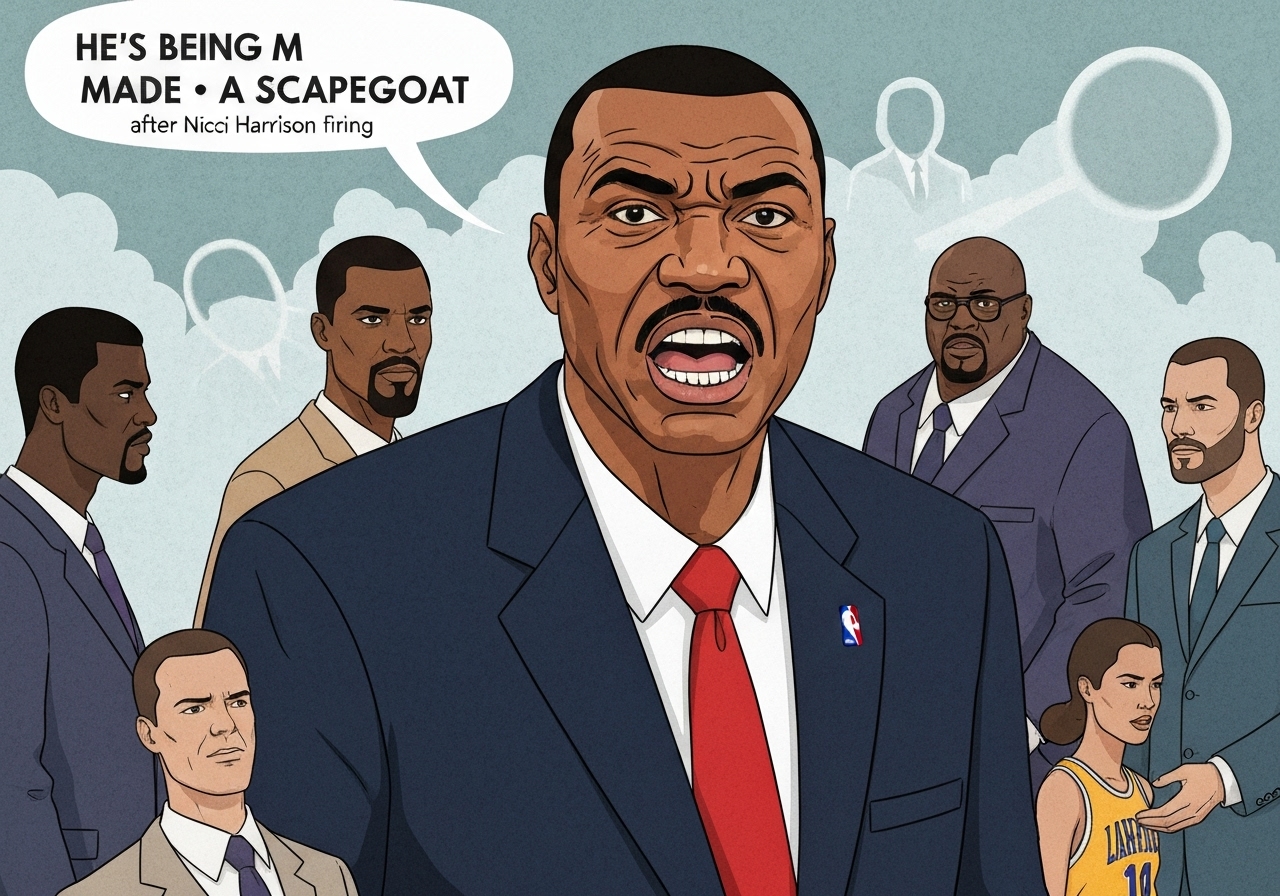
- Charles Barkley told ESPN on Wednesday that Harrison is being portrayed as a scapegoat and argued the owner would have signed off on any blockbuster trade.
- Barkley and others cited injuries to Anthony Davis and Kyrie Irving as key factors that derailed the organization’s plans after the trade.
- The front office change comes as the Mavericks shift toward a rebuild centered on recent lottery pick Cooper Flagg.
- The move highlights tension between short‑term roster gambles and long‑term fan patience in Dallas.
Background
The decision to remove Nico Harrison follows a contentious nine‑month period for the Mavericks. Last season’s trade that sent Luka Dončić to the Lakers was widely characterized as one of the NBA’s most surprising transactions; it reshaped Dallas’s competitive trajectory and provoked intense media and fan scrutiny. Ownership, led by Patrick Dumont, faced sustained criticism as results fell short of expectations and injuries piled up on key acquisitions. Despite the criticism, the franchise later captured a high draft lottery outcome, securing Cooper Flagg, which complicated the public narrative and gave the organization a new cornerstone to build around.
Harrison’s tenure unfolded against a broader league context in which rapid roster turnover and high‑risk trades have become common among teams chasing a championship window. The Mavericks’ situation mirrored other franchises that moved aggressively and then faced immediate setbacks beyond their control, notably injuries to veteran signees. Responsibility for such outcomes typically sits with both the front office and ownership, a dynamic that has played out in Dallas’s boardroom and in public discourse. The firing marks a reset point for the franchise’s leadership and its relationship with supporters.
Main Event
On Tuesday, the Mavericks announced they had parted ways with GM Nico Harrison, a decision described by the organization as aimed at restoring confidence with a frustrated fanbase. The split came after months of backlash following the Dončić trade; fans and local media had intensified scrutiny following on‑court struggles and the inability to marshal consistent health from pivotal acquisitions. Despite later landing Cooper Flagg in the draft lottery, the immediate optics of the earlier trade persisted as a focal point of discontent.
Charles Barkley addressed the firing on ESPN the next day, stressing that Harrison’s role in the Dončić transaction was overstated in public debate. Barkley argued that a trade of that magnitude would have required owner approval, and that injuries to key players, including Anthony Davis and Kyrie Irving, hampered the front office’s plans. He said the organization as a whole, rather than a single executive, bore responsibility for the roster outcome.
The franchise now enters a transition phase. With Cooper Flagg joining the roster picture, Dallas will need to reconcile a long‑term youth plan with the short‑term expectations of a demanding market. The timing forces the new leadership to define whether the team pursues a rapid rebuild, a measured reload, or a hybrid approach blending veteran acquisition with development of young talent.
Analysis & Implications
Making a general manager the public face of failure is a familiar pattern in professional sports, but it often oversimplifies the multi‑actor decision‑making that belongs to owners, boards, scouts and coaching staffs. In Dallas’s case, Barkley’s point that the owner likely approved major trades shifts attention from Harrison alone to the broader governance of the franchise. That matters for accountability: if ownership sanctioned the strategy, fans and analysts may judge Dumont’s stewardship as much as they did Harrison’s.
Injuries to anticipated centerpiece signings such as Anthony Davis and Kyrie Irving materially changed the expected returns on Dallas’s investment. When high‑cost roster additions are unavailable, trade outcomes that looked sensible on paper can appear disastrous in practice. That sequence amplified public frustration and reduced the margin for error for the front office, accelerating calls for change.
Strategically, the arrival of Cooper Flagg creates a focal point for reconstruction. Flagg’s presence gives Dallas an attractive building block, but the team will need complementary moves—draft development, selective veteran additions and possible salary‑cap management—to convert potential into competitiveness. How the next GM and Dumont align on timelines and resource allocation will determine whether the Mavericks return to contention quickly or enter a prolonged rebuild.
Comparison & Data
| Event | Timing | Immediate Impact |
|---|---|---|
| Luka Dončić trade to Lakers | ~9 months prior | Major roster restructuring; public backlash |
| Nico Harrison fired | Tuesday (this week) | Leadership vacancy; fan appeasement effort |
| Cooper Flagg lottery win | Recent lottery | Provides long‑term cornerstone for rebuild |
The table above places the headline moves and outcomes along a simple timeline to show how the franchise rapidly pivoted from a blockbuster trade to a leadership change and then to acquiring high draft capital. This sequence explains why perceptions hardened: the trade set expectations that injuries and outcomes failed to meet, and the subsequent lottery luck altered the calculus for future planning.
Reactions & Quotes
Public and media reaction split between those who view Harrison as a fall guy and those who see firing as a necessary step to satisfy an aggrieved fanbase. Coverage has leaned on questions of accountability and the role of ownership in sanctioning major roster moves.
“The thing that bothers me is he’s just being made a scapegoat … there’s no way in the world Nico Harrison had the power to trade Luka Dončić unless the owner of the team signed off on it.”
Charles Barkley, ESPN (paraphrased from broadcast)
“Charles Barkley weighs in on the Mavericks parting ways with GM Nico Harrison.”
SportsCenter (social clip)
Unconfirmed
- Whether Dumont personally initiated the Dončić trade has not been independently verified beyond public commentary; direct internal approval records are not public.
- Claims that Harrison alone drove the trade lack documentary proof; public reporting indicates multiple executives and ownership were involved in high‑level approvals.
Bottom Line
The Mavericks’ dismissal of Nico Harrison closes a controversial chapter that began with a franchise‑shaping trade and culminated in public frustration. Charles Barkley’s comments on ESPN reframed the story as one about organizational responsibility rather than a single executive’s error, underscoring the role of ownership and unlucky injuries in the outcome.
Going forward, Dallas must convert recent lottery success with Cooper Flagg into a coherent long‑term plan while addressing fan expectations. How Patrick Dumont and the next GM balance immediate pressure with a sustainable rebuild will determine whether this leadership change turns into a genuine reset or merely a symbolic response to a public relations crisis.
Sources
- Sports Illustrated — news article summarizing the firing and Barkley remarks
- SportsCenter (social clip/tweet) — video clip of Barkley on ESPN (social distribution)
- ESPN (broadcast) — platform where Barkley discussed the firing (broadcast source)