
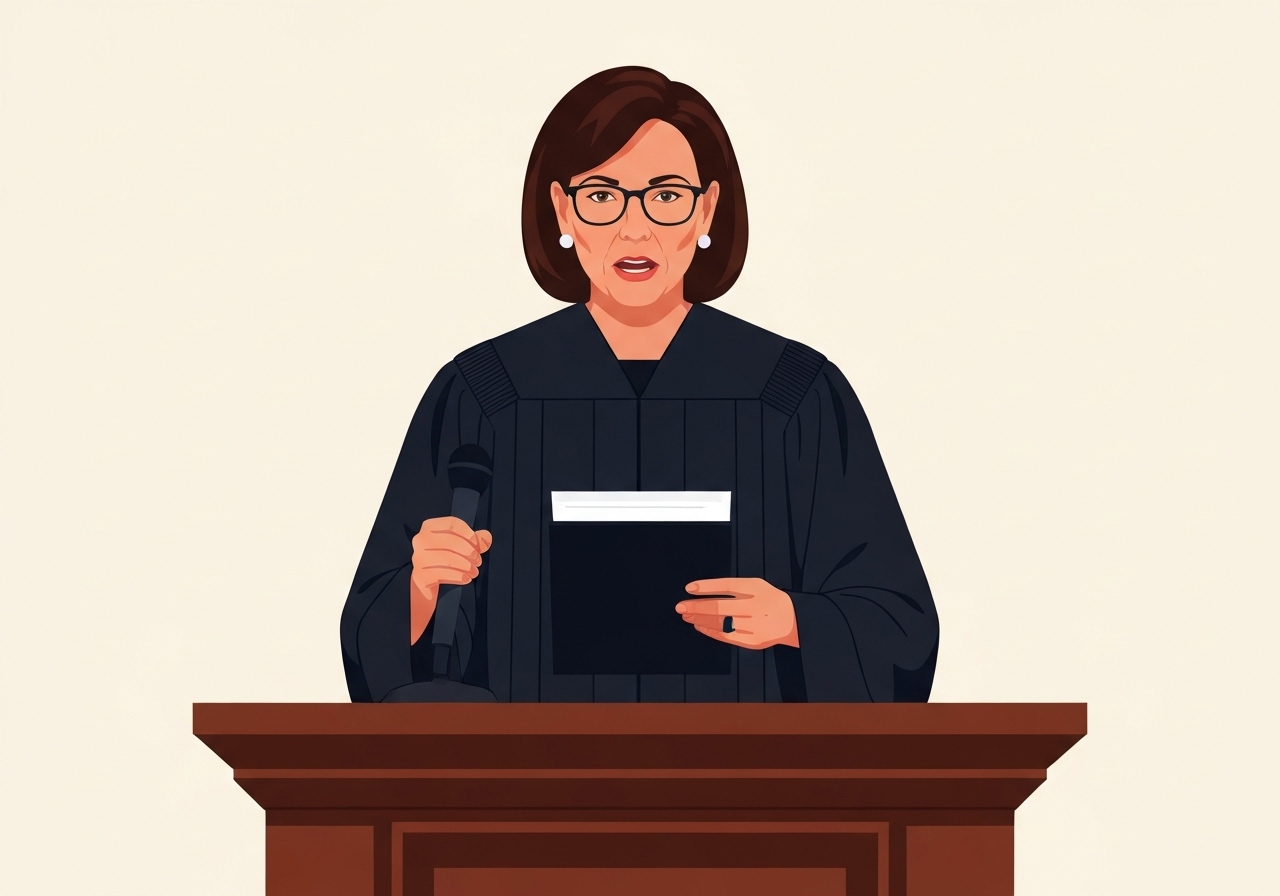
Lead: In a Sept. 2025 CBS News interview ahead of her book release, Justice Amy Coney Barrett said the law should reflect constitutional and statutory decisions — not the personal views of justices — as the Supreme Court reviews a longshot petition by former Kentucky clerk Kim Davis seeking to revisit the 2015 Obergefell ruling on same‑sex marriage.
Key Takeaways
- Barrett told CBS that the Court “is not an opinion poll” and should avoid imposing its own values on the public.
- Her remarks came in her first TV interview since joining the Court in October 2020 and ahead of her book release on Sept. 9, 2025.
- Kim Davis has asked the Court to reconsider Obergefell v. Hodges (2015); the petition is viewed as unlikely to succeed.
- Barrett was in the majority that voted to overturn Roe v. Wade in June 2022, which intensified scrutiny of other precedents grounded in the 14th Amendment.
- Justice Clarence Thomas urged reconsideration of contraception and marriage precedents in a separate concurring opinion; Justice Brett Kavanaugh said overruling Roe does not necessarily threaten those cases.
- It remains unclear whether four justices want to rehear Obergefell and whether five would vote to overturn it.
Verified Facts
Barrett, 53, joined the Supreme Court in October 2020 after being nominated by President Donald Trump and confirmed by the Senate. She filled the seat held by Justice Ruth Bader Ginsburg following RBG’s death in September 2020.
In the CBS News interview with Norah O’Donnell, Barrett emphasized legal sources — the Constitution and statutes — as the proper basis for decisions, saying courts should not substitute their own values for those determined through democratic processes.
The Court overturned Roe v. Wade in June 2022, a 6‑3 decision in which Barrett was among the five justices in the majority. That ruling returned abortion authority to the states and led to restrictions in more than 20 states.
The current petition from Kim Davis raises three questions, including whether the Court should overturn Obergefell v. Hodges, the 2015 decision that recognized a constitutional right to same‑sex marriage. Legal observers describe the petition as a longshot because it is uncertain whether the justices have the votes to rehear and then reverse the precedent.
Context & Impact
The Dobbs decision to overturn Roe intensified debate about the stability of landmark precedents based on the 14th Amendment’s Due Process Clause. After Dobbs, Justice Clarence Thomas wrote that the Court should revisit other substantive‑due‑process cases; no other justice joined his concurrence.
Other justices have sought to limit alarm by distinguishing Roe from cases like Obergefell and contraception rights. For example, Justice Brett Kavanaugh wrote separately that overruling Roe does not automatically end protection for other privacy or marriage rights.
If the Court were to revisit Obergefell and ultimately dismantle the federal right to same‑sex marriage, legal recognition of marriage would likely revert to state legislatures and courts, producing a patchwork of laws across the country.
- Possible near‑term effects: legal uncertainty for married same‑sex couples in some states.
- Political effects: renewed debate and mobilization on both sides of the issue ahead of elections.
“The court is trying to see what the American people have decided… but the court should not be imposing its own values on the American people.”
CBS News interview — Justice Amy Coney Barrett
Unconfirmed
- Whether four justices will vote to grant review of the Kim Davis petition is not publicly confirmed.
- Whether five justices would ultimately vote to overturn Obergefell, if review were granted, remains speculative.
Bottom Line
Justice Barrett framed the Court’s role as applying constitutional and statutory law rather than acting as a public opinion body. While the petition to reconsider Obergefell has drawn political attention, legal analysts view it as unlikely to succeed without clear signals that a majority of justices favor reversal.
Readers should watch for the Court’s decision on whether to take the case; that gatekeeping step will determine if Obergefell faces further review.