
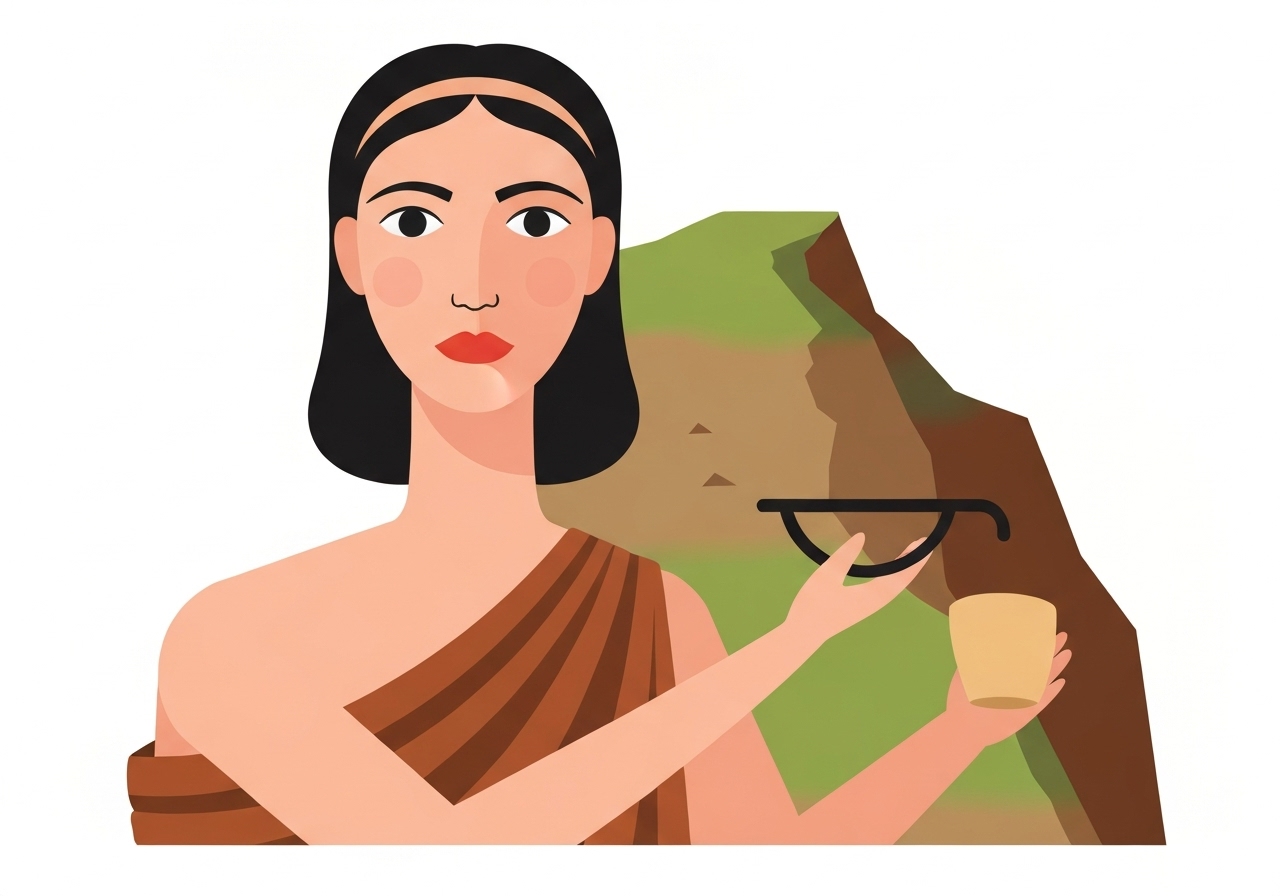
Lead: New genetic sequencing indicates the Roman-era skeleton known as the ‘Beachy Head woman’ most likely grew up in southern England, near modern Eastbourne. The remains, excavated from a box in Eastbourne town hall collections in 2012 and radiocarbon-dated to AD 129–311, were reanalyzed using improved ancient DNA methods. Earlier interpretations that suggested Cypriot or sub-Saharan African origin have been revised after a high-quality genomic readout. The team says the new result settles a long-running debate about the individual’s geographic origins.
Key takeaways
- Researchers recovered a substantially improved ancient DNA sequence using capture-array methods, increasing genome coverage by more than tenfold compared with prior attempts.
- Radiocarbon dating places the individual between AD 129 and 311, within Roman-era Britain.
- Osteological analysis estimates the woman was about 18–25 years old at death and about 5 ft (152 cm) tall, with a healed leg wound indicating a serious but non-fatal injury.
- Isotopic indicators of carbon and nitrogen point to a diet rich in marine foods and residence in the local coastal region during life.
- Earlier skull-based morphometry suggested sub-Saharan affinity and a 2016 plaque commemorated her as the ‘first black Briton’, a claim later questioned.
- A 2017 DNA test had been too degraded to be decisive; it suggested Cyprus as a possible origin but was inconclusive.
- The new study, published in the Journal of Archaeological Science, concludes the woman descended from the local Roman-era population of southern England.
Background
The skeletal remains were catalogued at Eastbourne town hall and rediscovered in 2012; archival notes on the storage box link the remains to finds at the nearby Beachy Head headland made in the 1950s. Radiocarbon analysis conducted by the research team puts the death between AD 129 and 311, aligning with the period of Roman occupation of Britain. Standard osteological assessment provided estimates of age-at-death (18–25 years) and stature (about 152 cm), and a healed tibial lesion suggests she survived a major leg injury earlier in life. Stable isotope analysis of carbon and nitrogen in her bone collagen indicated a diet that included substantial seafood, consistent with long-term coastal residence.
The woman entered public discussion after a forensic skull morphometry assessment proposed features consistent with sub-Saharan African ancestry; that interpretation featured in a 2016 BBC series and prompted local commemoration. Subsequent questions arose when an initial DNA recovery in 2017 returned a degraded profile that did not support an African origin and pointed weakly toward Cyprus, though the data were fragmentary. Debate intensified because the different lines of evidence — skull shape, early DNA, isotopes and burial context — did not point to a single clear provenance, creating both academic and public interest in resolving the case more definitively.
Main event
The current study used targeted capture arrays to enrich tiny fragments of ancient DNA, a method designed to recover more of a degraded genome by pulling out specific sequences before sequencing. That approach yielded a dataset with more than ten times the coverage of the prior DNA attempt, enabling population-level analyses that were not previously possible. Comparative analyses placed the woman within genetic variation typical of Roman-era populations from southern Britain rather than matching populations from Cyprus or sub-Saharan Africa.
Investigators combined genetic evidence with the existing osteological and isotopic data to produce a comprehensive biological profile: a young adult female, roughly 18–25 years old, about 5 ft tall, who consumed marine foods and appears to have lived locally. The healed wound on her leg remains part of the physical record and indicates she experienced a significant but non-lethal injury. Taken together, the multidisciplinary evidence supports a narrative of local origin rather than long-distance migration in life.
Authors note that incomplete archival information about the precise circumstances of the original Beachy Head find (1950s) means some contextual details remain indirect; the box label in town-hall collections is the principal provenance link. The paper, peer-reviewed and published in the Journal of Archaeological Science, frames the result as a correction of earlier, less-certain interpretations rather than as a refutation of the methods that prompted those interpretations.
Analysis & implications
The case highlights how improvements in ancient DNA retrieval and sequencing can overturn tentative ancestry assessments based on skull morphology or small genetic fragments. Skull-based ancestry inference has long been contested because facial and cranial features vary continuously across populations and overlap substantially; the Beachy Head example reinforces caution in assigning ancestry from morphology alone. The capture-array method used here demonstrates the value of technological advances that can rescue useful genomic data from highly degraded remains.
For public history and commemoration, the episode underscores the risk of rushing symbolic gestures based on preliminary evidence. A plaque installed in 2016 that celebrated the woman as the ‘first black Briton’ was later removed after the inconclusive 2017 DNA results prompted a local vote; the new genetic result complicates the earlier celebratory narrative but also illustrates how scientific understanding evolves. Researchers emphasize that correcting the record is an ethical necessity when new data materially change interpretations about human remains on public display or memorials.
On a broader scale, the study contributes to the emerging genomic picture of Roman Britain, where local population continuity coexisted with mobility and some migration. While this individual appears local, other ancient-DNA studies have found continental and Mediterranean connections in Roman-era Britain; thus, the result refines rather than overturns current models of population dynamics. Future sampling across sites and contexts will help place this case within regional demographic patterns during the Roman period.
Comparison & data
| Measure | Earlier reports | Latest study |
|---|---|---|
| Radiocarbon date | AD 129–311 | AD 129–311 |
| Age-at-death | Estimated 18–25 years | Estimated 18–25 years |
| Stature | ~5 ft / 152 cm | ~5 ft / 152 cm |
| Diet (isotopes) | High marine signal | High marine signal |
| DNA coverage | Low, fragmentary (2017) | >10× improvement (capture arrays) |
| Suggested origin | Sub-Saharan Africa / Cyprus (uncertain) | Local Roman-era southern England |
The table summarizes the stable elements of the biological profile and the single major change: the genetic assignment. While radiocarbon, osteology and isotopes were consistent across studies, genetic resolution improved markedly. That improvement shifts the most likely geographic origin from tentative external matches to a local southern-English population. The numbers emphasize that some lines of evidence were robust from the start (dates, age, diet) while the genetic signal required better data to provide clarity.
Reactions & quotes
Researchers and curators responded to the new genetic evidence by stressing both the human story and the role of evolving methods in archaeology. The lead geneticist framed the outcome as a correction driven by better data rather than as a reversal of prior scholarship; she highlighted the ethical obligation to update public narratives when evidence improves. Local officials and community members who had engaged with earlier interpretations expressed mixed feelings, noting the case’s symbolic resonance regardless of origin.
“Her biography, as written by science so far, has shifted as our methods have improved; the data now point to a local Eastbourne connection.”
Dr Selina Brace, Natural History Museum (paraphrase)
An expert who performed the original skull assessment reflected on limits to morphology-based ancestry claims and on the field-wide move away from rigid categorizations based on cranial measurements. She emphasized that overlapping variation among populations complicates categorical ancestry declarations and welcomed the stronger genetic data for resolving difficult cases.
“Cranial features can overlap between populations; the field is rightly moving toward integrated, cautious interpretations supported by genetics where possible.”
Prof Caroline Wilkinson, forensic anthropologist (paraphrase)
Public commentators noted the wider lesson: archaeological and scientific narratives influence community memory and commemoration, so transparency about uncertainty and method matters. The research team framed the study as an example of science self-correcting rather than as an attempt to erase prior engagements with the skeleton’s story.
Unconfirmed
- The 2017 DNA indication favoring Cyprus remains unconfirmed because the data were based on highly degraded fragments and lacked sufficient genome coverage.
- The original box label linking the skeleton to finds at Beachy Head in the 1950s provides strong provenance but cannot substitute for a formally recorded excavation context.
- Any specific claims about the woman’s cultural identity, social status, or life history beyond biological indicators remain speculative without additional archaeological context.
Bottom line
The improved ancient-DNA analysis transforms the most visible uncertainty in this case: the woman’s geographic origin. Multiple independent measures — radiocarbon dating, osteology, isotopes — already indicated a Roman-era coastal life; the new genetic data now align the individual with local southern-English populations rather than with Cyprus or sub-Saharan Africa. This outcome illustrates how advancing molecular methods can consolidate or correct earlier, provisional interpretations in bioarchaeology.
Beyond this single case, the episode carries lessons for both researchers and the public: avoid firm identity claims from limited data, document find contexts carefully, and maintain mechanisms to revise public narratives as evidence improves. The Beachy Head woman remains an important human story from Roman Britain, now better understood through a multidisciplinary, evidence-driven approach.
Sources
- The Guardian — media (news report)
- Journal of Archaeological Science — academic journal (peer-reviewed publication of the findings)
- Natural History Museum, London — institution (research team affiliation and related press material)