
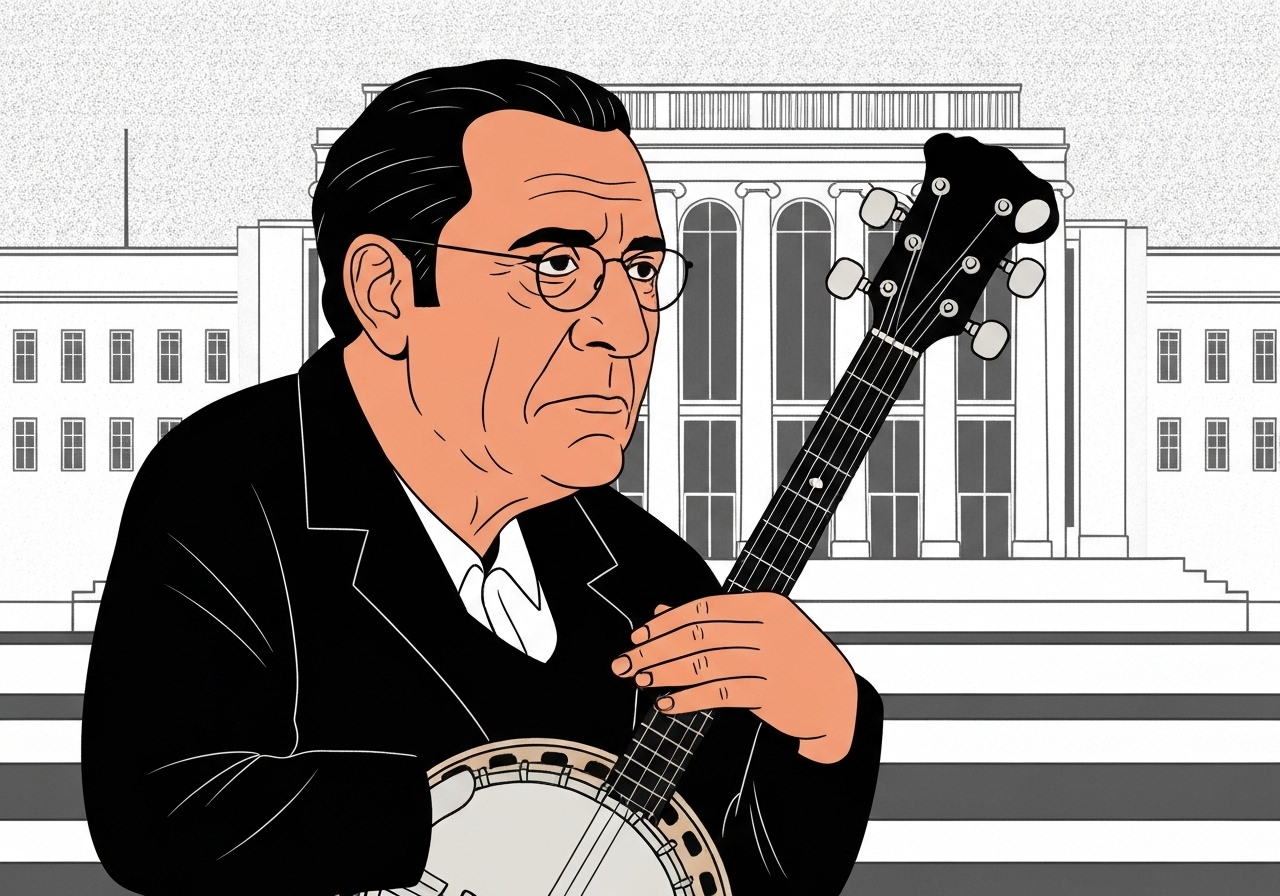
On , celebrated banjoist Béla Fleck announced he had withdrawn from three performances with the National Symphony Orchestra at the John F. Kennedy Center for the Performing Arts, saying the venue had become “charged and political.” Fleck, an 18-time Grammy winner who regularly collaborates with major orchestras, said he hopes to perform with the NSO again when the focus returns to music. The move follows months of leadership changes at the Kennedy Center and a growing string of artist cancellations tied to the institution’s new board and naming debate. The National Symphony Orchestra did not immediately respond to requests for comment.
- Fleck canceled three NSO performances scheduled for February 2026; he tweeted that performing at the Kennedy Center had become “charged and political.”
- Fleck has won 18 Grammy Awards and frequently appears with symphonies across the U.S., including a Feb. 2025 appearance at the 67th GRAMMY Awards Premiere Ceremony.
- In February 2025, President Trump removed the Kennedy Center’s former president Deborah Rutter and reshaped the board; that board later named Trump its chair.
- In December 2025 the board voted to add President Trump’s name to the institution; Democratic Congresswoman Joyce Beatty has filed a lawsuit challenging the renaming.
- Several artists have canceled Kennedy Center engagements amid the upheaval: Stephen Schwartz (announced Jan. 2, 2026), Chuck Redd (cancelled his Christmas Eve show; center announced a $1 million lawsuit), The Cookers, and Doug Varone and Dancers.
- Kennedy Center president Richard Grenell publicly criticized Fleck’s withdrawal on X, framing the dispute as political and accusing critics of partisanship.
Background
The Kennedy Center has been at the center of a controversy since senior leadership changes began in early 2025. In February 2025, the center’s previous president Deborah Rutter was removed amid a broader board turnover that included the ousting of former board chair David Rubenstein and several members appointed during the Biden administration. The new board slate includes political figures and media personalities appointed by the administration, and it subsequently selected President Trump as the center’s chair.
Those governance changes accelerated scrutiny of the institution’s direction. In December 2025 the board voted to append President Trump’s name to the center, a step that has not been finalized by Congress and is already the subject of legal challenge by Rep. Joyce Beatty, an ex officio board member. Artists and arts organizations have cited concerns over artistic independence and inclusivity, prompting a number of withdrawals from scheduled performances and fundraising events at the venue.
Main Event
Béla Fleck said on social media he had withdrawn from three scheduled performances with the National Symphony Orchestra next month, explaining that the Kennedy Center’s current environment felt politicized and no longer centered on music. Fleck emphasized he did not face a coordinated campaign urging him to cancel and expressed hope for future collaboration when conditions change. The National Symphony Orchestra did not reply to requests for comment on his decision.
Kennedy Center President Richard Grenell responded on X with a post that characterized Fleck’s decision as succumbing to pressure from a partisan “mob,” and framed the center as open to audiences across the political spectrum. Fleck replied by email, saying he had not “made it political; it already was,” and reiterated that music should emphasize expression, creativity and inclusivity rather than partisan debate.
Fleck’s cancellation follows a pattern: composer Stephen Schwartz withdrew from a planned Washington National Opera gala on Jan. 2, 2026, jazz drummer and vibraphonist Chuck Redd canceled his annual Christmas Eve show in December 2025 and the theater of events prompted the center to threaten litigation. Other ensembles, including The Cookers and Doug Varone and Dancers, have also pulled out of scheduled Kennedy Center engagements.
Analysis & Implications
The resignations and withdrawals highlight how governance decisions at flagship cultural institutions can ripple quickly through programming and donor relations. When boards become closely associated with partisan figures or political agendas, artists may reassess the reputational costs of performing at those venues. For orchestras and producing organizations, artist cancellations can disrupt seasons, reduce ticket sales and complicate fundraising efforts, particularly for events tied to gala donors and corporate sponsors.
Legal actions and public disputes—such as the Kennedy Center’s announced suit against Chuck Redd and Rep. Beatty’s lawsuit over the renaming—add a costly and unpredictable layer. Litigation could divert operating funds and staff time, deepen polarization around programming decisions, and create a chilling effect that deters touring artists and collaborators who fear reputational fallout or fan backlash.
At a broader level, the controversy raises questions about the governance of public cultural institutions. The Kennedy Center receives federal support and holds a national profile; changes in oversight and naming carry symbolic weight and could prompt congressional attention or legislative responses. If the dispute persists, audiences may see reduced diversity of programming and fewer premiere collaborations, affecting the center’s relevance to both local and national communities.
Comparison & Data
| Artist/Ensemble | Action | Timing |
|---|---|---|
| Béla Fleck | Withdrew from three NSO performances | Announced Jan. 7, 2026; performances slated for Feb. 2026 |
| Stephen Schwartz | Withdrew from Washington National Opera gala | Announced Jan. 2, 2026 |
| Chuck Redd | Cancelled Christmas Eve show; center announced $1M suit | Dec. 2025 |
| The Cookers, Doug Varone & Dancers | Withdrawn from scheduled performances | Late 2025 |
These cancellations span genres—classical, musical theater and jazz—underscoring that the dispute is affecting a wide cross-section of the performing arts. The combination of legal threats and public debate about governance has correlated with more frequent artist withdrawals in the last 12 months compared with the prior season.
Reactions & Quotes
“I have withdrawn from my upcoming performance with the NSO at The Kennedy Center. Performing there has become charged and political…”
Béla Fleck (social media post, Jan. 7, 2026)
“You just made it political and caved to the woke mob who wants you to perform for only Lefties… We want performers who aren’t political — who simply love entertaining everyone regardless of who they voted for.”
Richard Grenell, President, Kennedy Center (post on X)
“Music should be about expression, creativity and inclusivity. This current dialogue doesn’t seem to be about any of those things.”
Béla Fleck (email response to media)
Unconfirmed
- Claims that a coordinated, large-scale campaign forced Fleck’s withdrawal have not been substantiated; Fleck himself said no “mob” pressured him.
- Whether additional artists will announce cancellations or whether contract disputes will lead to further litigation remains uncertain.
Bottom Line
Béla Fleck’s withdrawal from Kennedy Center performances is the latest in a series of artist decisions tied to leadership and naming controversies at one of the nation’s premier cultural institutions. The departures and threats of litigation illustrate how governance choices can quickly affect programming, fundraising and public perception.
Key items to watch are the outcome of legal challenges over the renaming, any congressional response to the board changes, and whether major artists and ensembles resume engagements once perceived political pressures ease. For audiences and arts managers alike, the episode underscores the fragility of institutional reputation and the centrality of perceived artistic independence.
Sources
- NPR (news report)
- John F. Kennedy Center for the Performing Arts (official institution site)