
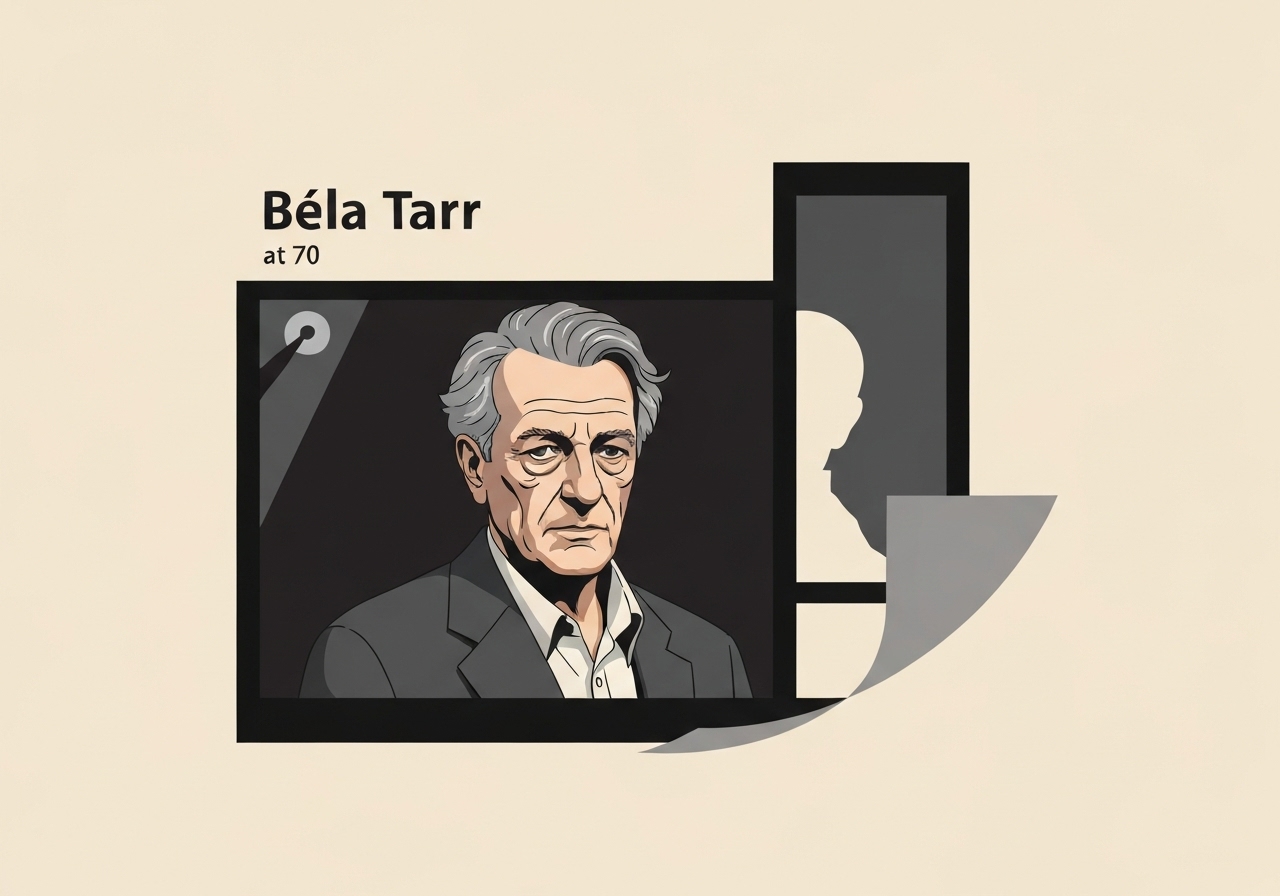
Lead: Béla Tarr, the Hungarian director whose austere, long-form films including Satantango and Werckmeister Harmonies reshaped art-house cinema, died on Jan. 6, 2026, in a Budapest hospital at age 70. His stepdaughter, Reka Gaborjani, said he passed after a series of extended, serious illnesses. Tarr, born in Pécs in 1955, rose from early, socially minded dramas to a distinctive cinematic language marked by prolonged takes and bleak atmospheres. His death removes one of Europe’s most singular filmmakers from the international festival and critical circuits.
Key Takeaways
- Béla Tarr died Jan. 6, 2026, in Budapest at 70, confirmed by his stepdaughter Reka Gaborjani.
- Born in Pécs in 1955, he began making films at 16 while working in jobs such as a shipyard laborer and a receptionist.
- His feature debut, Family Nest, premiered in 1979; over the next decades he directed a small but influential body of work including Satantango and Werckmeister Harmonies.
- Satantango, often described as roughly seven hours long, became his best-known work and a touchstone of “slow cinema.”
- Agnes Hranitzky, his partner since 1978, was a longtime collaborator responsible for editing many of his films.
- The European Film Academy noted his early start and lasting impact on European art cinema in their statement.
- Critics regularly singled out Tarr’s ability to find formal beauty in bleak subject matter and to slow audience temporality through extended takes.
Background
Béla Tarr was born in 1955 in Pécs, Hungary, during the period of Communist rule. He began making short films as a teenager while taking on a variety of manual and service jobs to support himself. Tarr’s earliest features, including the 1979 drama Family Nest, were rooted in social realism and domestic concerns common to Eastern European cinema of the period.
Across eight subsequent features he evolved a radically different approach: sparse dialogue, long uninterrupted camera movements, and monochrome palettes that stretched narrative time. That formal shift aligned him with what critics later labeled “slow cinema,” a loose grouping emphasizing duration, minimalism, and atmosphere. Throughout his career Tarr remained outside mainstream commercial cinema but central to festival programs and cinephile debate.
Main Event
On Jan. 6, 2026, Béla Tarr died in a Budapest hospital. His stepdaughter, Reka Gaborjani, told reporters that he had suffered a succession of serious illnesses before his death, but public statements have not listed a precise medical cause. The European Film Academy issued a notice acknowledging his passing and highlighting his unconventional trajectory as a filmmaker who began working at 16.
Tarr’s reputation rests largely on a handful of films that reached international audiences through festivals and retrospectives rather than broad commercial distribution. Satantango, often presented in its full, multi-hour form at festivals and art-house screenings, and Werckmeister Harmonies, released in 2000, remain the most frequently cited entries in his filmography.
Agnes Hranitzky, Tarr’s creative partner since 1978, played a sustained role in shaping his later films through editing and collaborative work in postproduction. Colleagues and festival organizers have highlighted the partnership as integral to the distinctive rhythm and compositional logic of Tarr’s late work.
Analysis & Implications
Tarr’s death invites a reassessment of how duration and austerity operate in contemporary cinema. His films demanded patience from audiences and programmers alike, and in doing so helped sustain circuits—festivals, repertory theaters, and academic forums—that value experimentation over immediacy. As streaming platforms and multiplex economies emphasize short attention spans and algorithmic repeatability, Tarr’s career is a reminder of an alternative cinematic logic that privileges temporal immersion.
Institutionally, the loss is felt most keenly in European film culture, where Tarr’s work influenced younger filmmakers and shaped programming choices at festivals and museums. Retrospectives and restorations of his films will likely accelerate in the months ahead, offering opportunities for renewed critical engagement and for archives to secure definitive prints or restorations.
Economically, Tarr’s films never generated large box-office returns, but they had outsized effect on film scholarship, curation, and a niche international market for auteur-driven releases. The continued interest in physical restorations, boutique home-video editions, and specialty theatrical runs suggests Tarr’s work will retain cultural and market value in the archival and collector sectors.
Comparison & Data
| Film | Year | Runtime (category) |
|---|---|---|
| Family Nest | 1979 | Feature (conventional runtime) |
| Satantango | 1994 | Extended (about seven hours in festival presentations) |
| Werckmeister Harmonies | 2000 | Feature (festival-length but much shorter than Satantango) |
Context: Satantango’s unusually long exhibition challenged programming norms and became emblematic of Tarr’s formal ambition. Werckmeister Harmonies, by contrast, demonstrated how Tarr applied the same aesthetic principles at a more conventionally programmatic length, widening his critical reception without sacrificing formal rigor.
Reactions & Quotes
“He died after a series of long and serious illnesses,”
Reka Gaborjani, stepdaughter
Gaborjani’s brief confirmation provided the immediate family account of Tarr’s passing while leaving clinical specifics private.
“He began making films at 16 and became a singular voice in European cinema,”
European Film Academy (official statement)
The academy emphasized Tarr’s early start and lasting influence across film culture and education.
“Satantango stands as his masterpiece,”
Manohla Dargis, film critic
Critics have long singled out Satantango for its formal audacity; such assessments underscore how a small number of titles can define a filmmaker’s international reputation.
Unconfirmed
- No official medical cause of death has been released; reports cite only “long and serious illnesses.”
- Details about the duration and timing of his final hospitalization have not been publicly confirmed.
- Any uncompleted projects or scripts under development have not been publicly documented at this time.
Bottom Line
Béla Tarr’s passing marks the end of a career that deliberately resisted commercial pressures and reshaped expectations about cinematic time. His films—few in number but vast in ambition—will continue to be studied, restored, and screened in specialized venues where audiences seek a different tempo of viewing.
In the months ahead expect retrospectives, critical essays, and archival initiatives to reassert Tarr’s place in 20th- and 21st-century film histories. For filmmakers and programmers, his legacy poses a continuing question: how to sustain spaces for work that demands prolonged attention in an era of abbreviated viewing habits.
Sources
- The New York Times (media report)
- European Film Academy (official statement)