
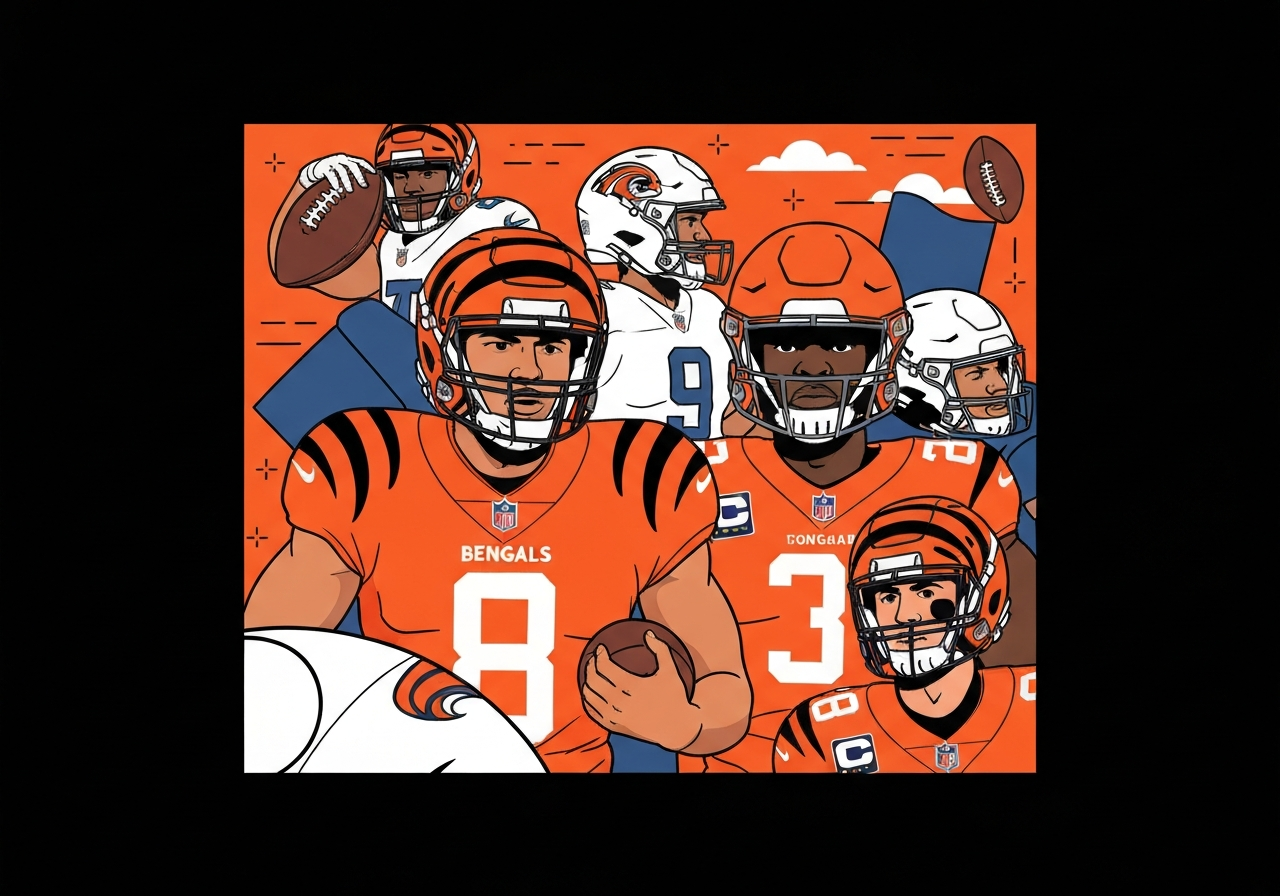
As the new league year opened, teams spent, reshaped rosters and signaled where they expect to be when the 2026 campaign begins. This first post–free agency power ranking set weighs early veteran additions and trades to judge which clubs improved their short- and medium-term odds. The list finds familiar names climbing back into contention—most notably the Cincinnati Bengals and Washington Commanders—while highlighting teams that banked on veteran signings to extend or reopen their competitive windows.
Key takeaways
- Seattle sits atop this first post-free-agency list after keeping offensive continuity—retaining Rashid Shaheed and signing Jaxson Smith-Njigba to a market-setting deal—aimed at preserving a Super Bowl–caliber scheme.
- Los Angeles Rams remade a glaring weakness by overhauling their cornerback room, betting their window for Stafford’s era remains open for at least one more season.
- Denver’s acquisition of Jaylen Waddle is a seismic roster move expected to produce deep-touchdown plays and reshape Sean Payton’s pass offense.
- San Francisco’s Mike Evans signing is judged among the top value moves of free agency for creating easier running lanes for Christian McCaffrey.
- Kansas City added Kenneth Walker III plus defensive help (Alohi Gilman, Khyiris Tonga), a mix designed to relieve Patrick Mahomes and reboot defensive ideology under Steve Spagnuolo.
- Buffalo’s Jim Leonhard–led defense received Bradley Chubb and secondary upgrades, signaling a clear strategic retrofit rather than a splashy overhaul.
- Washington’s targeted, non-glamour signings (Chig Okonkwo, Leo Chenal, K’Lavon Chaisson) move the Commanders back toward true contender status without reckless spending.
- Not all moves equal progress: Miami traded Jaylen Waddle and still projects a weakened skill-position group entering 2026, while Arizona faces instability behind a thin QB depth chart.
Background
Historically, heavy free-agent spending has not guaranteed more wins, but the league’s evolving draft outcomes and modern longevity science have shifted that calculus. The NIL era produced more variable draft production, making veteran proven players comparatively more valuable when windows open. At the same time, training, recovery and medical management—topics thrust into public view by high-profile recoveries such as Matthew Stafford’s—have lengthened meaningful careers and raised the payoff for certain veteran contracts.
Teams now approach early waves of veteran free agency with a dual lens: immediate roster function and alignment with multi-year cap planning toward the 2026 offseason. General managers face pressure to balance short-term competitiveness with the risk of hampering future flexibility. That balance explains why some clubs pursued marquee names while others prioritized plug-and-play veterans who fit specific schematic needs.
Main event
Seattle’s offseason was conservative in profile but disruptive in effect: the front office prioritized keeping the offense’s core intact and complemented it with a market-setting deal for Jaxson Smith-Njigba. That approach preserves the scheme continuity that carried them through the playoffs and into the Super Bowl, while avoiding a wholesale reset that could have jeopardized their immediate window.
The Rams elected to obliterate their cornerback corps in free agency, addressing their most glaring deficiency from 2025. With a rebuilt back end, defensive coordinator Chris Shula can game-plan without the repeated coverage breakdowns that plagued Los Angeles last season. The expectation is a smoother pass defense and fewer matchup nightmares for an offense still led by Matthew Stafford.
Denver’s trade for Jaylen Waddle rates as a major ripple-maker. The Broncos acquired a pure vertical threat to fix an offense that badly needed explosive scoring ability downfield. While questions about Waddle’s durability persist, he projects to be among league leaders in long touchdown plays and to materially change the Broncos’ red-zone and deep-pass production.
San Francisco’s signing of Mike Evans is a textbook veteran move that shifts defensive attention away from the run game and Christian McCaffrey. Evans’ presence should force linebackers and safeties into simpler assignments, potentially reviving gap-running opportunities. The 49ers still face aging-roster management but added a piece built to drive immediate offensive efficiency.
Kansas City’s additions blend both short-yardage and schematic relief: Kenneth Walker III brings a physical run-game complement for Patrick Mahomes, while Alohi Gilman and Khyiris Tonga shore up positional needs on defense. Those signings are meant to accelerate an ideological change on defense and give Andy Reid’s offense more comfortable play-calling options.
Analysis & implications
One clear theme is targeted veteran investment over blockbuster spending for its own sake. Teams such as Washington and Cincinnati prioritized positional fits that address schematic deficits rather than chasing headline names. That approach reduces downside: veterans who slot into role-specific tasks can move the needle without carrying outsized cap risk.
Another implication is the shifting balance between windows and long-term rebuilds. For clubs with quarterbacks on short-term trajectories—veteran QBs or QBs coming off injuries—front-loaded veteran spending can be meaningful. But for younger franchises, the trade-off between veteran help and draft capital still causes hesitation, as seen in franchises that largely sat on their hands during the first waves.
Defensive overhauls dominated headlines because many teams felt last season’s results exposed schematic weaknesses. The Rams, Raiders and several AFC clubs invested heavily in edge and secondary talent, betting that incremental defensive improvement will translate into more consistent late-game performance. These are low-variance plays compared with swinging for game-changing offensive signings.
Finally, cap trajectories into the 2026 offseason matter. Some teams bought win-now pieces that could limit flexibility later; others used short-term, roster-friendly contracts to leave room for a draft- or trade-driven push. How teams manage those constraints will determine whether this class of signings becomes a catalyst for contention or a temporary Band-Aid.
Comparison & data
| Team | Top additions | Why it matters |
|---|---|---|
| Seattle Seahawks | Rashid Shaheed retained, Jaxson Smith-Njigba signing | Preserves offensive continuity that fueled playoff run |
| Los Angeles Rams | Multiple cornerback signings | Remedies primary defensive flaw from 2025 |
| Denver Broncos | Acquired Jaylen Waddle | Transforms deep-pass threat profile |
| San Francisco 49ers | Mike Evans | Opens running lanes for Christian McCaffrey |
| Kansas City Chiefs | Kenneth Walker III, Alohi Gilman, Khyiris Tonga | Relieves Mahomes and upgrades defensive structure |
| Buffalo Bills | Bradley Chubb, secondary upgrades | Retrofits defense for Jim Leonhard’s system |
This snapshot focuses on the front half of the rankings to illustrate how targeted veteran moves affected positional balance and schematic fit. The table shows that the teams rising in the pecking order mostly made additions that solve a clear tactical problem rather than pursuing luxury talent without a planned role.
Reactions & quotes
These signings put us in a better position to compete immediately while preserving our identity,
Team statement (general manager)
Adding proven veterans who fit the scheme is a smarter path than signing names for headlines,
League analyst
Fans on social platforms reacted with a mix of optimism and skepticism, highlighting the risk-versus-reward calculus for expensive veteran deals,
Public reaction (social media)
Unconfirmed
- The exact causal role of specific recovery protocols (e.g., treatments attributed to Matthew Stafford) in producing his 46-touchdown, MVP season remains disputed and not fully verified.
- Long-term durability for Jaylen Waddle following the trade is an open question until multiple regular-season games validate health projections.
- Aaron Rodgers’ playing status remains unsettled publicly until the player or team issues an official retirement or roster declaration.
Bottom line
The first post-free-agency power rankings show clubs using the market to answer immediate schematic needs rather than simply spending for spectacle. Teams that prioritized fit—Seattle, San Francisco, Kansas City, Washington—appear best positioned to convert signings into wins over the next 12–18 months. Denver’s Waddle trade and the Rams’ secondary rebuild are two of the most consequential moves, each reshaping offensive or defensive identity in measurable ways.
Looking ahead, cap management and health will determine whether these additions are sustainable foundations or stopgaps that require further investment. The 2026 offseason looms as the next inflection point: teams that balanced short-term gain with future flexibility will have the clearest path to sustained contention.