
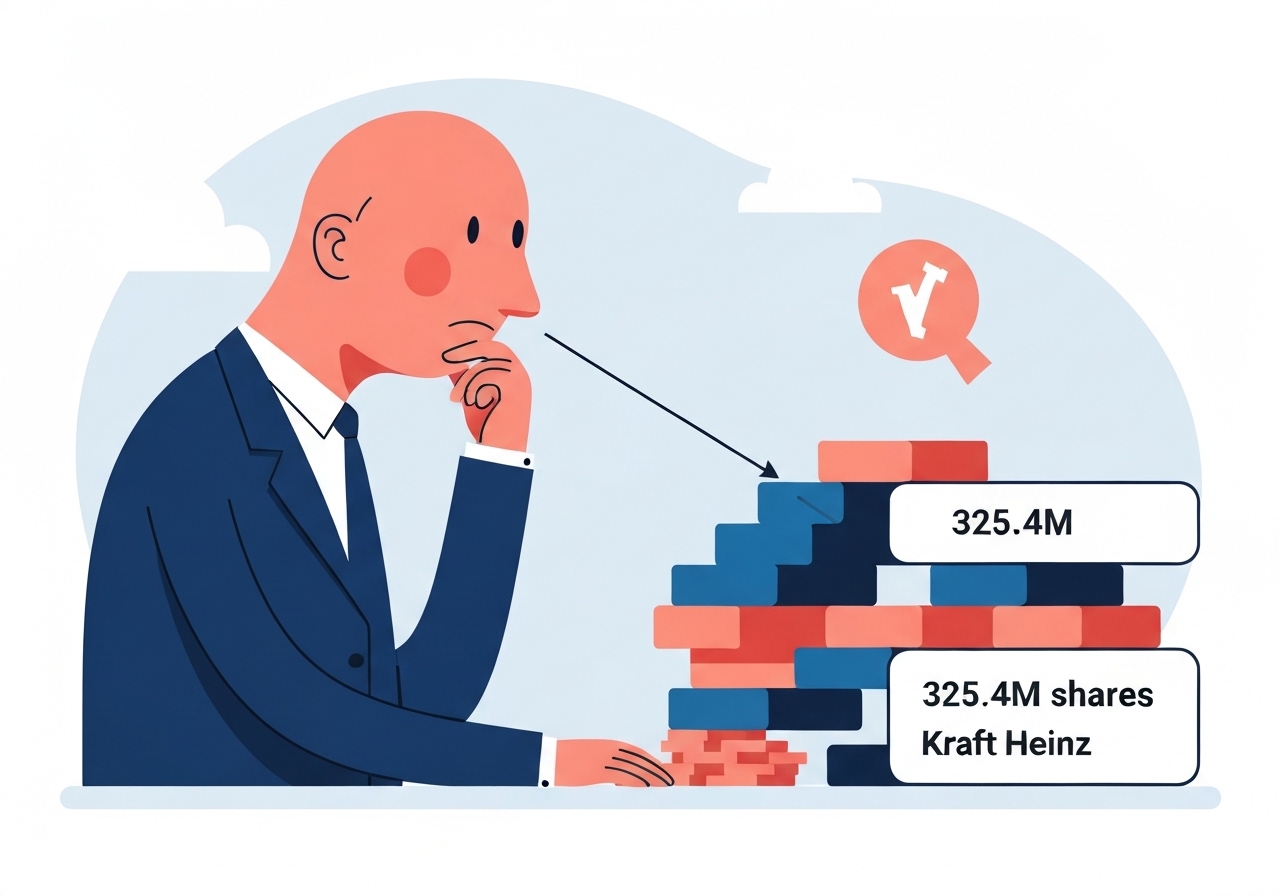
Lead: In Omaha, Nebraska, after a regulatory filing on Tuesday, Kraft Heinz disclosed that Berkshire Hathaway may offer up to 325,442,152 shares of the packaged-food company that Warren Buffett and 3G Capital helped create in 2015. The disclosure comes days after Greg Abel assumed the role of Berkshire Hathaway CEO on Jan 1, with Buffett remaining chairman. Kraft Heinz stock fell nearly 4 percent to 22.85 after the filing, and Berkshire did not immediately answer questions about whether any sales have begun. The move would mark a rare large divestiture for Berkshire if completed.
Key Takeaways
- Berkshire Hathaway is listed as possibly offering 325,442,152 Kraft Heinz shares in a regulatory filing disclosed Tuesday, a stake representing the conglomerate’s largest single holding in the company it helped merge in 2015.
- Kraft Heinz shares fell about 4 percent to 22.85 on the news, reflecting market concern over a potential supply of large blocks of stock hitting the market.
- Berkshire took a 3.76 billion dollar writedown on its Kraft Heinz stake last summer, signaling diminished confidence in the asset under Buffett’s tenure.
- Greg Abel became CEO of Berkshire Hathaway on Jan 1 while Warren Buffett remains chairman, prompting investor attention on whether Abel will change strategy.
- Analysts note Berkshire’s public equity portfolio exceeds 300 billion dollars and the conglomerate controls insurers, utilities, BNSF railroad and other operating businesses, complicating any large-scale divestiture plan.
- Berkshire representatives resigned from the Kraft Heinz board last spring and Buffett expressed disappointment last fall about Kraft Heinz plans to split the company in two.
Background
In 2015 Warren Buffett and 3G Capital combined Kraft and Heinz after Berkshire already held Heinz, citing strong brands and expected efficiencies from the merger. At the time the deal was presented as a classic Buffett commitment to durable consumer franchises paired with 3G Capital’s cost discipline. Over subsequent years, however, shifting consumer preferences toward private labels and fresher options eroded confidence in processed-food brands that had once been seen as having wide moats.
That reassessment crystallized last summer when Berkshire recorded a 3.76 billion dollar writedown on its Kraft Heinz position, acknowledging the investment had underperformed expectations. Berkshire also withdrew its board representatives from Kraft Heinz last spring, and Buffett publicly criticized parts of the company’s strategic plans. Together those moves signaled growing tension between Berkshire and Kraft Heinz management.
Main Event
The immediate trigger was a regulatory filing disclosed by Kraft Heinz on Tuesday stating its largest shareholder may, from time to time, offer to sell 325,442,152 shares. The filing did not say that sales have begun or specify timing, manner, or buyers. Market reaction was swift: Kraft Heinz stock traded down roughly 4 percent to 22.85 following the disclosure.
Berkshire has not confirmed an active sale, and the filing language is permissive rather than definitive. Large shareholders often file broad notices to maintain flexibility for future transactions, which can range from orderly block trades to gradual portfolio rebalancing. Because the stake is so large, any attempt to sell on the open market could pressure the share price unless structured with one or more institutional buyers.
Investors and analysts immediately speculated about what a sale would mean under Greg Abel, who took on the CEO role on Jan 1. Abel has overseen Berkshire’s non-insurance businesses since 2018 and is familiar with many subsidiaries, but this disclosure raises questions about whether he will pursue more active portfolio pruning than Berkshire historically practiced under Buffett.
Analysis & Implications
If Berkshire moves to sell the Kraft Heinz position, the implications are multi-layered. For Kraft Heinz, even a planned, phased disposal could depress the stock as markets price in added supply and uncertainty about strategic direction. For Berkshire, selling would represent a tactical departure from decades of accumulation and long-term holding, suggesting a potentially more flexible approach to portfolio management under Abel.
The mechanics matter. A managed block sale to a large buyer or buyers would limit price disruption, but Buffett indicated last fall that Berkshire would not accept a block bid unless the same offer was made to all Kraft Heinz shareholders, adding a fairness constraint that could discourage private block purchases. Selling incrementally in open market trades would likely take time and could weigh on the share price.
Beyond the immediate market effects, the move would signal to investors that Berkshire may more actively reassess underperforming assets across its businesses and the more than 300 billion dollar stock portfolio. That could lead to heightened scrutiny of other legacy holdings and the valuation assumptions investors apply to a conglomerate long prized for buy-and-hold stability.
Comparison & Data
| Item | Figure |
|---|---|
| Shares disclosed in filing | 325,442,152 |
| Kraft Heinz share price reaction | Down ~4% to 22.85 |
| Berkshire writedown on Kraft Heinz | $3.76 billion |
| Berkshire public stock portfolio | Over $300 billion |
The table frames the immediate numerical context. The size of the stake relative to average daily trading volume will affect how rapidly shares could be monetized without depressing market prices. Berkshire’s large and diversified asset base gives it options beyond an immediate open-market sale, including negotiated block trades or structured transactions designed to protect value.
Reactions & Quotes
My sense is that Greg Abel’s leadership style may be a departure from Buffett’s
Cathy Seifert, CFRA Research (analyst)
Seifert suggested the filing could mark the start of a broader review of Berkshire’s holdings, with management willing to discard assets that don’t meet internal hurdles. Her comment reflects industry expectations that new leadership often reassesses portfolios and governance practices.
Selling Kraft is probably the most low-hanging fruit for Greg
Chris Ballard, Check Capital (investor)
Ballard noted practical constraints on an immediate sale given the stake’s size and speculated about the possibility of a large buyer taking a block. He also observed that many investors would not miss the holding, indicating mixed sentiment among shareholders.
Unconfirmed
- There is no public confirmation that Berkshire has started selling any Kraft Heinz shares at the time of this report.
- It is not confirmed whether Berkshire has identified any large prospective buyer for the entire stake or sizable blocks of shares.
- Reports that Greg Abel will order a broad divestiture program across Berkshire subsidiaries remain speculative and unverified.
Bottom Line
The regulatory filing by Kraft Heinz puts a spotlight on Berkshire Hathaway’s largest single holding in the food company and marks one of the first tests of Greg Abel’s approach as CEO. Even the possibility of an eventual sale has immediate market effects, as evidenced by a nearly 4 percent drop in Kraft Heinz shares after the disclosure.
How any sale would be executed will determine its market impact and signal more about Berkshire’s future strategy than the filing itself. Investors should watch for subsequent disclosures, potential block-trade reports, or statements from Berkshire and Kraft Heinz. For now the filing raises important questions about ownership, strategy, and how a post-Buffett Berkshire may balance long-term holding with active portfolio management.
Sources
- AP News – Kraft Heinz, Berkshire Hathaway filing (news)
- Kraft Heinz Company – Investor relations (official investor filings)
- Berkshire Hathaway – Company site (company)