
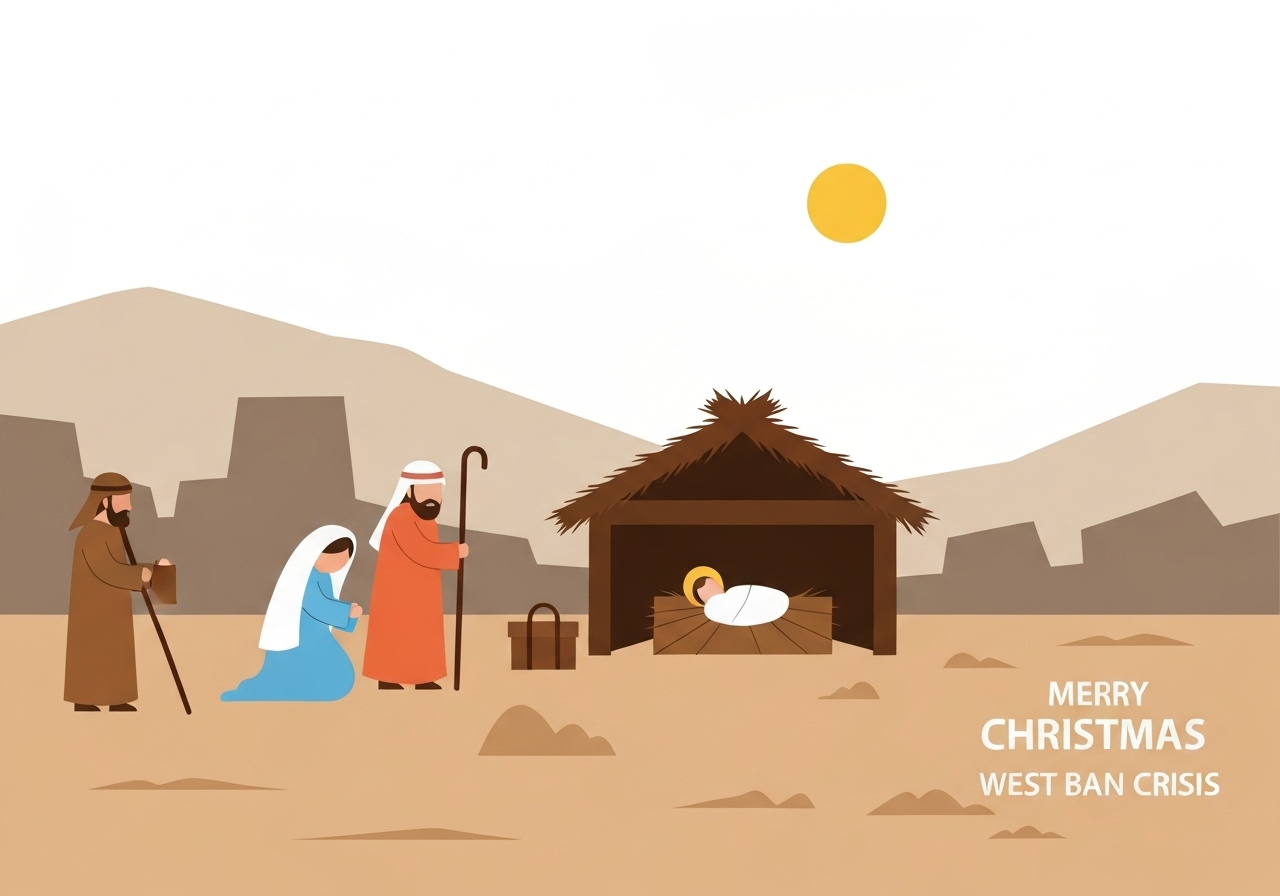
Christmas services resumed in Bethlehem on Thursday, Dec. 25, 2025, as morning mass took place at the Church of the Nativity and limited crowds gathered on Manger Square after a two-year pause. The return of public celebrations followed a suspension observed in solidarity with Palestinians affected by the Gaza war, but the festivities were muted by ongoing hardship across the occupied West Bank. Local leaders and aid agencies say movement restrictions, rising demolitions and a spike in displacement have constrained attendance and overshadowed the holiday. Official figures and humanitarian reports point to a year of intensified violence, dispossession and policy shifts that residents say undercut any sense of normalcy.
Key Takeaways
- Public Christmas events resumed in Bethlehem on Dec. 25, 2025, after a two-year halt; morning mass was held at the Church of the Nativity.
- Palestinian politician Mustafa Barghouti said Israeli checkpoints and restricted movement limited who could attend, describing the West Bank as ‘under siege’ to visiting journalists.
- UN OCHA reported that in 2025 more than 30,000 Palestinians were forcibly displaced in the West Bank, calling it the longest and largest displacement crisis there since 1967.
- At least 233 Palestinians were killed in the West Bank in 2025, including 52 children, according to OCHA data; many fatalities were attributed to live ammunition used by Israeli forces.
- Israeli authorities approved moves this month to legalize 19 settler outposts, while in May plans were announced for 22 new settlements, measures watchdogs call the largest expansion in over 30 years.
- Humanitarian groups such as the Norwegian Refugee Council describe a record number of home and structure demolitions in 2025 and characterize some destruction as part of a deliberate dispossession policy.
Background
The West Bank has been under Israeli military occupation since 1967 and is home to more than 3.3 million Palestinians. Decades of military control, settlement activity and an often stalled diplomatic process have made the territory a focal point for longstanding Israeli-Palestinian tensions. Since the October 7, 2023 Hamas attack and the subsequent Gaza war, the West Bank has seen a marked intensification of military operations, punitive measures and settlement activity, according to humanitarian monitors and diplomatic sources. That shift has coincided with political fractures among Palestinian leadership and rising accusations of corruption and paralysis within local institutions.
Humanitarian agencies report that 2025 brought unusually heavy civilian harm and forced displacement in the West Bank, with whole neighborhoods uprooted because of demolitions or insecurity. The combination of movement restrictions, checkpoints and heightened operations has constrained economic life, market access and humanitarian deliveries in several urban and rural areas. International law debates continue about the status of settlements and outposts, with most legal experts and the United Nations viewing the expansion as a violation of international norms. Within Israel, political currents have pushed for accelerated settlement policy, framing expansion as a security and historical imperative.
Main Event
On Christmas Eve and into Dec. 25, limited processions and gatherings returned to Bethlehem, where both Palestinians and foreign visitors attended events in and around Manger Square. Organizers said numbers were well below typical pre-2023 levels, as many Palestinians faced barriers to travel caused by checkpoints, permit restrictions and economic strain. Mustafa Barghouti told visiting journalists that blocked roads and travel costs prevented many from taking part, a point that local monitors and residents echoed on the ground.
At the same time, the year has been marked by frequent Israeli military raids and operations in West Bank cities, often aimed at militant groups and individual suspects. Those operations have been accompanied by a substantial rise in demolitions of homes and structures, frequently cited by humanitarian groups as a cause of forced displacement. The United Nations Office for the Coordination of Humanitarian Affairs said more than 30,000 people were displaced in 2025, describing the scale as unprecedented in recent decades.
Settlement policy developments also shaped the atmosphere: the Israeli cabinet approved measures this month to recognize or legalize 19 settler outposts, and in May the government announced plans for 22 new settlements, moves that international observers warned could further erode prospects for a negotiated two-state solution. Local residents in Bethlehem and nearby towns described a holiday marked by solemnity rather than celebration, as families tended to security concerns and the needs of relatives affected by displacement or detention.
Analysis & Implications
The return of Christmas services in Bethlehem offers a symbolic moment of resilience, but the underlying trends suggest deeper challenges for daily life and the political horizon. Large-scale displacement and rising civilian casualties intensify humanitarian needs and could destabilize already fragile municipal services, displace communities from agricultural land and raise food and water insecurity in affected areas. International relief agencies are likely to face increasing demand for shelter, legal aid and psychosocial support in the coming months.
Politically, the legalization of outposts and the announcement of new settlements amplify the gap between Israeli domestic policy and international diplomatic calls for restraint. These measures reduce the contiguity of Palestinian population centers and complicate any future territorial compromise, prompting condemnations from multiple foreign governments and a recalibration of mediation efforts. If settlement expansion continues alongside forcible displacements, trust in negotiations will weaken and unilateral facts on the ground will harden.
Security dynamics also carry regional implications: sustained operations and growing civilian tolls can fuel cycles of retaliation, radicalize segments of the population and influence neighboring states’ diplomatic positions. Economic consequences are tangible too: movement constraints and loss of homes and livelihoods will depress local commerce, reduce tax bases for Palestinian authorities and increase dependency on humanitarian assistance. For international actors, the challenge is to balance immediate relief with pressure and incentives aimed at preventing further escalation and protecting civilians.
Comparison & Data
| Measure | 2025 Figure / Action |
|---|---|
| Forced displacement (West Bank) | More than 30,000 people (UN OCHA, Nov. 2025) |
| Fatalities in 2025 (West Bank) | At least 233 Palestinians killed, including 52 children (OCHA) |
| Settler expansions announced | 19 outposts legalized this month; 22 new settlements announced in May |
| Population | Over 3.3 million Palestinians in the West Bank |
The figures above underline a year of intensified humanitarian pressure compared with recent years, according to UN and NGO reports. Displacement on the scale reported by OCHA marks a notable departure from previous patterns and signals widespread destruction or loss of access to homes and livelihoods. Settlement approvals and outpost legalizations change facts on the ground in ways that are hard to reverse, while casualty figures reflect both operational tempo and rules of engagement that international monitors scrutinize. Policymakers and aid planners use such comparative data to prioritize response, protection and advocacy measures.
Reactions & Quotes
Local politicians and humanitarian officials framed the holiday return as constrained by security and movement policies. Their statements were short but direct about causes and consequences for civilians.
“The West Bank is completely under siege; Israel has blocked the roads,”
Mustafa Barghouti, Palestinian politician
Barghouti’s remarks were made in Bethlehem to international media and reflect a common local explanation for low attendance at Christmas events. Observers on the ground corroborated reports of checkpoints and permit hurdles that affected travel between towns and to Bethlehem.
“Families are being stripped of homes, water and livelihoods in a calculated effort to drive them from their land,”
Angelita Caredda, Regional Director, Norwegian Refugee Council
The NRC statement characterized demolitions and losses as deliberate dispossession; humanitarian groups use such language to press for international protection and accountability, while Israeli officials dispute or contextualize specific cases as enforcement of planning and security rules.
“We are blocking on the ground the establishment of a Palestinian terror state,”
Bezalel Smotrich, Israeli Finance Minister
Statements by senior Israeli ministers frame settlement growth as a security and ideological imperative. Such rhetoric clarifies the domestic political drivers behind settlement policies and helps explain why expansion has proceeded despite international criticism.
Unconfirmed
- Whether every demolition in 2025 was carried out as part of a coordinated, central policy of dispossession remains contested and has not been independently verified in each instance.
- Exact numbers for ‘record’ demolitions in 2025 vary by source; consolidated, itemized public tallies for the full year are still being compiled by some monitoring groups.
- The long-term legal status of newly legalized outposts and the administrative steps required to formalize them are subject to internal Israeli processes and have not been fully documented in all cases.
Bottom Line
The resumption of Christmas services in Bethlehem is a significant symbolic moment, but it does not signal a return to normal conditions for most West Bank residents. Deep-seated drivers of displacement, settlement expansion and security operations remain in place and are likely to shape daily life and political options in the near term. Humanitarian needs are rising, and the combination of forced displacement and settlement growth will complicate any future negotiations about borders or governance.
For international actors and local communities, immediate priorities include protecting civilians, ensuring access to shelter and basic services, and documenting rights violations for accountability purposes. Observers should watch further settlement approvals, rates of demolition and displacement, and any changes to access and movement that would affect humanitarian operations and civilian life.
Sources
- CNN — (international news outlet; primary report on Bethlehem events)
- UN OCHA oPt — (United Nations humanitarian coordination; displacement and casualty data)
- Norwegian Refugee Council — (international NGO; statements on demolitions and dispossession)
- Peace Now — (Israeli settlement watchdog; reporting on settlement expansion)