
Lead
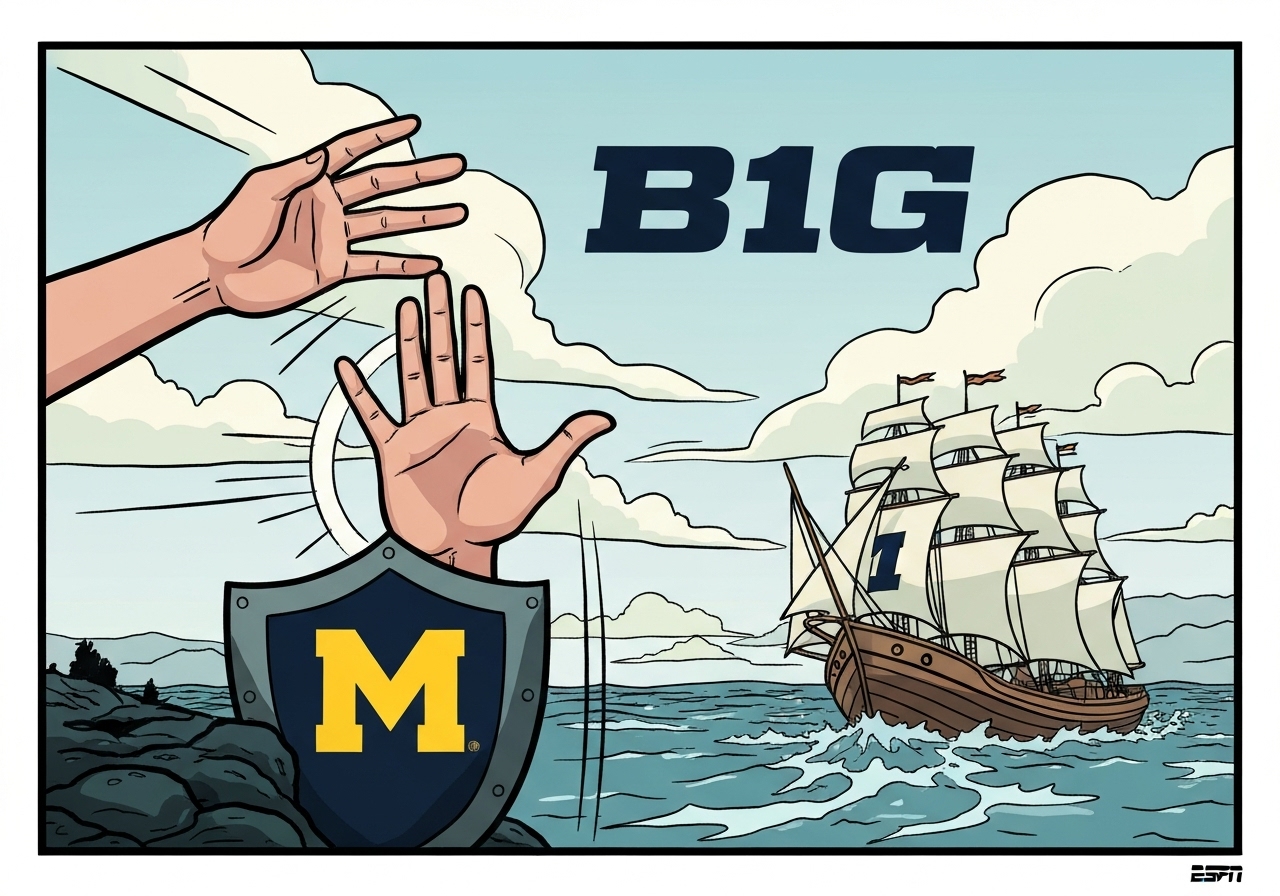
On Nov. 18, 2025 in Ann Arbor, Mich., a dispute erupted between the Big Ten Conference and University of Michigan regent Mark Bernstein after Bernstein said Commissioner Tony Petitti threatened penalties if Michigan declined to back a $2.4 billion private equity proposal. The Big Ten has formally denied any coercion, saying member discussions have been collaborative since a working group formed in 2024. The disagreement has intensified scrutiny of governance, revenue-sharing and potential tax and control implications for the league’s 18 schools. The dispute has left several governing boards, congressional offices and outside investors seeking clarity on process and timelines.
Key takeaways
- Regent Mark Bernstein alleged on Nov. 18, 2025 that Commissioner Tony Petitti threatened sanctions if Michigan did not support a $2.4 billion private investment plan; Bernstein declined to provide specifics.
- The Big Ten, through Maryland President Darryll Pines as Council chair, said the working group — chaired in 2024 by then-University of Michigan president Santa J. Ono — has included Michigan and followed a collaborative process.
- UC Investments proposed up to $2.4 billion up front in exchange for a 10% cut of Big Ten media rights and sponsorship revenue, with payments distributed to 18 schools on a tiered basis through 2046.
- Every school that opted into the House settlement can share up to $20.5 million with athletes this academic year; that figure is expected to rise over time.
- USC and Michigan have expressed reservations; USC athletic director Jennifer Cohen warned the distribution would be uneven, and several Michigan regents called for more governance review.
- UC Investments’ CIO Jagdeep Singh Bachher praised conference leadership while saying more due diligence time is needed; he also warned that recent misinformation has distorted aspects of the effort.
- Sen. Maria Cantwell has asked the congressional Joint Committee on Taxation to analyze how outside funding might affect tax-exempt status for college athletics.
Background
Collegiate athletics has been under financial strain since major shifts in media markets, name-image-and-likeness rules and a landmark House settlement altered traditional revenue streams. Athletic departments across the Power Five and other conferences have sought new capital to stabilize budgets, meet scholarship and facility costs, and compete on an expanded national stage. The Big Ten’s leadership began exploring external funding and commercialization options in 2024 after interest from institutional investors, forming a working group to assess structures that could generate long-term revenue.
UC Investments, the manager of the University of California system’s public funds, was approached in July to consider underwriting a commercial entity, Big Ten Enterprises, that would pay schools up front and take a minority share of media and sponsorship rights. Proponents see a large upfront infusion as a way to address legacy liabilities and invest in student-athlete support, while critics worry private capital will prioritize returns, alter governance and concentrate influence among wealthier members.
Main event
The immediate flashpoint came when Michigan regent Mark Bernstein told reporters the conference commissioner had threatened penalties if Michigan did not approve the UC Investments proposal. Bernstein said those comments “call into question” Commissioner Petitti’s leadership but provided no specifics about the alleged penalty or the setting in which the remarks were made. The timeline places Bernstein’s public remarks on Nov. 18, 2025, after months of internal discussion led by the Council of Presidents and Chancellors.
The conference pushed back the same day. Maryland President Darryll Pines, who chairs the Council, reiterated that the working group process beginning in 2024 included Michigan and other members and that the conference office has engaged transparently. Pines also said Michigan retained a consultant and that the conference continues to coordinate with that consultant at Michigan’s direction, signaling the school remains part of the evaluation process.
Several member institutions have voiced concrete concerns. USC athletic director Jennifer Cohen sent a letter to boosters saying the deal would create “uneven” revenue distribution and stressing USC would protect its own interests. Other Michigan regents, including Sarah Hubbard and Jordan Acker, said they had not been given a vote deadline and expressed unease about private equity involvement. Bernstein called the proposal “reckless” and argued governing boards have not fully vetted the transaction.
UC Investments’ CIO Jagdeep Singh Bachher publicly praised conference leadership and urged unity, while also noting the investor needs more time for due diligence as developments continue. At the federal level, Sen. Maria Cantwell asked the congressional Joint Committee on Taxation to review how outside investment might affect nonprofit and tax-exempt rules that currently cover many college athletic activities, injecting a regulatory dimension into the negotiation.
Analysis & implications
If the Big Ten were to approve a transaction that trades away 10% of media rights for upfront capital, the governance and long-term control of conference revenues would materially change. Private investors typically seek returns and governance protections that could steer priorities toward revenue-generating activities; that dynamic could shift decision-making on scheduling, media packaging and sponsorship strategy. Schools that accept capital early could obtain immediate relief but may cede flexibility over future income streams and brand monetization.
Distribution mechanics are also politically fraught: a tiered payout system can entrench disparities among members at a time when conferences already wrestle with competitive balance and unequal resources. Institutions like USC and Michigan fear that a one-time payment does not solve structural budget shortfalls and may instead create longer-term constraints tied to investor terms. The $20.5 million number tied to the House settlement highlights immediate athlete-facing payments but does not address institutional operating deficits or capital needs.
Regulatory scrutiny is likely to increase. Cantwell’s request to the Joint Committee on Taxation signals possible federal interest in whether such deals are compatible with nonprofit tax status or whether legislative or administrative changes are needed. Antitrust and contractual questions may follow if a transaction requires unanimous member approval or if dissenting members pursue legal remedies. The outcome could set precedent for other conferences weighing private capital.
Comparison & data
| Item | Value |
|---|---|
| Proposed upfront capital | $2.4 billion |
| Share of media rights proposed | 10% |
| Big Ten member schools | 18 |
| House settlement athlete share (this year) | Up to $20.5 million per school |
| Term referenced for payout | Through 2046 |
| Working group formed | 2024 |
The table above summarizes the concrete numbers driving the debate: the headline $2.4 billion payment and the 10% media-rights concession are central trade-offs. Stakeholders are weighing immediate liquidity against long-term revenue dilution and governance constraints, with the working group process intended to surface alternatives and mitigation measures.
Reactions & quotes
University of Michigan regent Mark Bernstein made the initial public allegation, framing it as a governance failure that merits independent review and potentially changes in conference leadership.
“The Big Ten conference commissioner has threatened the University of Michigan with penalties if we do not approve this deal.”
Mark Bernstein, University of Michigan regent
Bernstein’s comment prompted swift denials from conference leadership and renewed calls within Michigan for fuller board review; he declined to provide on-the-record specifics about the alleged threat. The claim elevated internal process questions into a public governance dispute between a regent and the conference office.
Conference leadership responded by emphasizing a collaborative process and participation by Michigan representatives from the start of the working group in 2024.
“Since we first met in 2024, this has been a collaborative, fair and thorough process that included the University of Michigan.”
Darryll Pines, Maryland President & Big Ten COPC chair
Pines’ statement framed the talks as collective and procedural, and he noted Michigan’s consultant remains engaged with the conference. The conference sought to rebut any impression that the league had pressured a member into a vote.
UC Investments’ CIO sought to counter misinformation and called for more time for due diligence while praising conference leadership.
“Conference leadership has shown exceptional leadership and recent misinformation has distorted some aspects of its effort.”
Jagdeep Singh Bachher, UC Investments CIO
Bachher’s remarks signal continued investor interest but also acknowledge the need for additional prudence as member schools and their boards digest the proposal and its conditions.
Unconfirmed
- Specifics of the alleged threat by Commissioner Petitti: Bernstein raised the claim but did not provide details or corroborating witnesses.
- Which member schools, if any, have formally declined participation: some schools have publicly expressed reservations, but no formal rejections tied to the transaction terms have been confirmed.
- How the Joint Committee on Taxation will rule on potential tax-exempt status implications or whether it will lead to legislative action remains uncertain.
Bottom line
The dispute between Michigan’s regent and Big Ten leadership has crystallized broader anxieties about public-private deals in college sports: immediate capital can address shortfalls, but the governance, tax and distribution trade-offs are complex and consequential. The conference says its process has been inclusive and procedural, while at least one Michigan regent views the conduct as alarming and insufficiently transparent. Absent specific, verifiable evidence of coercion, the debate will turn on board-level reviews, investor due diligence and possible federal scrutiny.
Next steps are likely to include extended member deliberations, further legal and tax analysis requested by lawmakers, and continued engagement between UC Investments and conference officials. For institutions and athletes, the ultimate measure will be whether any approved transaction delivers sustainable support without undermining institutional autonomy or public trust.
Sources
- ESPN (media report summarizing Associated Press reporting)
- The Associated Press (news agency report originally credited in coverage)
- Big Ten Conference (official statements and Council of Presidents and Chancellors communications)