
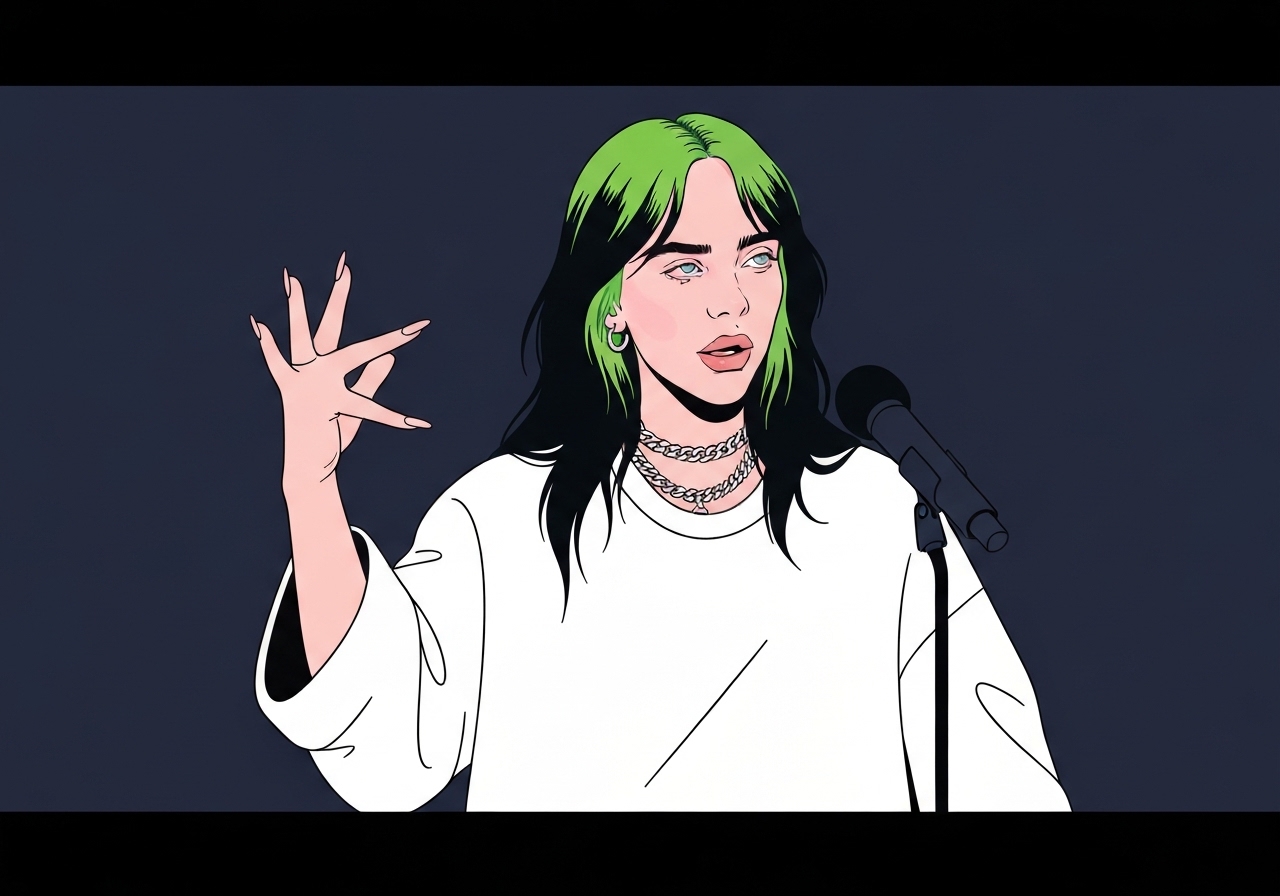
On Jan. 17 in downtown Atlanta, Billie Eilish accepted the MLK Jr. Beloved Community Environmental Justice Award at the King Center ceremony held at the Hyatt Regency. A little over a week after the Department of Homeland Security publicly criticized her Instagram posts as ‘garbage rhetoric’ related to anti-ICE content, Eilish used her platform to spotlight what she described as escalating threats to communities and civil rights while also highlighting her climate philanthropy. The artist’s $11.5 million pledge through The Changemaker Program and her public challenge to wealthy attendees to ‘give your money away’ framed both the ceremony and the broader debate about celebrity activism, policy and public safety. The event of roughly 1,000 attendees combined awards, performances and calls for renewed civic engagement.
Key Takeaways
- Billie Eilish accepted the MLK Jr. Beloved Community Environmental Justice Award on Jan. 17 at the Hyatt Regency in Atlanta, an event with about 1,000 attendees.
- Eilish has pledged $11.5 million from proceeds of her sold-out Hit Me Hard and Soft tour to climate justice, carbon reduction and food equity via The Changemaker Program.
- The Department of Homeland Security publicly criticized Eilish’s anti-ICE Instagram posts as ‘garbage rhetoric’ roughly one week before the award ceremony.
- Eilish warned of community dangers in her speech, saying ‘we’re seeing our neighbors being kidnapped, peaceful protesters being assaulted and murdered,’ framing the remarks around civil rights and public safety.
- Other honorees included Viola Davis, Warrick Dunn, and Gloria James for the LeBron James Family Foundation; presenters included Karine Jean-Pierre and Iain Armitage.
- The evening featured performances by Chance the Rapper and will air on BET in February; the King Center framed the program under the theme ‘Mission Possible 2: Building Community, Uniting a Nation the Nonviolent Way.’
Background
The King Center’s MLK Jr. Beloved Community awards recognize activism across social, environmental and educational fields and are presented as part of the organization founded by the King family. This year’s theme emphasized nonviolence and community-building at a moment of heightened public debate over immigration enforcement, protest policing and climate policy. Eilish emerged in recent months as a significant philanthropic actor after announcing a multi-million-dollar donation plan tied to her tour, directing funds to groups focused on environmental justice, carbon reduction and food access. That pledge positioned her among a growing cohort of musicians converting tour revenue into sustained grant-making for advocacy and relief.
At the same time, national conversations about immigration enforcement and protest responses have intensified. The Department of Homeland Security’s public rebuke of Eilish’s social posts signaled how celebrity commentary on enforcement policy can draw formal responses from federal agencies. Civil-society groups, artists and advocacy organizations increasingly overlap at events like the King Center ceremony, where cultural recognition and policy critique occur in the same fora.
Main Event
The ceremony opened with an introduction by Wawa Gatheru, founder of Black Girl Environmentalist, who presented Eilish and highlighted the intersection of youth activism and climate advocacy. When Eilish took the stage she read prepared remarks that mixed gratitude for the honor with blunt concerns about public safety and the direction of national policy. She said she felt ‘not deserving’ while stressing the urgency of protecting communities and the environment amid what she described as policy choices that deprioritize those protections.
In her address Eilish listed a string of societal harms and tied them to what she framed as a failure of current leadership, mentioning kidnappings, assaults on peaceful protesters, cuts to climate-fighting resources and unequal access to food and healthcare. Her delivery was measured; she read parts of the speech from a small note and framed her activism as a duty linked to the reach of her platform. The remarks came a week after DHS publicly criticized her social-media posts, a confrontation that underscored the political stakes of celebrity advocacy.
Justice for Migrant Women founder Mónica A. Ramìrez accepted a social-justice award and echoed Eilish’s concerns by recounting fear within Latino communities tied to immigration enforcement activity. Other honorees included Viola Davis, Warrick Dunn and the LeBron James Family Foundation representative Gloria James, with presentations by Iain Armitage, Karine Jean-Pierre and Sean Freeman. Musical performances, including Chance the Rapper, punctuated the evening and the program will be broadcast on BET in February.
Analysis & Implications
Eilish’s speech and the public exchange with DHS illustrate how pop figures can shift from cultural influence to political lightning rods. Her $11.5 million commitment demonstrates the growing role of artist-led philanthropy in funding climate and food-equity work, but it also invites scrutiny about the limits of private giving in addressing structural policy issues. When federal agencies respond publicly to a performer’s social-media commentary, it raises questions about administrative posture toward dissent and the relationship between celebrity speech and government communication.
The intersection of environmental justice and immigration concerns in Eilish’s remarks reflects a broader coalition-building strategy: connecting climate policy to social equity and civil liberties expands the base for advocacy but can also polarize debates. For policy advocates, celebrity endorsements can bring rapid visibility and resources; for opponents, they can catalyze formal pushback from institutions that prefer to keep policy discourse within legislative or expert channels. The net effect on legislation depends on whether sustained public pressure translates into organized policy campaigns beyond the media cycle.
For the philanthropic ecosystem, Eilish’s challenge to wealthy attendees to ‘give your money away’ is part moral appeal, part reputational pressure. High-profile donations can seed programs and raise expectations, but systemic change requires durable funding, policy shifts and accountability mechanisms. Observers will watch whether The Changemaker Program’s grants produce measurable outcomes and whether celebrity-driven funding models spur new standards for transparency and long-term evaluation in climate and food-security work.
Comparison & Data
| Award/Recipient | Focus Area |
|---|---|
| Billie Eilish — MLK Jr. Environmental Justice Award | Environmental justice, climate philanthropy ($11.5M pledge) |
| Viola Davis — Honoree | Arts and community leadership |
| Warrick Dunn — Honoree | Community service and youth support |
| Gloria James/LeBron James Family Foundation — Honoree | Education and family services |
The table above summarizes the ceremony’s principal honorees and the issue areas they represent. While Eilish’s $11.5 million pledge is a quantified commitment reported alongside her award, most honors at the event recognize long-term service rather than immediate financial transfers. Assessing impact therefore requires tracking grant disbursements, project outcomes and the degree to which award visibility translates into policy or funding shifts.
Reactions & Quotes
Organizers and honorees framed the evening as both celebration and call to action. King Center CEO Bernice King placed the program within a nonviolence mandate, emphasizing unity and civic duty ahead of the broadcast.
‘This is a celebration of humanity at its best.’
Bernice King, King Center CEO
Bernice King’s remark followed a larger framing of the event as ‘Mission Possible 2: Building Community, Uniting a Nation the Nonviolent Way,’ language she said was particularly fitting given current tensions. Eilish’s own words were stark and aimed at drawing attention to harms she said were unfolding in communities across the country.
‘We’re seeing our neighbors being kidnapped, peaceful protesters being assaulted and murdered, our civil rights being stripped…’
Billie Eilish
Mónica A. Ramìrez, founder of Justice for Migrant Women, described fear in immigrant communities and said recognition from the King Center amplified the visibility of that fear and the courage of advocacy groups confronting it.
‘I understand that part of my receiving this recognition today speaks to the courage of Dr. Bernice King and the King Center to give someone like me and my organization a platform in this moment.’
Mónica A. Ramìrez, Justice for Migrant Women
Unconfirmed
- The specific incidents Eilish referenced (kidnappings and murders of peaceful protestors) were cited in her speech and reported here but were not itemized or independently verified in event coverage.
- Details about which federal statement or official at DHS used the phrase ‘garbage rhetoric’ were reported by outlets; the full context and target of that characterization require review of the original DHS communication.
- Whether Eilish’s challenge to billionaires will lead to immediate, matching external donations remains unreported and cannot be confirmed at this time.
Bottom Line
Billie Eilish’s acceptance speech at the King Center awards blended a high-profile philanthropic announcement with stark political critique, reinforcing the growing role of artists in public-policy debates. Her $11.5 million pledge and public challenge to wealthy attendees underscore an intensifying expectation that cultural figures translate platform into concrete funding and advocacy.
The immediate impact will be measured by how The Changemaker Program distributes funds and whether the ceremony’s visibility catalyzes sustained policy campaigns or legislative attention. Meanwhile, the federal response to celebrity commentary and the unverified claims highlighted in the speech point to an unsettled information environment where cultural influence, public safety concerns and policy disagreements overlap.
Sources
- The Hollywood Reporter — Entertainment news report on the King Center ceremony and Eilish’s remarks