
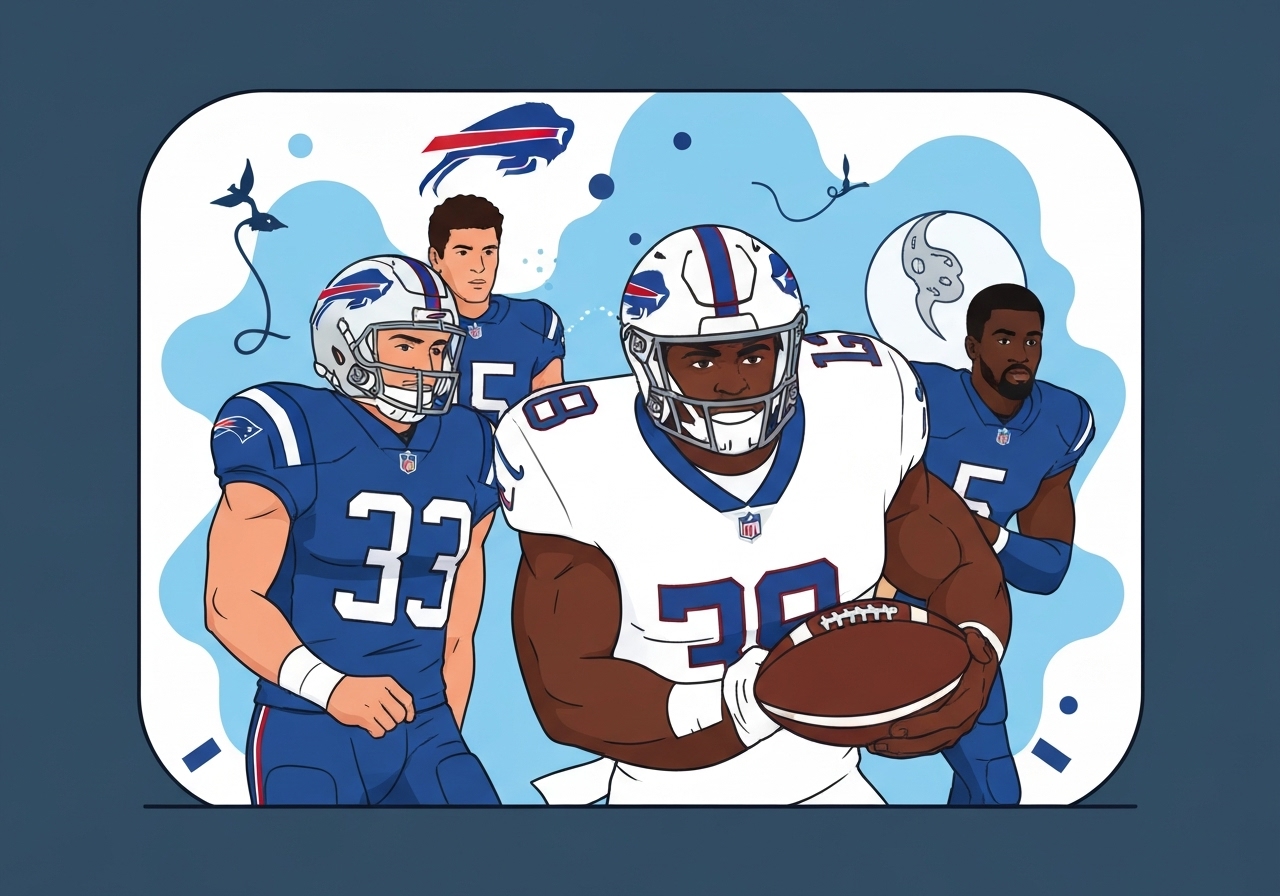
In Foxborough on Sunday the Buffalo Bills erased a 21-point deficit to beat the New England Patriots 35-31, moving to 10-4 and claiming their third straight victory. Buffalo trailed 21-0 early and 24-7 at halftime before dominating the second half on both sides of the ball. Key contributors in the comeback included Josh Allen, Dawson Knox and a special-teams wrinkle that repeatedly flipped field position. The result tightened Buffalo’s grip in the AFC playoff picture while exposing persistent defensive issues.
Key Takeaways
- The Bills rallied from a 21-point hole to win 35-31, improving to 10-4 for the season.
- Second-half surge: Buffalo out-gained New England 273 to 100 in the final two quarters and surrendered just 7 second-half points.
- Josh Allen finished 19-of-28 for 193 yards and three touchdown passes and added 11 carries for 48 rushing yards.
- Dawson Knox caught three passes for 34 yards and two TDs, becoming the Bills’ all-time leader in touchdown catches by a tight end with 26.
- James Cook scored three touchdowns and ran for 107 yards on 22 carries (4.9 avg); Patriots ran 25 times for 246 yards (9.8 ypc), including two long TD runs of 65 and 52 yards by TreVeyon Henderson.
- Special teams shifted field position: kick returner Ray Davis averaged 41 yards per return and the Bills’ average kickoff starting field position was the 46-yard line.
- Defensive highlights included Tre’Davious White’s first interception since September 2023 and Matt Milano’s two sacks, a forced fumble and a team-high ten tackles.
Background
The Bills entered this matchup with momentum but also scrutiny over defensive consistency and run containment. Buffalo’s offense, led by Josh Allen, has engineered several come-from-behind wins this season; the team’s ability to rally has become a defining trait. New England opened the game with tempo and success on the ground, building a 21-0 lead and finishing the first half with a 24-7 advantage. For the Patriots, the game featured a heavy dose of rushing and a few explosive plays that tested Buffalo’s tackling and gap discipline.
Special teams and situational football have taken on added importance for both clubs this year. The Bills have looked for ways to gain field-position edges when the offense stalls; coach Sean McDermott’s staff has mixed return looks and protections to create openings. Meanwhile, the Patriots leaned on their running game and quick-strike opportunities to keep drives alive early, forcing Buffalo to play catch-up. The contrast between the first and second half highlighted coaching adjustments and in-game adaptability on both sidelines.
Main Event
New England dominated early, out-gaining Buffalo 285-76 in the first half and converting early chunk plays into a 21-0 lead. A controversial sequence on the Patriots’ first drive produced a long catch that stood; replay footage later suggested the ball may have contacted the ground. Buffalo’s opening offensive series also saw a near-turnover when Brandin Cooks dropped a deep target on the first play, a chance that would have flipped the script before New England’s early surge.
The second half belonged to Buffalo’s adjustments. Defensive pressure increased — the Bills recorded three second-half sacks — and the offense found rhythm. Tre’Davious White intercepted a deep ball late in the third quarter, setting up a 91-yard touchdown march that produced Buffalo’s first lead. Josh Allen connected on multiple red-zone throws, and Dawson Knox’s two touchdown receptions proved decisive.
Special teams amplified the comeback. Ray Davis returned multiple kickoffs into Patriots territory (including returns to the New England 42 and 44) and Buffalo averaged the 46-yard line after kickoffs, consistently shortening the field. Punter Mitch Wishnowski pinned New England deep on three of four punts, forcing the Patriots to start drives at their own 12, 6 and 17-yard lines during critical stretches.
Despite the win, New England’s ground success remained glaring: the Patriots amassed 246 rushing yards on 25 carries (9.8 yards per attempt), punctuated by two explosive touchdown runs that briefly swung momentum back to the home side. Buffalo’s tackling and run fits on those plays were repeatedly exploited until adjustments late in the game limited further damage.
Analysis & Implications
Coaching and halftime adjustments were the deciding factors. Buffalo’s staff altered personnel and looks, generating pressure and tightening coverage in the second half; the result was a 28-7 edge in second-half scoring and a dominant yards advantage. That kind of midgame turnaround suggests the Bills’ staff can diagnose problems quickly, a strong sign as the postseason nears. However, early-game game-planning needs work — being outplayed for a half against a run-heavy attack is a vulnerability opponents can exploit.
Special teams made the difference in hidden yardage. Ray Davis’s returns and the kickoff alignment using Reggie Gilliam as a lead blocker produced multiple starts inside New England’s 45 and turned field position into short touchdown drives. When special teams consistently generate starts near midfield, it reduces offensive burden and amplifies scoring chances; Buffalo should preserve and refine that wrinkle.
Defensively, the Bills still face questions about tackling and run fit discipline. Allowing 246 rushing yards and multiple long TD runs underscores schematic or execution gaps against inside zone and outside stretch concepts. If those weaknesses persist into playoff matchups with elite offensive lines and power runners, Buffalo could face tougher second-half comebacks or games decided by inability to stop sustained runs.
On offense, reliance on goal-to-go execution and red-zone efficiency was a positive: Buffalo scored touchdowns on five of six trips inside the 20 and converted all four goal-to-go opportunities. That polish in short-field offense is critical in tight games and bodes well for November and December contests where red-zone steadiness matters most.
Comparison & Data
| Stat | Bills | Patriots |
|---|---|---|
| Final Score | 35 | 31 |
| Halftime | 7 | 24 |
| 2nd-half yards | 273 | 100 |
| Patriots rushing | — | 246 yards on 25 carries (9.8 ypc) |
| Josh Allen | 19/28, 193 yds, 3 TDs, 11 rushes, 48 yds | Drake Maye 5/12, 42 yds (second half) |
The table highlights the dramatic swing after halftime and the contrast between Buffalo’s second-half production and New England’s early rushing success. Outgaining an opponent by 173 yards in the second half is an example of both tactical success and execution; conversely, surrendering nearly 10 yards per carry on the ground is a structural defensive problem that appears repeatedly in game tape.
Reactions & Quotes
We made the necessary fixes and the players executed them; that’s credit to the staff and the room, but we can’t start like that, either,
Sean McDermott, Bills head coach (postgame)
The turnovers and the kickoff returns shifted momentum — those are game-movers in tight contests,
Special teams analyst
We got behind early, but the group showed resilience. The red-zone calls and blocks were there when we needed them,
Dawson Knox (postgame comments)
Each quote reflects different perspectives: the head coach on adjustments, analysts on hidden-yardage impact, and a key player on execution in scoring areas.
Unconfirmed
- Whether a timely challenge would have overturned Kayshon Boutte’s early catch — available replays suggest contact with the ground but the play stood on the field.
- The internal coaching conversations about leaving certain personnel on the field for the first half — those exchanges were not publicly disclosed.
Bottom Line
Buffalo’s comeback win showcased the team’s halftime adjustments, red-zone efficiency and special-teams ingenuity — all encouraging signs as the playoff race tightens. Yet the game also reinforced persistent defensive vulnerabilities against the run and occasional tackling breakdowns that could be costly against elite opponents.
For the Bills, sustaining the second-half template from kickoff and shoring up gap discipline on early downs will be essential. For New England, the rushing success offers a blueprint other teams might emulate to test Buffalo early. As both teams move forward, the result will be remembered as a statement of resilience for Buffalo and a reminder of work left on defense.