
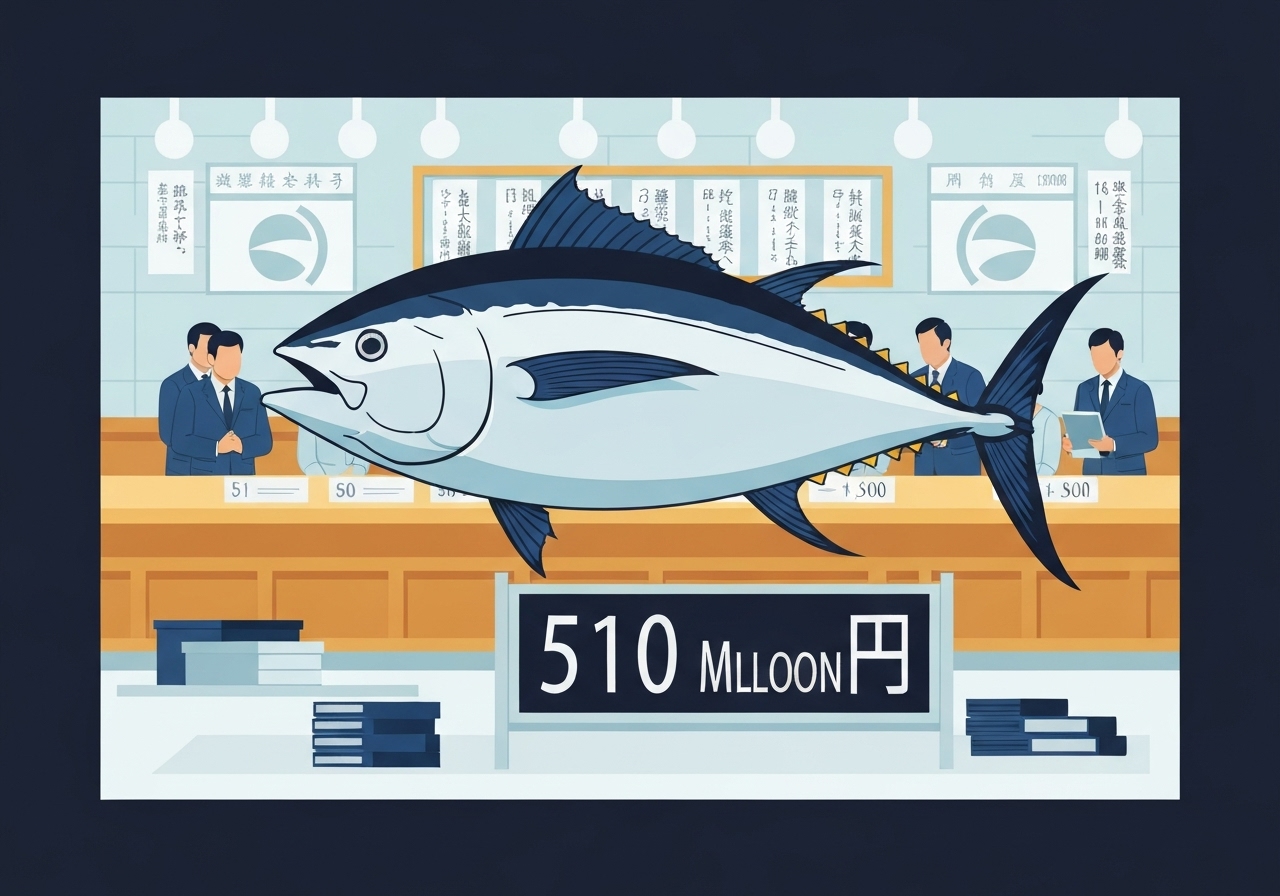
Lead: In the predawn New Year auction at Tokyo’s Toyosu fish market on Monday, a 243-kilogram (535-pound) Pacific bluefin tuna from Oma fetched a record 510 million yen (about $3.2 million). The winning bid came from Kiyomura Corp., owned by Sushi Zanmai operator Kiyoshi Kimura, surpassing the previous 334 million yen mark set in 2019. The fish drew attention for its origin, market price of roughly 2.1 million yen per kilogram, and the symbolic role such sales play at the start of the year.
Key Takeaways
- A 243-kg (535-lb) Pacific bluefin tuna sold for 510 million yen ($3.2M) at Toyosu Market’s first auction of 2026.
- Kiyomura Corp., run by Kiyoshi Kimura of Sushi Zanmai, was the top bidder, breaking his own 2019 record of 334 million yen ($2.1M).
- The tuna was caught off Oma, Aomori Prefecture, a region prized for high-grade tuna, and averaged about 2.1 million yen per kg ($13,360/kg).
- The auction took place before dawn and featured hundreds of tuna; bidders inspect cut tails to assess color, texture and fattiness.
- Pacific bluefin tuna stocks were previously stressed by overfishing and climate change, but recent conservation measures have supported recovery trends.
Background
Toyosu Market replaced Tokyo’s long-running Tsukiji wholesale market and has hosted the high-profile New Year tuna auctions that attract restaurant owners, wholesalers and media. These first-auction sales are part tradition and part commercial competition; extravagant opening bids often serve as publicity for buyers and their brands. Kiyoshi Kimura has been a frequent high bidder in past New Year auctions, seeking both media attention and supply for his Sushi Zanmai restaurants. The Oma fishing grounds, off northern Japan, have a strong reputation for producing fatty, high-quality bluefin that command premium prices at auction.
Pacific bluefin tuna experienced sharp declines in population in the early 21st century due to international demand, expanded longline fleets and environmental changes affecting spawning. Japan, regional fisheries bodies and industry groups implemented stricter catch limits, seasonal controls and monitoring; managers and some scientific assessments now report signs of stock rebuilding. Still, high-value auction sales highlight the tension between commercial demand for premium sushi-grade fish and ongoing sustainability goals.
Main Event
The predawn bidding began when the auction bell sounded and rows of large, torpedo-shaped tuna with trimmed tails were paraded on the floor for purchasers to examine. Buyers inspected flesh tone, marbling and firmness while walking past the lots, a standard practice that helps set aggressive opening bids. Kiyomura Corp. emerged as the winning bidder for the 243-kg tuna, paying 510 million yen, a sum that equates to roughly 2.1 million yen per kilogram or about $6,060 per pound.
Kiyoshi Kimura, who has won the New Year auction multiple times, captured attention from photographers and reporters as the sale closed. He later told assembled media that he had hoped to pay less but that bidding “shot up” quickly; he also noted that buying a top specimen at the New Year auction carries a traditional association with good fortune for the coming year. The tuna was reported to have been caught off Oma in Aomori Prefecture, an area long regarded by buyers for producing richly marbled specimens preferred for sushi and sashimi.
Hundreds of tuna are traded daily at Toyosu, but average prices for Oma fish rise markedly during the New Year showcase, when competition and publicity push values higher. The sale generated immediate social and industry commentary, with restaurateurs, suppliers and consumers noting both the culinary prestige and the broader market signals the price conveys about demand for premium seafood.
Analysis & Implications
The headline price functions on multiple levels: as a commercial purchase, a marketing moment, and a cultural symbol. For Kiyomura and his chain, the purchase underlines brand positioning as a source of premium tuna and generates free media coverage that can translate into customer interest. Economically, high-profile auction results feed into perceptions of scarcity and desirability that can support premium pricing downstream to restaurants and retailers.
From a resource-management perspective, record auction prices underscore ongoing market pressure on a species that was once classified as highly threatened in several assessments. While regulatory steps and quota management in recent years have coincided with signs of stock recovery for Pacific bluefin, the extraordinary sums paid at public auctions remind stakeholders that demand remains intense. This dynamic complicates the trade-off between supporting fishers’ incomes and sustaining long-term populations.
Internationally, Japan’s high-profile tuna auctions can affect global markets by signaling willingness to pay extreme premiums for top-grade fish, which in turn influences supply chain behavior from fishing fleets to middlemen. Policy responses may need to balance enforcement of catch limits and traceability measures with incentives for fishers to target abundant cohorts and avoid overharvest of reproductive stock. The sale also raises questions about allocation: whether premium specimens should be channeled primarily to domestic celebratory markets or distributed more broadly to supply needs.
Comparison & Data
| Year | Weight (kg) | Sale Price (yen) | Price per kg (yen) |
|---|---|---|---|
| 2019 | unspecified | 334,000,000 | — |
| 2026 | 243 | 510,000,000 | ~2,100,000 |
The 2026 sale exceeded the 2019 record by 176 million yen, or roughly 53% more in headline price. The per-kilogram figure for the 243-kg tuna in 2026 is approximately 2.1 million yen; published reports list the equivalent as about $13,360 per kilogram. These numbers reflect premium market behavior and do not represent average commercial prices across the broader tuna catch.
Reactions & Quotes
“The price shot up before you knew it,”
Kiyoshi Kimura, owner, Kiyomura Corp. (buyer)
“It’s in part for good luck. But when I see a good looking tuna, I cannot resist,”
Kiyoshi Kimura, owner, Kiyomura Corp. (buyer)
Officials at Toyosu Market reiterated that New Year auctions traditionally attract premium bids and intense media attention, while industry commentators noted that headline purchases often serve dual roles as supply actions and promotional events. Conservationists highlighted that, despite recovery signals in stock assessments, extreme prices can increase economic incentives for higher effort unless management and monitoring remain strict. Consumers and restaurateurs responded with a mix of admiration for the specimen and caution about sustainability implications.
Unconfirmed
- Specific plans for immediate use of the purchased tuna (which restaurant cuts or events it will supply) have not been publicly detailed by the buyer.
- Direct tasting notes from the buyer about this specific fish remain pending; statements about flavor are speculative until sampling occurs.
Bottom Line
The 510 million yen sale of a 243-kg Oma bluefin at Toyosu’s New Year auction is both a market event and a cultural moment: it showcases premium seafood demand, creates publicity for the buyer, and raises visibility around resource-management questions. While the price reflects the specimen’s perceived gastronomic value and the buyer’s commercial and symbolic aims, it also spotlights the ongoing tension between high-end consumption and long-term stock sustainability.
Policymakers, industry actors and consumers will likely watch subsequent scientific assessments and management actions to see whether recent recovery signals for Pacific bluefin are sustained. For observers, the sale is a reminder that headline auction figures matter beyond spectacle—they influence incentives across the fishing, processing and dining chain and therefore should be considered in broader fisheries governance discussions.