
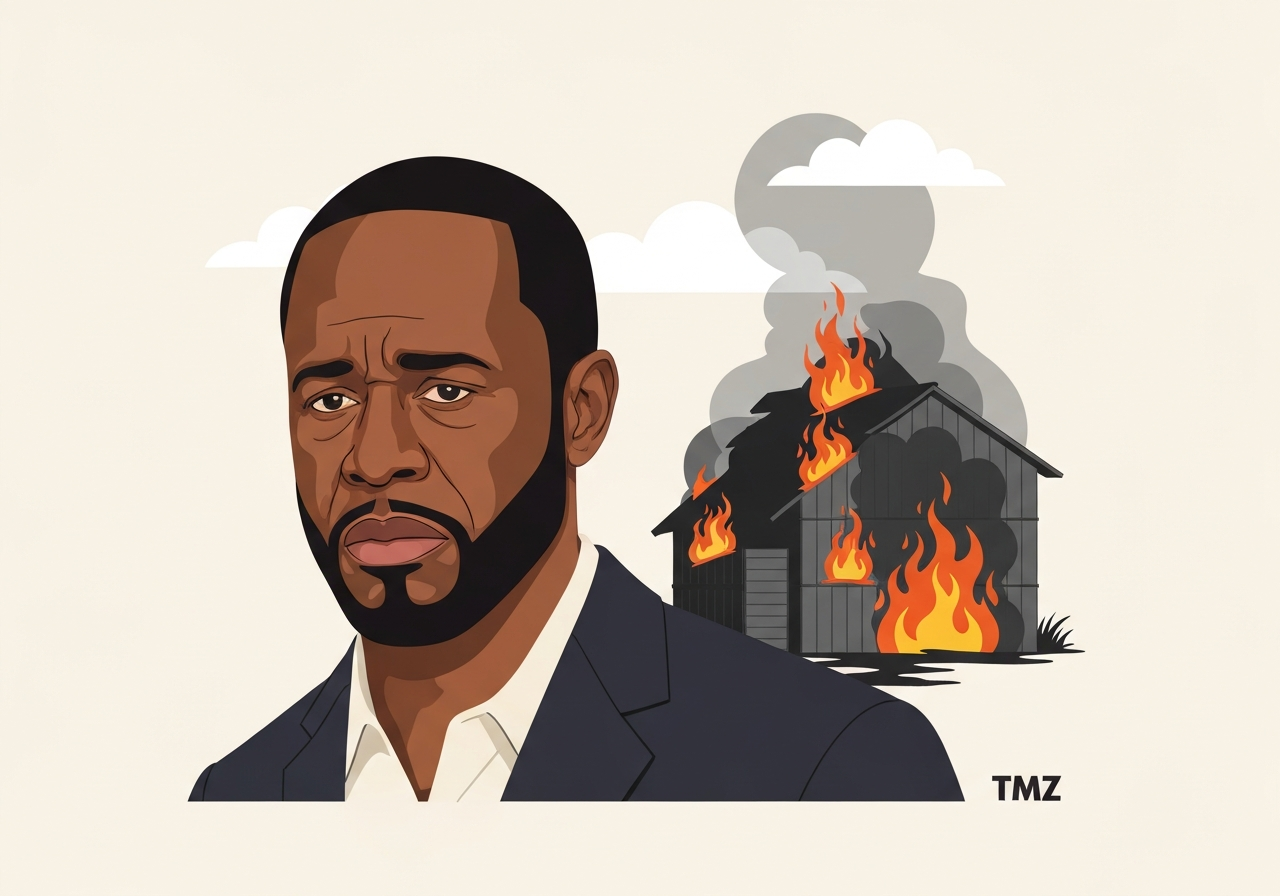
Actor Bobby J. Brown, best known for portraying Officer Bobby Brown on HBO’s The Wire, died on February 26, 2026 after a barn fire in Maryland. The Maryland Office of the Chief Medical Examiner determined his death was due to diffuse thermal injury and smoke inhalation and ruled the manner accidental. Family members told reporters he entered the barn to jump-start a vehicle and later called for a fire extinguisher; by the time relatives arrived the structure was engulfed. His wife suffered severe burns attempting to rescue him, and a funeral service is being planned, the family said.
Key Takeaways
- Bobby J. Brown, aged 62, died Feb. 26, 2026 after a barn fire in Maryland; the medical examiner listed diffuse thermal injury and smoke inhalation as causes.
- The Maryland Office of the Chief Medical Examiner classified the manner of death as accidental.
- According to family accounts, Brown entered the barn to jump-start a vehicle and later requested a fire extinguisher before the blaze consumed the building.
- Brown’s wife sustained serious burns while trying to save him; her current medical status has not been publicly detailed.
- Brown was a cast member of HBO’s The Wire and had credited appearances on Law & Order: SVU and the limited series We Own This City.
- His agent, Albert Bramante, described Brown as dedicated to his craft and a pleasure to work with.
- The family has identified Brown as a devout Jehovah’s Witness and said plans for a funeral service are underway.
Background
Bobby J. Brown emerged as a recognizable character actor through recurring work on prestige television, most prominently as Officer Bobby Brown on HBO’s critically acclaimed series The Wire. The Wire, which focuses on Baltimore’s institutions and urban life, elevated many supporting actors into enduring cultural recognition; Brown’s role contributed to that ensemble profile. Over the years Brown also appeared in mainstream procedural television such as Law & Order: SVU and recent limited-series dramas including We Own This City, which revisited policing and institutional themes similar to those dramatized on The Wire.
Beyond his screen credits, Brown’s career illustrates the long-term visibility that recurring roles on prestige cable dramas can bring to character actors. His passing at 62 removes a familiar presence from shows that have become reference points in discussions of contemporary TV realism. The circumstances of his death—an accidental barn fire while working on a vehicle—also intersect with recurring public-safety concerns about older adults, rural structures and accidental fire risks.
Main Event
According to family members and the medical examiner, Brown entered a barn on the property to jump-start a vehicle. Sometime after, he called for a fire extinguisher; relatives arrived but found the barn already ablaze. Responders and family efforts could not prevent the fatal outcome; medical authorities attributed Brown’s death to diffuse thermal injury and smoke inhalation.
The Maryland Office of the Chief Medical Examiner reviewed the scene and circumstances and issued the official ruling that the manner of death was accidental. The family reported that Brown’s wife sustained severe burns while trying to assist him; officials have not released additional medical details about her condition. Local emergency services were involved in extinguishing the fire and documenting the incident for the medical review.
Brown’s daughter told reporters he was a devout Jehovah’s Witness and that the family is planning funeral services. His agent, Albert Bramante, issued a public comment expressing sorrow and praising Brown’s professionalism and dedication to acting. The entertainment community has begun to acknowledge Brown’s death and recall his on-screen work.
Analysis & Implications
On a personal level, Brown’s death highlights how routine tasks—such as jump-starting a vehicle—can lead to catastrophic outcomes when combined with combustible materials, enclosed spaces and delayed suppression. Barns and outbuildings often store fuels, tools and hay or other flammable materials that can accelerate fires; enclosed smoke conditions increase the risk of fatal inhalation even when external burns are limited. Public messaging on fire safety typically emphasizes working smoke alarms and accessible extinguishers, but many rural properties lack both consistent inspection and rapid-response infrastructure.
For the entertainment industry and audiences, the loss of a reliable character actor underlines how ensemble casts rely on longstanding contributors whose careers span decades. Brown’s body of work on series that examine policing and urban life reinforced his association with realistic portrayals of law-enforcement figures. Colleagues and casting directors may note the gap left by performers who bridge recurring television roles and community recognition.
The incident may also prompt localized discussions about emergency preparedness on private property, especially among older homeowners and those who maintain outbuildings. Insurance, building codes and volunteer fire department resources vary widely by jurisdiction; this event could spur community-level reviews of safety practices and outreach about common ignition sources tied to vehicle maintenance and battery work.
Comparison & Data
| Production | Noted Role | Context |
|---|---|---|
| The Wire | Officer Bobby Brown | Recurring role on HBO drama about Baltimore institutions |
| Law & Order: SVU | Guest/credited appearances | Long-running network procedural with frequent character-actor turns |
| We Own This City | Credited role | HBO limited series revisiting policing themes |
The table above summarizes Brown’s most-cited credits, illustrating the through-line of law-enforcement and institutional storylines in his filmography. While not exhaustive, these credits show why Brown was repeatedly cast in roles connected to policing and public-safety narratives.
Reactions & Quotes
“I am upset and saddened. He was such a good actor and person. He was totally dedicated to the craft of acting and was a joy to work with.”
Albert Bramante, agent
“Cause of death was ruled diffuse thermal injury and smoke inhalation; the manner of death was determined to be an accident.”
Maryland Office of the Chief Medical Examiner (official)
Unconfirmed
- Specific ignition source inside the barn (for example, whether a battery spark, fuel leak or other factor started the blaze) has not been publicly confirmed by investigators.
- The current medical status and prognosis for Brown’s wife beyond description of “severe burns” have not been disclosed by family or medical officials.
- Exact date, time and location details for the planned funeral service have not yet been released.
Bottom Line
Bobby J. Brown’s death at 62 removes a familiar face from contemporary television dramas and underscores how quickly routine, everyday tasks can become deadly in the presence of combustible materials and confined spaces. The Maryland medical examiner’s ruling of accidental death from diffuse thermal injury and smoke inhalation frames the incident as a tragic, non-criminal event.
For fans and colleagues, the immediate focus will be on memorials and the family’s plans; for public officials and community groups, the episode may revive conversations about fire safety on private and rural properties. Those who knew Brown recall his steady presence on screen and his dedication to acting; his professional legacy will persist in the series and episodes where his performances remain available.
Sources
- TMZ — Entertainment news report with family and agent statements (journalism).
- Maryland Office of the Chief Medical Examiner — Official state medical examiner office (public health/official).
- HBO: The Wire — Series information and context about the program where Brown was a recurring actor (official network).