
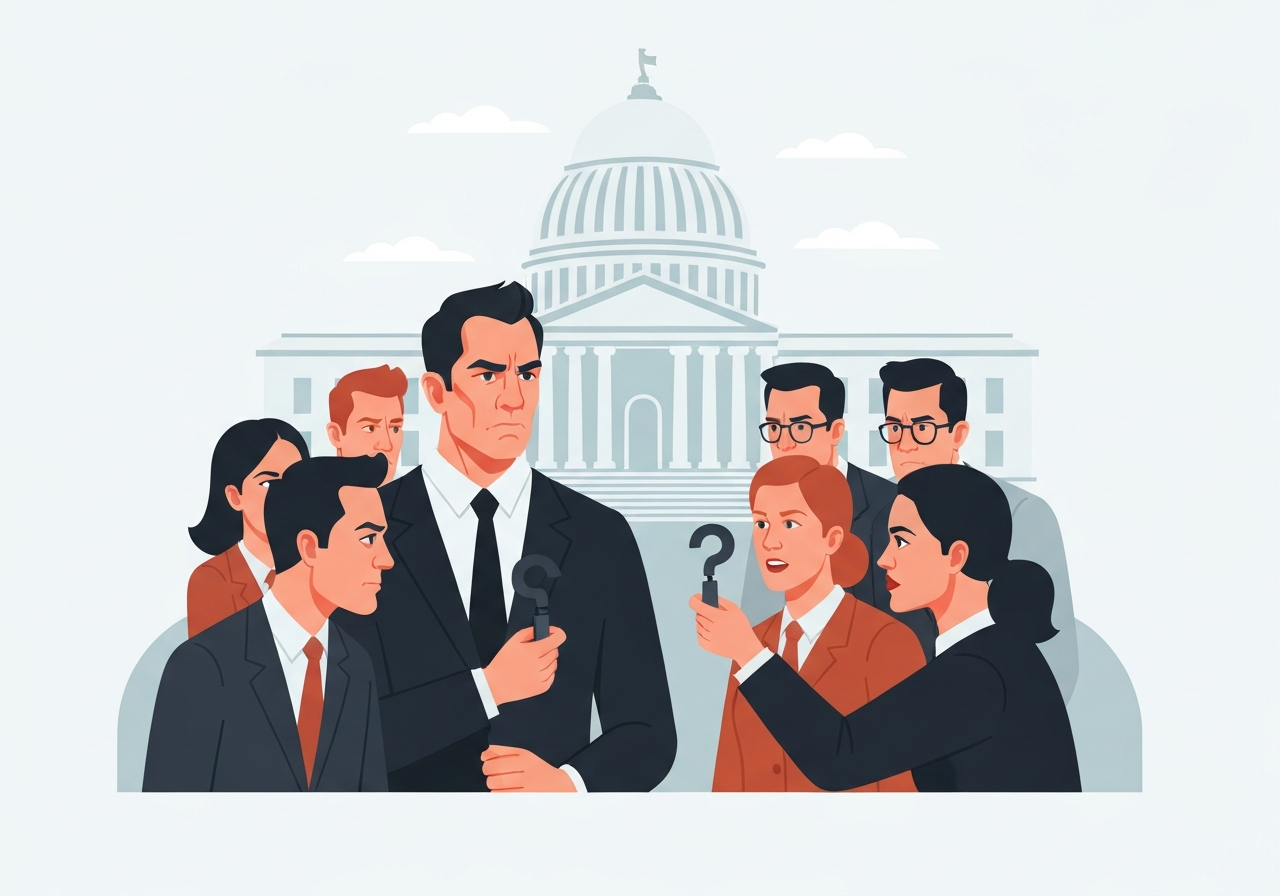
Lead: Attorney General Pam Bondi appeared before the House Judiciary Committee on Feb. 11, 2026, amid intense questioning about her handling of materials tied to Jeffrey Epstein. Her testimony produced heated exchanges with Democrats and repeated interventions by Chairman Jim Jordan, who kept the session from devolving into shouting matches. Lawmakers pressed for clarity about decisions made when she was a state prosecutor and about Justice Department records; Bondi defended her record and refused to apologize to victims present in the hearing room. The session heightened partisan scrutiny of the Justice Department and fed broader inquiries into the administration’s handling of several high-profile controversies.
Key Takeaways
- Attorney General Pam Bondi testified before the House Judiciary Committee on Feb. 11, 2026, facing sustained questions about documents and decisions connected to Jeffrey Epstein.
- Bondi declined to apologize to victims in the hearing room and repeatedly described herself as a career prosecutor who fights for victims.
- Top Democrat Jamie Raskin warned Bondi against repeating a prior Senate hearing tactic of scripted attacks and personal putdowns.
- Separately, congressional Democrats pushed for independent audits of up to $500 million in Venezuelan oil proceeds the administration says it controls, held in an overseas (Qatari) account.
- The Congressional Budget Office reported a nine-year shortfall projection widening to $23.1 trillion and a debt path that could reach 120% of GDP by 2036; Social Security’s trust fund is projected to run out in 2032.
- Other items drawing congressional attention included the legality of emergency tariffs, scrutiny of Commerce Secretary Howard Lutnick’s reported ties to Epstein, and newly released evidence in the Oct. 4 shooting of Marimar Martinez.
Background
The hearing with Attorney General Bondi is the latest episode in a months‑long tug of war over records and accountability stemming from Jeffrey Epstein’s criminal network. Epstein became a focal point for both right‑ and left‑wing attacks on law enforcement and public officials; documents and prosecutorial decisions made years ago have repeatedly been reexamined as new patterns and names emerged. Bondi’s role as a state prosecutor in a Florida matter tied her name to those records and put her squarely in the center of congressional inquiry when she later joined the federal executive branch.
Political dynamics have amplified the hearing. Democrats have used Epstein‑related questions to challenge the Trump administration broadly, while Republicans have at times framed the scrutiny as political theater. Committee leaders from both parties control the procedural flow: Chairman Jim Jordan maintained order during Thursday’s session, and Democrats, led by Representative Pramila Jayapal and ranking member Jamie Raskin, pressed aggressively for answers. That mix — legal history, high emotions from victims and partisan pressure — set the stage for a contentious public forum.
Main Event
The hearing opened with sharp statements from Democrats charging that Bondi’s past choices sided with powerful defendants and failed victims. Jamie Raskin, in his opening remarks, warned Bondi that the committee would not tolerate the evasive, antagonistic approach she displayed in an October Senate hearing. Raskin argued that the conduct risked eroding public confidence in the Department of Justice and labeled the situation a potential cover‑up if not addressed.
Bondi pushed back, repeatedly identifying herself as a lifelong prosecutor and rejecting calls to apologize. When Representative Pramila Jayapal directly sought an apology for victims present, Bondi declined and redirected criticism at Jayapal’s line of questioning, calling it an attempt to drag her “into the gutter.” Chairman Jordan intervened multiple times to keep exchanges from escalating into shouting matches, temporarily cutting off speakers who raised their voices.
Lawmakers also probed procedural details: what records were shared, what communications occurred between state and federal officials, and whether any files had been withheld. Bondi answered by defending her record and asserting she had prioritized victims; Democrats countered with specific examples and demanded documentary proof of the choices she described. Video excerpts played in the hearing and were cited by members on both sides to support competing narratives about what happened in prior prosecutions and post‑case communications.
The hearing occurred alongside other oversight efforts: senators and representatives pressed Treasury and State officials on the status of Venezuelan oil proceeds, questioned Commerce Secretary Lutnick’s past connections to Epstein, and examined released evidence in the Martinez shooting case. Taken together, the hearings signaled an escalated appetite on Capitol Hill for documentary transparency across several controversies involving the administration.
Analysis & Implications
Politically, the Bondi hearing deepens partisan divisions while creating openings for cross‑cutting criticism of the Justice Department’s independence. Democrats frame the testimony as more evidence that the department has been politicized; Republicans portray aggressive questioning as theatrical and aimed at scoring political points. Either way, the optics matter: sustained allegations of preferential treatment or record‑keeping lapses can weaken public trust and invite additional probes by other committees and federal inspectors general.
Substantively, the hearing could lead to concrete oversight steps. Committees may issue subpoenas for records that remain incomplete or ambiguous, and inspectors general could be asked to review decisions from the period in question. If documentation shows internal coordination that contravenes department policies or statutory obligations, that could prompt disciplinary actions, referrals or new regulations governing how state prosecutors interact with federal counterparts when high‑profile defendants are involved.
Beyond the Epstein matter, the concurrent push for audits of $500 million in Venezuelan oil proceeds and the CBO’s stark fiscal projections together suggest a Capitol Hill increasingly focused on financial and institutional accountability. An audit ordered by Congress — if enacted — would test whether the administration’s claim that the funds are held in custody outside U.S. control stands up to forensic accounting and legal scrutiny. A finding of inadequate controls would have both legal and political consequences for the administration.
Finally, the unfolding oversight activity will influence other branches and venues. Legal challenges to emergency tariffs are before the Supreme Court, the CBO’s long‑term debt forecast frames fiscal arguments for both parties, and public hearings like Bondi’s feed media coverage that can shape public opinion ahead of legislative fights. Each of those arenas — courts, budget debates and public perception — can constrain policy options available to the administration going forward.
Comparison & Data
| Metric | Recent Figure | Prior Reference |
|---|---|---|
| Nine‑year federal shortfall (CBO) | $23.1 trillion | $21.8 trillion (Jan. 2025 projection) |
| Projected tariffs revenue (10-year window cited) | ~$3 trillion | — |
| Cost of recent tax cuts (9 years) | ~$4.7 trillion | — |
| Social Security trust fund exhaustion | 2032 | One year earlier than prior estimate |
| Debt held by public vs GDP | Projected 120% by 2036 | Highest since WWII era |
Those figures frame competing policy arguments: proponents of the administration’s trade measures point to tariffs as a revenue source, while critics warn that tariffs are legally tenuous and may not provide sustained income if courts or subsequent presidents rescind them. The widening shortfall and Social Security timetable create pressure for lawmakers to consider entitlement and revenue reforms; at the same time, immediate politics influence whether such discussions gain traction before upcoming elections.
Reactions & Quotes
Members of Congress and officials offered pointed statements before and after Bondi’s testimony, framing both the hearing and parallel oversight fights.
“You’re siding with the perpetrators, and you’re ignoring the victims,” Jamie Raskin said in his opening remarks, urging Bondi to change course to avoid a lasting legacy of obstruction.
Rep. Jamie Raskin (D), House Judiciary ranking member
Raskin’s remarks set a confrontational tone. He later warned the committee that a repeat of evasive tactics seen in October’s Senate hearing would not be tolerated, reflecting Democratic determination to extract documentary evidence from the department.
“I have spent my entire career fighting for victims, and will continue to do so,” Bondi replied, defending her record and rejecting calls for an apology to victims present in the room.
Attorney General Pam Bondi
Bondi’s statement reiterated her professional identity as a career prosecutor and was delivered in a combative environment where emotions were high and several victims were in attendance.
“The American people deserve to know what’s happening with the money received from these Venezuelan oil payments and where — and to whom — they are going,” Senator Chuck Schumer said, urging independent accounting of the funds.
Sen. Chuck Schumer (D), Senate minority leader
Schumer and other Democrats pushed legislation seeking a GAO audit within 30 days of enactment and a report within 90 days of audit completion, underscoring congressional impatience with the administration’s explanations for the $500 million arrangement.
Unconfirmed
- At least one text message cited by prosecutors suggests senior officials celebrated the shooting in Chicago and conveyed praise from high‑level figures; the full chain of attribution and approval has not been independently verified.
- The administration’s claim that the Venezuelan oil proceeds never “enter U.S. hands” rests on custodian language; whether that legal distinction fully insulates the arrangement from U.S. appropriation law remains unresolved.
- Reports that no finalized audit agreement exists for the Venezuelan funds were highlighted in testimony, but the current, detailed status of any audit negotiation or timetable has not been confirmed publicly.
Bottom Line
The Bondi hearing crystallizes a broader wave of congressional oversight aimed at the Justice Department and wider administration practices. Lawmakers from both parties are now placing pressure on executive‑branch officials over document access, record retention and the legal foundations for handling contested funds. That pressure increases the likelihood of subpoenas, inspector general reviews or legislative proposals to tighten transparency rules.
At the same time, major fiscal and policy questions — the CBO’s long‑term projections, challenges to emergency tariff authority, and the fate of Venezuelan oil proceeds — mean Capitol Hill will be juggling accountability demands across multiple fronts. For observers, the coming weeks are likely to reveal whether existing institutional checks can secure clearer answers or whether partisan gridlock will limit the reach of congressional scrutiny.
Sources
- Live coverage: Bondi hearing and related Washington reporting — (News media)
- Congressional Budget Office — (Federal nonpartisan agency)
- House Judiciary Committee materials — (Congressional committee)
- Department of Homeland Security releases and public statements — (Federal agency)