
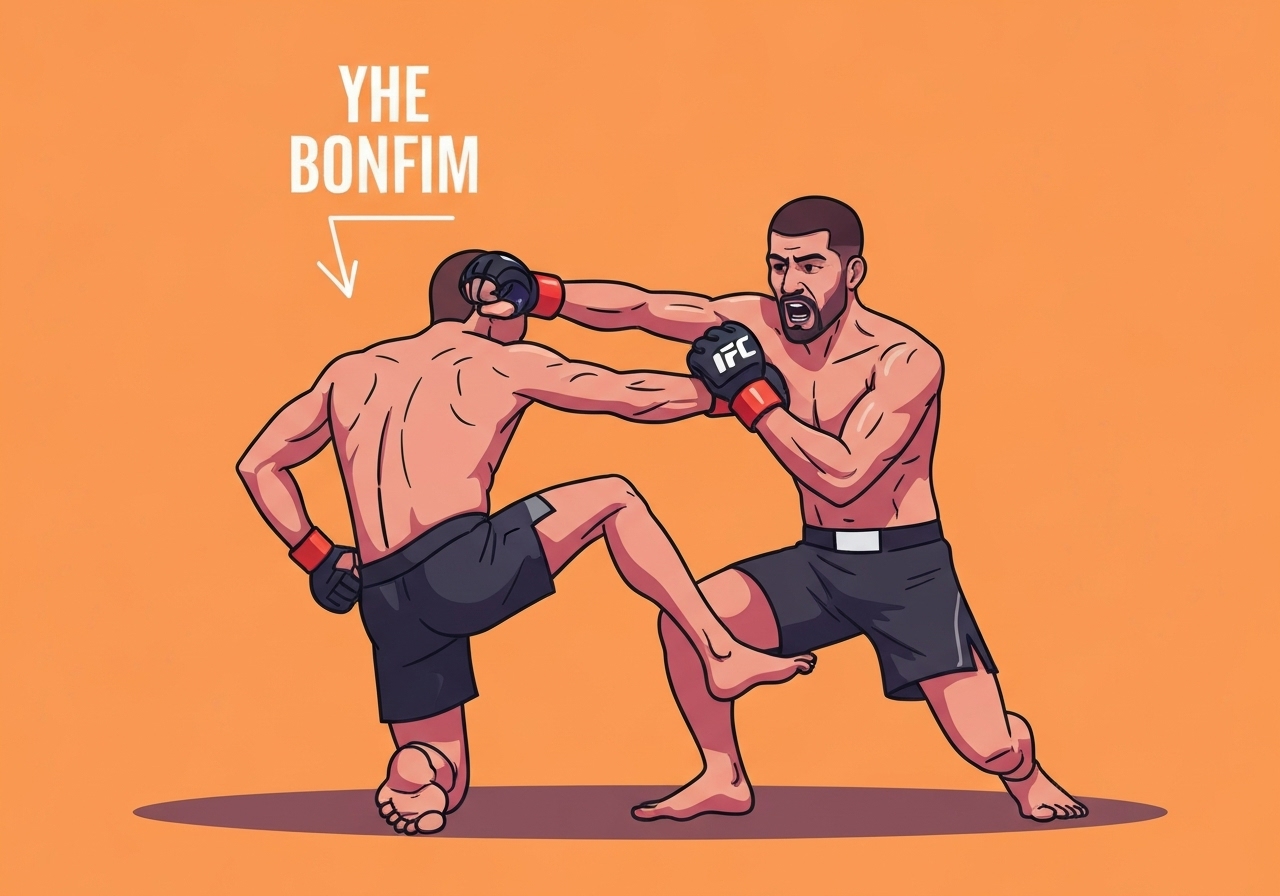
Gabriel Bonfim scored a highlight knockout in the UFC main event on Nov. 8, 2025, in Las Vegas, delivering a standing knee that finished Randy Brown at 1:40 of round two. The 28-year-old Brazilian improved to 19-1 and extended his win streak to five, while 35-year-old Brown fell to 20-7 and absorbed his first knockout loss since 2020. Bonfim used repeated leg attacks to create the opening for the fight-ending strike, then publicly targeted former interim champion Colby Covington after the stoppage. Replays showed Brown was badly hurt by the knee, supporting the referee’s decision to stop the bout.
- Finish: Standing knee knockout at 1:40 of Round 2 in the UFC Fight Night main event in Las Vegas on Nov. 8, 2025.
- Records: Gabriel Bonfim improved to 19-1 and extended a five-fight winning streak; Randy Brown dropped to 20-7 and suffered his first KO since 2020.
- Strikes: Bonfim landed 35 total strikes, including 23 leg strikes, according to UFC Stats, using calf kicks to open opportunities upstairs.
- Rankings context: Bonfim entered the night ranked No. 14 in the welterweight division and is angling to enter the top 10; Colby Covington is listed at No. 10 but has not fought since December.
- Fight dynamics: Brown showed willingness to stand and trade, but cumulative damage from leg attacks created space for the decisive knee in Round 2.
Background
The UFC welterweight division has deep recent activity and several contenders jockeying for position, setting the stage for heightened attention in the weeks after this event. Bonfim arrived in Las Vegas on a five-fight run, seeking a breakthrough that would move him into title contention; his striking pedigree and leg-attack game have been central to that ascent. Randy Brown came in with momentum as well, having won four of his previous five, and brought veteran durability and experience at 35 years old. The matchup was viewed as a test of Bonfim’s ability to convert volume leg work into a finished fight against a seasoned opponent.
Historically, leg-targeting strategies — particularly calf and thigh kicks — have been used to slow opponents and open striking lanes; Bonfim doubled down on that tactic from the opening bell. Stakeholders watching the division include established contenders such as Colby Covington, who, despite a prolonged layoff and an inconsistent recent record, remains a ranking benchmark for fighters aiming for the top 10. Promoters and matchmakers have signaled interest in pairing ascending contenders with name opponents to accelerate rankings movement, a dynamic that frames Bonfim’s post-fight call for a bout with Covington.
Main Event
Bonfim controlled much of the fight’s tone with persistent leg attacks in Round 1, landing repeated calf kicks that limited Brown’s mobility and built clear statistical advantages. UFC Stats credited Bonfim with 35 total strikes and 23 leg strikes, numbers that underline the targeted approach he used to dismantle Brown’s rhythm. Brown responded by engaging in close exchanges and demonstrating his readiness to stand in the pocket, but he paid a price for those choices as damage accumulated to his legs and body.
Early in Round 2, Bonfim found an opening up the middle and landed a right knee that dropped Brown to the canvas. The referee halted the bout at 1:40 after Brown did not beat the count in the referee’s assessment; broadcast replays showed Brown momentarily unconscious from the strike. After the stoppage, Brown initially protested the call, but the replay evidence and his temporary loss of consciousness supported the official decision to stop the fight.
Following the result, Bonfim used an interpreter to address the crowd and the division, calling out Colby Covington by name and urging him to accept a fight. His post-fight words were confrontational and aimed at accelerating his climb in the rankings: “Colby, stop running. Give me a chance so I can walk you out of the ring. For sure, I’m going to retire [you].” The exchange frames Bonfim as an outspoken contender seeking high-profile opportunities.
Analysis & Implications
Bonfim’s performance reinforced the effectiveness of targeted leg strikes as a strategic path to high-percentage finishes in modern MMA. By landing 23 leg strikes, he systematically degraded Brown’s base and mobility, forcing Brown into positions where a single strike could end the contest. This demonstrates how a fight-plan focused on lower-body damage can translate into sudden, fight-ending opportunities upstairs.
From a rankings perspective, Bonfim’s win over a veteran like Brown should bolster his case for a top-10 placement; he entered at No. 14 and is now in a stronger position to be considered for matchups with ranked opponents. A bout with Colby Covington, currently No. 10 and inactive since December, would be a high-stakes test. However, Covington’s inactivity and mixed results since 2022 complicate matchmaking and the division’s pecking order.
For Randy Brown, the knockout loss is a setback but not necessarily a career-altering event. At 35, Brown remains a durable and experienced gatekeeper for the division; he may need to reassess his defense against low-body volume and recover medically before mapping a path back toward relevance. The nature of the stoppage — a standing knee preceded by accumulated leg damage — suggests tactical adjustments rather than a complete stylistic overhaul.
Comparison & Data
| Fighter | Record (after) | Age | Notable fight stats |
|---|---|---|---|
| Gabriel Bonfim | 19-1 | 28 | 35 total strikes, 23 leg strikes (UFC Stats) |
| Randy Brown | 20-7 | 35 | Knocked out at 1:40 of R2; first KO loss since 2020 |
The table highlights how Bonfim’s statistical dominance in leg strikes aligned with the eventual finish. Leg-targeting has become an increasingly common pathway to victory at welterweight, where steady accumulation of damage can create openings for decisive techniques. Promoters and analysts will likely view Bonfim’s approach as an effective template for advancing through a crowded division.
Reactions & Quotes
“Colby, stop running. Give me a chance so I can walk you out of the ring. For sure, I’m going to retire [you].”
Gabriel Bonfim (through interpreter)
Bonfim’s direct call to Covington framed his victory as a stepping-stone toward higher-profile fights; he positioned himself as ready for a ranked showdown.
“I thought I was fine after that first exchange, but the replay shows it landed clean and put me out for a second.”
Randy Brown (post-fight comments)
Brown acknowledged the replay evidence and accepted that the knee was a decisive blow, even as he initially reacted against the referee’s stoppage.
“The leg attacks were the plan — he executed them and then found the finish. That’s high-level striking setup.”
Independent striking analyst
Analysts emphasized the technical sequence: systemic calf kicks creating the conditions for a central knee to end the fight.
Unconfirmed
- Colby Covington’s willingness and timeline to accept a fight with Bonfim remains unconfirmed; no official offer has been announced.
- Short-term medical prognosis for Randy Brown beyond immediate post-fight checks has not been publicly detailed at the time of reporting.
Bottom Line
Gabriel Bonfim’s second-round knee knockout of Randy Brown is both a stylistic statement and a tangible boost to his welterweight standing. The fight illustrated how repeated low-body strikes can erode an opponent’s base and set up a fight-ending opportunity; Bonfim executed that plan cleanly to finish a seasoned adversary.
Practically, the result should move Bonfim closer to a top-10 berth and put him in the conversation for higher-profile matchups, though opponent availability and rankings politics — notably Colby Covington’s status — will shape his next steps. For Brown, the loss invites tactical recalibration and a measured medical and competitive response as he determines his next move in a deep division.