
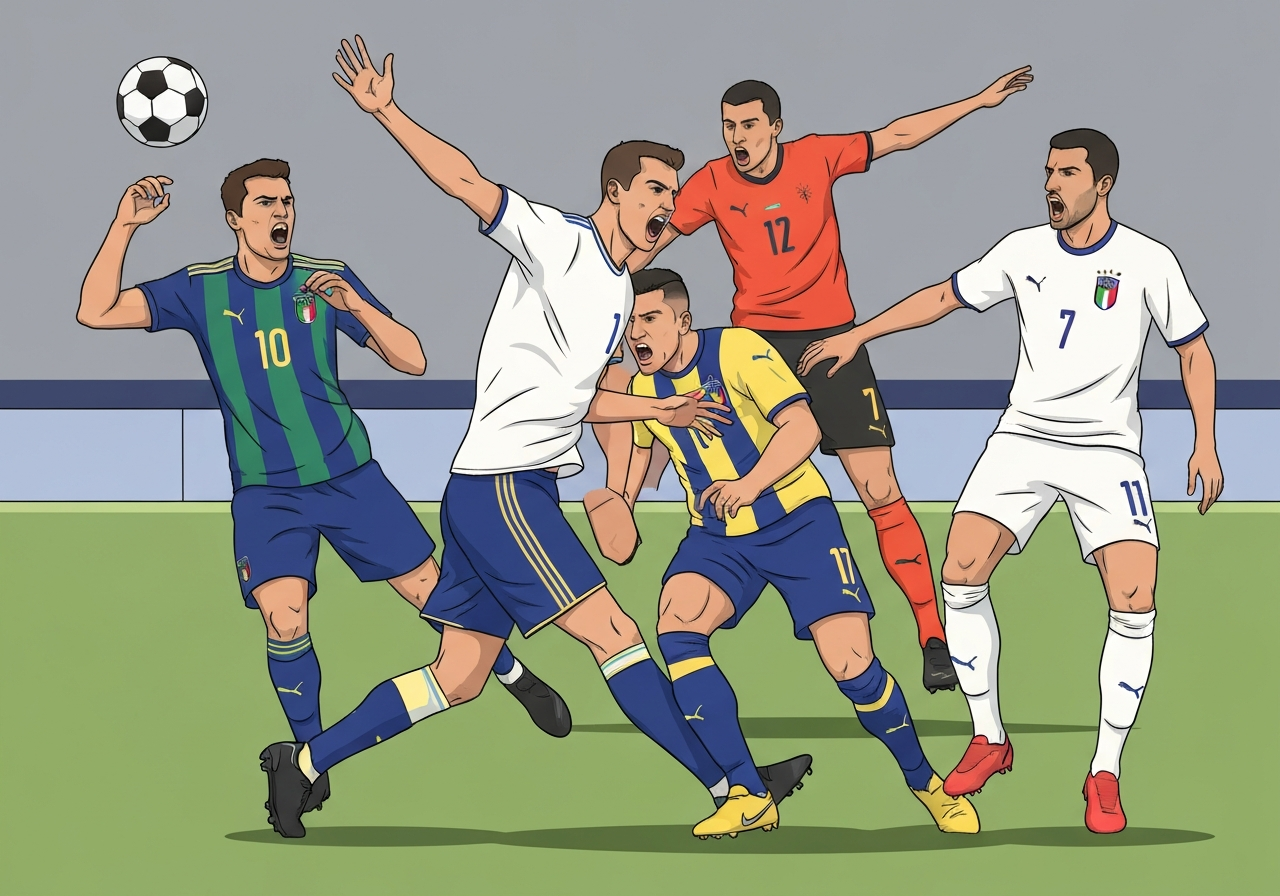
On March 31, 2026, Bosnia and Herzegovina eliminated Italy from the FIFA World Cup playoff in Zenica after a penalty shootout, sending the Azzurri out of the tournament for a third consecutive cycle. The match was level after extra time and decided 4-1 in penalties for Bosnia. Earlier and parallel playoff fixtures produced decisive outcomes across Europe, with Czechia, Turkey and Sweden also clinching World Cup berths. Several other intercontinental playoff matches, including Congo vs Jamaica, were underway or in halftime across broadcast windows.
Key Takeaways
- Bosnia and Herzegovina beat Italy on penalties, 4-1, after a 1-1 draw following extra time; Italy will miss the World Cup for the third straight tournament.
- Moise Kean opened for Italy in the 15th minute; Haris Tabakovic equalized for Bosnia in the 79th minute.
- Italy played more than half the match with 10 men after Alessandro Bastoni was sent off in the 41st minute for a foul on Amar Memic.
- Czechia defeated Denmark on penalties, 3-1, to qualify for the 2026 World Cup following extra time and a 2-2 aggregate in that fixture.
- Turkey beat Kosovo 1-0 (Kerem Aktürkoglu 53′) to secure a spot in Group D alongside the United States, Paraguay and Australia.
- Sweden edged Poland 3-2 with Viktor Gyökeres scoring the decisive goal in the 88th minute to qualify for 2026.
- The Intercontinental Playoff Tournament matches included Congo vs Jamaica (0-0 at halftime in Guadalajara), with those fixtures feeding the expanded 48-team 2026 World Cup field.
Background
The 2026 FIFA World Cup expands the finals to 48 teams, increasing the number of UEFA qualifiers to 16 and creating extra playoff slots and intercontinental paths for teams on the margins. UEFA set a knockout-style playoff that placed higher-ranked teams and surprise challengers into single-match ties on March 31, 2026, creating high-stakes encounters played across several European venues and broadcast internationally.
Italy arrived in Zenica under intense scrutiny after a turbulent qualifying period and squad selection debates. Bosnia and Herzegovina, meanwhile, approached the playoff as an opportunity to reach the World Cup finals for only the second time in history. The playoff format — single elimination with extra time and penalties — amplifies the role of individual moments, red cards, and the psychological pressure of spot kicks.
Main Event
The tie in Zenica opened with Italy taking an early lead. Moise Kean converted in the 15th minute from a Nicolò Barella assist, giving the visitors a cushion they would need after a tense opening half. Italy’s momentum shifted in the 41st minute when Alessandro Bastoni received a red card for a tackle on Amar Memic during a Bosnia counter; the dismissal forced Italy to reorganize and defend with 10 players for the remainder of the match.
Despite the numerical disadvantage, Italy held the lead into the second half until Bosnia found an equalizer. Haris Tabakovic scored in the 79th minute to level the tie at 1-1, and the remainder of regulation produced few clear chances for either side. The contest moved through extra time with both teams cautious, conserving energy and avoiding needless risks that might concede a late winner.
After extra time produced no further goals, the match went to penalties. Bosnia converted four spot kicks while Italy managed a single successful penalty, ending the shootout 4-1 and sealing qualification for Bosnia. The outcome eliminated Italy from the 2026 World Cup and sparked immediate reaction about the state of the Azzurri program and short-term tactical choices in the decisive match.
Analysis & Implications
Bastoni’s red card was a turning point. Playing over an hour with 11 versus 10 would normally be manageable, but the timing — late in the first half — forced Italy to adopt a defensive posture for the majority of the match. The dismissal changed substitution patterns and limited Italy’s ability to press effectively in the second half and extra time.
Psychologically, penalty shootouts magnify preparation and composure. Bosnia’s successful spot kicks reflected both technical execution and mental resilience cultivated in their season and training camp. For Italy, the shootout loss intensifies scrutiny on penalty preparation, goalkeeper selection and endgame strategy in knockout situations.
At a national level, Italy’s absence from the World Cup for a third straight tournament — as reported after this match — has implications for federation leadership, coaching appointments and player development pathways. Federations typically review strategic direction after such results, and domestic clubs may see recalibrated priorities in youth integration and international scouting.
Comparison & Data
| Match | Final | Decider | Qualified |
|---|---|---|---|
| Italy vs Bosnia and Herzegovina | 1-1 | Penalties 4-1 | Bosnia and Herzegovina |
| Czechia vs Denmark | 2-2 | Penalties 3-1 | Czechia |
| Turkey vs Kosovo | 1-0 | 90 minutes | Turkey |
| Sweden vs Poland | 3-2 | 90 minutes | Sweden |
| Congo vs Jamaica | 0-0 (HT) | Ongoing | — |
The table summarizes outcomes from the March 31 playoff schedule. The shootout results underline the thin margins in single-match playoffs: two European ties required penalties to settle qualification. The expanded World Cup field increases the value of each playoff slot, making these single-leg fixtures particularly consequential.
Reactions & Quotes
Bosnia’s coaching staff framed the win as the product of long-term investment in cohesion and match preparation.
Bosnia and Herzegovina federation (post-match comments)
Italian players and federation representatives acknowledged the disappointment and promised a review of decisions and structures after the shock elimination.
Italian FA spokesperson (post-match statement)
Independent analysts noted that the red card and subsequent tactical adjustments materially changed the game’s expected outcome probabilities.
Independent football analyst (media commentary)
Unconfirmed
- Any formal appeals or disciplinary reviews regarding Alessandro Bastoni’s red card were not confirmed at the time of publication.
- Details about long-term staffing changes within the Italian Football Federation remain speculative until official announcements are made.
Bottom Line
Bosnia and Herzegovina’s shootout victory over Italy is a landmark result that alters the composition of UEFA’s entrants at the 2026 World Cup and compounds pressure on Italian football leadership. The match highlighted how a single red card and the lottery of penalties can overturn pre-match expectations.
For Bosnia, qualification brings a rare opportunity to compete on football’s largest stage and the attendant economic and sporting benefits. For Italy, the outcome is a prompt to reassess tactical approaches in knockout settings and the structural choices that determine international competitiveness.
Sources
- Times Union — media coverage and live updates
- FIFA — official tournament information and format (official)
- UEFA — European qualifying structure and playoff rules (governing body)