
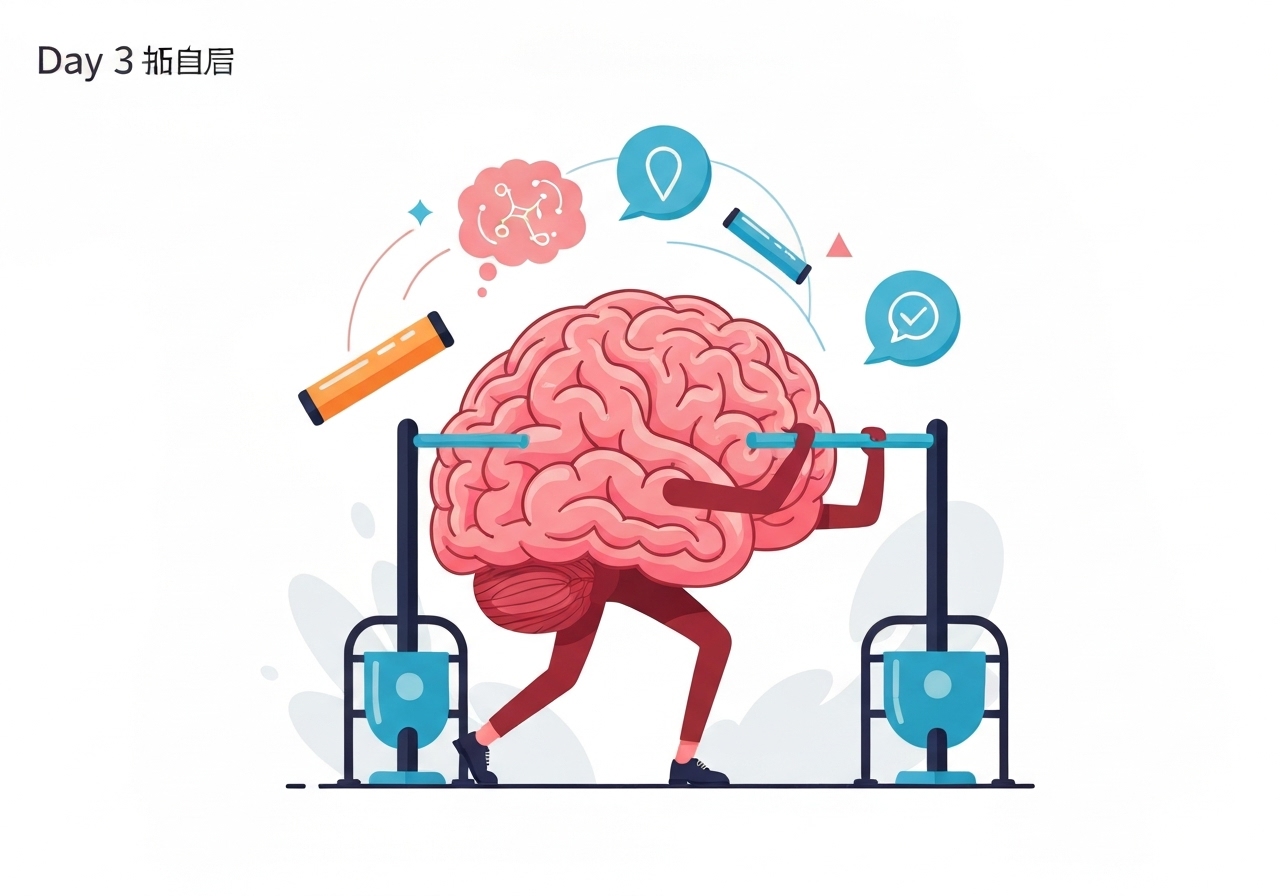
Day 3 of the 5-Day Brain Health Challenge asks you to do one of the most consistently recommended actions for mental resilience: exercise. Today, experts advise spending at least 20 minutes on physical activity to elevate heart rate, increase cerebral blood flow and engage muscle-to-brain signaling that supports memory and attention. Research links regular exercise to immediate small cognitive lifts after a workout and sustained benefits over months and years, including a lower long-term risk of dementia. The practical aim is a sharper, more resilient mind through movement you can maintain.
Key Takeaways
- Neurologists rank physical activity as the top single behavior for brain health, citing the largest payoff among lifestyle changes.
- Spend at least 20 minutes today on moderate activity; studies show both short-term cognitive boosts and lasting gains with consistent practice.
- Exercise triggers signaling molecules called exerkines released by muscle and other tissues; some travel to the brain to support synapse growth, repair and possibly neurogenesis.
- Regular activity improves brain blood flow, aiding delivery of oxygen and glucose and helping clear toxic proteins such as amyloid associated with Alzheimer’s.
- The hippocampus, central to learning and memory and known to shrink about 1–2 percent per year in older adults, appears especially responsive to exercise-related preservation.
- Simple options like brisk walking, swimming, cycling, resistance training, yoga or dance are all beneficial; the best choice is the one you will do consistently.
Background
Interest in exercise as a neuroprotective strategy has grown as populations age and dementia becomes a larger public-health challenge. Multiple cohort studies and randomized trials over the past two decades have linked habitual physical activity with better outcomes on tests of attention, memory and executive function. Researchers working in basic science have identified exerkines and other molecular pathways that plausibly connect muscle activity to neuronal resilience.
Clinicians now often emphasize activity as part of a broader prevention plan alongside sleep, social engagement and cardiovascular risk management. Although exercise cannot guarantee prevention of dementia, population data show a lower incidence among more active groups. Institutions from major medical centers to university labs continue to examine dose, intensity and which activity types produce the strongest cognitive effects.
Main Event
For Day 3 the instruction is concrete: set aside at least 20 continuous minutes for physical exertion that raises your heart rate. That could be a brisk walk, a short bike ride, a swim, a strength set in your living room, or a 20-minute dance session. Two neurologists noted they incorporate exercise by walking part of the way to work; modest daily step increases have been associated with reduced dementia risk in recent research.
Researchers emphasize intensity and consistency. A leisurely stroll has benefits, but walking briskly enough to speed the pulse tends to produce larger gains in blood flow and metabolic signaling. If motivation is the barrier, pair exercise with an enjoyable activity—audiobooks, music or a call with a friend—so movement becomes something you look forward to rather than postpone.
The challenge also encourages social accountability: walk with a partner if available or schedule a phone walk-and-talk. If you prefer guided options, use an app or the tool linked in the original program to find a new 20-minute routine. Small implementation strategies, like habit pairing and public commitments, increase the odds that a short workout becomes a regular habit.
Analysis & Implications
At a population level, promoting brief but regular exercise could shift risk curves for cognitive decline over decades. If even modest increments in daily activity translate into lower incidence of dementia, the cumulative public-health benefit would be substantial in aging societies. Policymakers and health systems face the pragmatic question of how to create environments and incentives—safe walking spaces, subsidized community programs, workplace flexibility—that make sustained activity feasible for more people.
Scientifically, the exerkine hypothesis offers a compelling mechanistic bridge between peripheral activity and central nervous system change, but human research is still unraveling which molecules matter most and how they act across ages and conditions. Longitudinal imaging studies suggest that regular aerobic and resistance exercise can slow hippocampal atrophy, but effect sizes vary by age, baseline fitness and other health factors.
For clinicians advising individual patients, a personalized approach matters. Someone with mobility limits may get cognitive benefit from seated resistance work or adapted aquatic exercise, while an otherwise healthy adult may maximize gains through a mix of aerobic and strength training. The immediate take-away is that achievable, enjoyable routines adopted long term are the most likely to produce meaningful benefits.
Comparison & Data
| Exercise Type | Typical Intensity | Evidence on Cognition |
|---|---|---|
| Brisk walking | Moderate | Consistent association with lower dementia risk and improved executive function |
| Aerobic cycling/swimming | Moderate to vigorous | Strong evidence for increased brain blood flow and memory benefits |
| Resistance training | Moderate to vigorous | Linked to improved attention and executive skills in older adults |
| Mind-body (yoga, tai chi) | Low to moderate | Benefits for attention, mood and fall prevention; cognitive evidence growing |
The table summarizes typical intensities and the prevailing evidence for cognitive outcomes. While aerobic activity most reliably increases cerebral perfusion, resistance training contributes to executive function and may complement aerobic benefits. Mind-body practices add value through stress reduction and balance, which indirectly support cognition.
Reactions & Quotes
Exercise delivers the largest overall return on lifestyle investment for brain health.
Dr Gregg Day, Mayo Clinic (neurologist)
Make walking brisk enough to raise your heart rate; think of moving as if you were on your way somewhere important.
Dr Linda Selwa, University of Michigan Medical School (clinical professor of neurology)
Physical activity appears to help the brain age more slowly than inactivity would allow.
Dr Kirk Erickson, AdventHealth Research Institute (chair of neuroscience)
Unconfirmed
- The precise minimum weekly dose of exercise required to significantly reduce dementia risk across populations remains unsettled.
- Which specific exerkines are most important for human neuroprotection has not been definitively established.
- Long-term causal estimates tying particular exercise regimens to percent reductions in dementia incidence vary by study and are still being refined.
Bottom Line
Day 3 asks for a simple, evidence-aligned action: move for at least 20 minutes in a way that elevates your heart rate. There is robust and mounting evidence that regular physical activity benefits attention, memory and executive functions, and that it lowers long-term dementia risk at the population level.
Choose an activity you enjoy, use habit strategies like temptation bundling or an accountability partner, and aim for consistency rather than perfection. Over months and years those small, repeatable choices are the most reliable route to preserving cognitive function.