
Lead
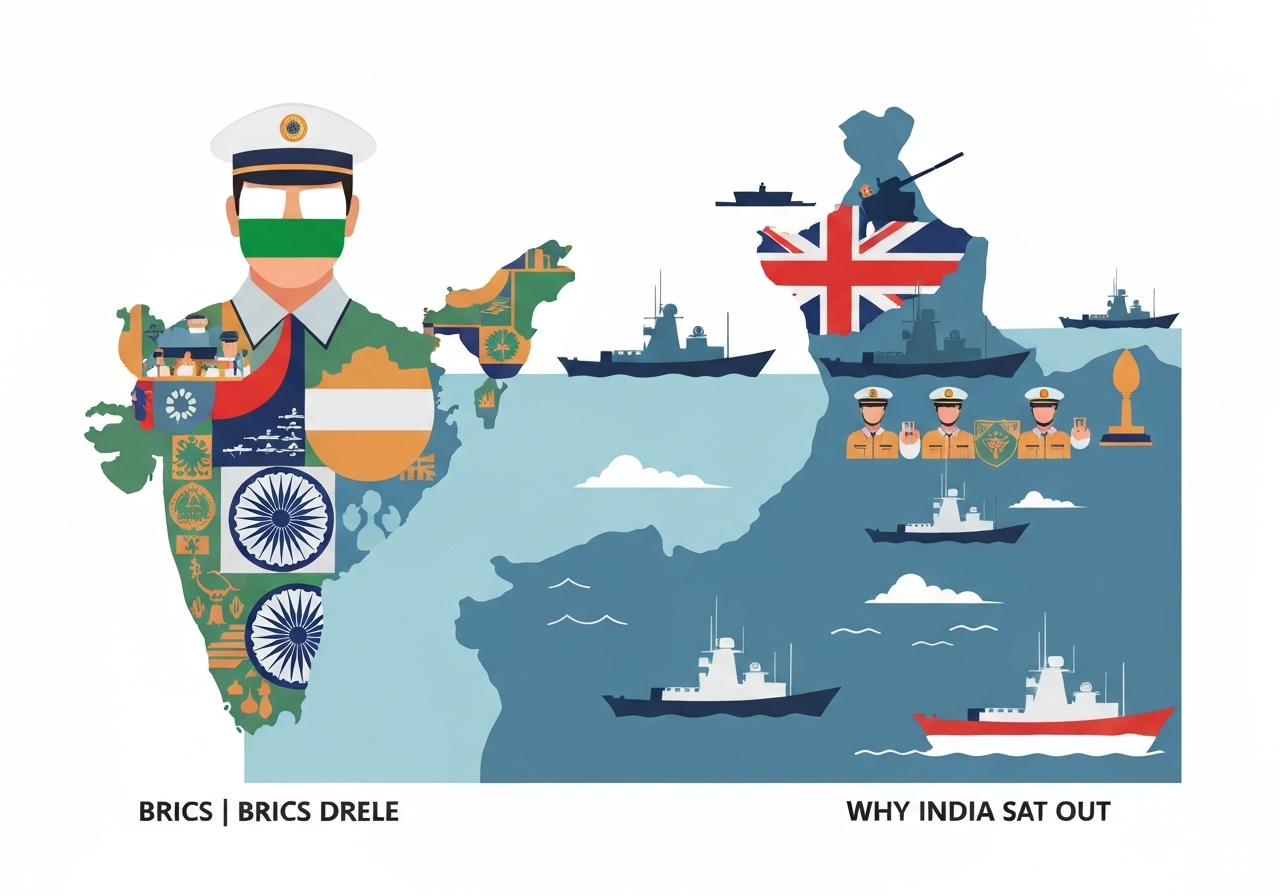
The weeklong “Will for Peace 2026” naval exercises began on 9 January 2026 off Simon’s Town, South Africa, with warships from China, Russia, Iran and South Africa taking part. Organizers say the drills focus on rescue, maritime strike and technical exchanges and are intended to reassure shipping lanes amid rising global maritime tensions. India and Brazil chose not to deploy ships, with New Delhi declining participation to avoid complicating ties with Washington. The manoeuvres come as US–South Africa relations remain frayed and Washington views parts of BRICS as an economic and strategic challenge.
Key takeaways
- Will for Peace 2026 started on 9 January 2026 at Simon’s Town, the meeting point of the Indian and Atlantic Oceans.
- Participants included China, Russia, Iran and South Africa; observers named at the opening were Brazil, Egypt, Indonesia and Ethiopia.
- Drill activities listed by Chinese defence officials include rescue operations, maritime strike drills and technical exchanges over a one‑week period.
- India and Brazil did not send combat ships; Brasilia attended as an observer while New Delhi abstained completely.
- The exercises follow heightened tensions: they began days after the United States seized a Venezuela‑linked Russian tanker, an episode tied to broader sanctions enforcement.
- South Africa chairs BRICS (Brazil, Russia, India, China, South Africa) and described the operation as a BRICS Plus engagement to protect maritime trade and economic activity.
- Analysts say New Delhi’s absence reflects a desire to balance strategic ties with Washington while resisting a military redefinition of BRICS.
Background
BRICS began as an economic grouping—Brazil, Russia, India, China and South Africa—focused on promoting cooperation among large developing states. In 2023–2024 the grouping expanded informally into a BRICS Plus format, bringing in partners such as Egypt, Ethiopia, Saudi Arabia and the UAE, and Iran was officially admitted in 2024. That enlargement broadened the bloc’s diplomatic reach but also introduced competing regional interests and rivalries among members and invitees.
South Africa has a history of staging joint naval exercises with China and Russia. Earlier trilateral naval exercises branded Exercise Mosi took place in November 2019 and again in February 2023. Those past drills drew criticism from Western capitals and underscored how military cooperation events can have diplomatic costs when host states face strained ties with the United States and its partners.
The geopolitical setting for Will for Peace 2026 is unusually charged. The drills opened shortly after a US operation that led to the seizure of a tanker linked to Venezuela and Russia, and amid a broader US posture under President Donald Trump that has included threats of tariffs and tougher rhetoric toward multiple BRICS members. This backdrop has magnified global attention on what otherwise could have been framed as routine maritime cooperation.
Main event
Chinese officials led the opening ceremony at Simon’s Town, where they described the manoeuvres as a response to rising maritime tensions and a contribution to protecting commercial sea lanes. South African task force commander Captain Nndwakhulu Thomas Thamaha framed the exercises as more than drills, saying they reflect a collective will to cooperate in a complex maritime environment.
Participating platforms included a Chinese guided‑missile destroyer, the Russian corvette Stoikiy, the Iranian patrol ship IRIS Naghdi and South Africa’s SAS Amatola (F145). Observers and invited participants were present in harbour during the opening, with Brazil, Egypt, Indonesia and Ethiopia listed as observers by Chinese organisers on the first day.
The exercise timetable reported by defence officials includes search and rescue training, coordinated maritime strike drills and technical exchanges on communications and navigation procedures. Chinese defence materials emphasised interoperability and safeguarding maritime economic activities, language mirrored by South African statements that presented the event as defensive and trade‑protecting in nature.
The timing and composition of the participating navies drew immediate scrutiny. With Iran participating at sea and recent additions to BRICS including states with divergent relations to the West, the exercise tested diplomatic boundaries for South Africa as host and prompted immediate reactions in Western capitals concerned about the strategic signal such drills send.
Analysis & implications
First, the exercises serve a dual purpose: practical maritime training and a symbolic demonstration of geopolitical alignment. For China and Russia, putting naval assets on display alongside Iran reinforces messaging about strategic partnerships that can operate beyond Western security architectures. For South Africa, hosting consolidates its role as BRICS chair and signals an independent foreign policy posture.
Second, India’s refusal to participate highlights limits to BRICS cohesion. New Delhi maintains deepening economic and security ties with the United States; participating in drills that include Iran or that are perceived as confrontational toward Washington could complicate New Delhi’s strategic calculus. Analysts cite India’s long‑standing preference to keep BRICS primarily an economic forum rather than a military one.
Third, the exercises underscore how BRICS Plus expansion complicates alliance dynamics. Bringing in states that have bilateral tensions with each other—such as Iran and some Gulf partners—reduces the likelihood of the grouping evolving into a unified military bloc. Divergent threat perceptions, regional disputes and competing economic priorities make a formal security alliance among all BRICS and BRICS Plus members improbable in the near term.
Finally, there are practical economic stakes: even if organisers stress protection of shipping, any escalation in naval posturing near major sea lanes raises insurance costs, affects routing decisions and can increase the commercial risk premia for companies operating in the region. Continued drills could therefore have modest but tangible effects on shipping and regional trade flows if tensions persist.
Comparison & data
| Country | Deployed Vessel Type |
|---|---|
| China | Guided‑missile destroyer |
| Russia | Corvette |
| Iran | Patrol ship / corvette |
| South Africa | Frigate (SAS Amatola F145) |
| Brazil, Egypt, Indonesia, Ethiopia | Observers (harbour presence) |
The table summarises the vessels publicised at the opening ceremony. Prior trilateral exercises involving South Africa, China and Russia in 2019 and 2023 had similar profiles, though the 2026 event is notable for formally including Iran and for branding under the BRICS Plus rubric. The observed pattern suggests continuity in platform types—surface combatants and support vessels—rather than a sudden shift to larger blue‑water expeditionary forces.
Reactions & quotes
South African military leadership framed the drills as cooperative and defensive in purpose, emphasising maritime safety rather than power projection.
“In an increasingly complex maritime environment, cooperation such as this is not an option. It is essential.”
Capt. Nndwakhulu Thomas Thamaha, South African Joint Task Force
Thamaha’s remark was delivered at the opening ceremony and explicitly tied the exercise to safeguarding shipping and maritime economic activities, language chosen to mitigate concerns about offensive intent.
Washington’s posture has been sharply critical of parts of the BRICS grouping; President Donald Trump has publicly attacked BRICS members’ policies and threatened tariffs and other measures to counter perceived economic threats.
“If they ever really form in a meaningful way, it will end very quickly.”
Donald J. Trump, US President (public statement, July 2025)
The president’s comment reflects a broader US skepticism toward any bloc perceived to challenge American economic or strategic primacy. US policy responses in 2025–2026, including tariff threats and sanctions enforcement, have added friction to relations with several BRICS members.
Unconfirmed
- Reports linking the exercises to an explicit, coordinated anti‑US strategy are unconfirmed; participating governments frame the drills as defensive and trade‑protective.
- Claims that the drills will lead to a formal BRICS military pact lack corroborating evidence; no formal security treaty has been announced.
- Allegations that drill timing was arranged as a direct response to the US tanker seizure remain unverified by participating officials.
Bottom line
Will for Peace 2026 is both a practical naval training event and a diplomatic signal. For China, Russia and Iran, the exercises reinforce visible security cooperation; for South Africa, hosting underscores its leadership role within BRICS even as it navigates relations with Western partners. For India and some other members, abstention underscores an ongoing effort to keep BRICS primarily an economic forum rather than a military alliance.
Looking ahead, the exercises are unlikely to convert BRICS into a unified military bloc because of divergent member interests, regional rivalries and the political costs for some participants in alienating Western partners. Nevertheless, such drills will remain a recurring feature of geopolitics as states with independent foreign policies seek both practical cooperation and platforms for strategic signaling.
Sources
- Al Jazeera (International news outlet; original reporting summarising opening ceremony and participation)
- Ministry/Department statements (Official defence communications as cited by participating states)
- Reuters (International news agency; images and deck reports from Simon’s Town)