
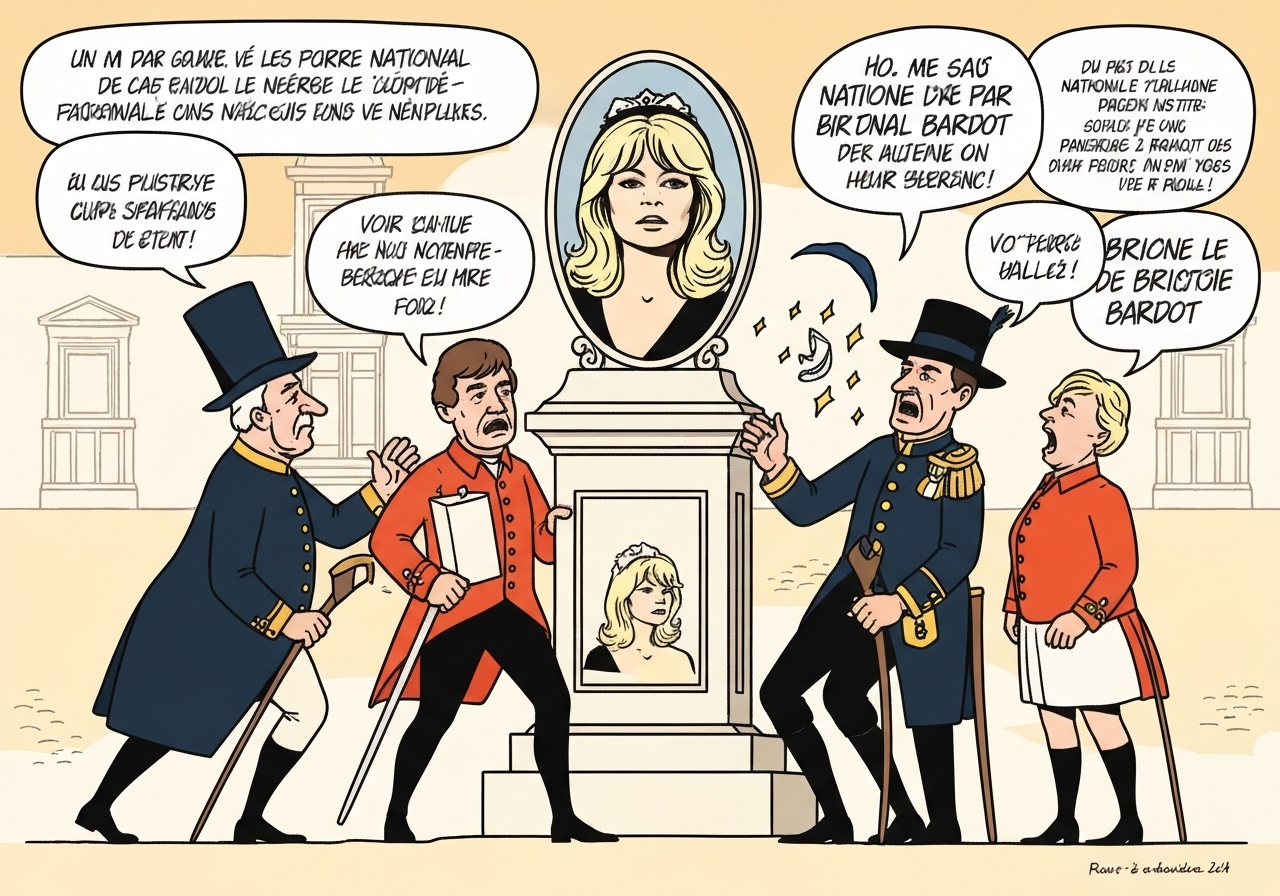
Lead: After Brigitte Bardot died on Sunday aged 91, right‑wing leader Éric Ciotti has urged the French state to hold a national homage to the film star, launching a petition that has gathered more than 23,000 signatures. The call has won backing from some on the far right and the mayor of Nice, but drawn objections from left‑wing politicians who argue national tributes are reserved for exceptional service to the republic. Officials have confirmed Bardot’s funeral will take place on 7 January at Notre‑Dame de l’Assomption in Saint‑Tropez and that she will be buried near her family in the town’s marine cemetery.
Key Takeaways
- Brigitte Bardot died on Sunday at age 91; her funeral is scheduled for 7 January at Notre‑Dame de l’Assomption in Saint‑Tropez.
- Éric Ciotti launched a petition for a national tribute that has exceeded 23,000 signatures and has support from some far‑right allies.
- President Emmanuel Macron described Bardot as a “legend of the century,” while opponents stress she was convicted five times for inciting racial hatred.
- Bardot starred in roughly 50 films, rose to fame with And God Created Woman (1956), and left cinema in 1973 to focus on animal welfare.
- Christian Estrosi, mayor of Nice, plans to name an “iconic site” in her honour; local officials in Saint‑Tropez have confirmed a private burial in the public cemetery.
- Debate over a national homage echoes past cases: Robert Badinter received a state ceremony in 2024, Charles Aznavour in 2018, and Johnny Hallyday had a public farewell in 2017.
Background
Brigitte Bardot became an international film star after her breakthrough in 1956 and built a career across roughly 50 films before withdrawing from cinema in 1973. She spent decades at her La Madrague home in Saint‑Tropez and devoted her later life to animal welfare through the Brigitte Bardot Foundation. Over time Bardot’s public profile split between admiration for her screen work and controversy over repeated inflammatory statements.
Her remarks on Muslims and comments about people from Réunion, among others, led to five convictions for incitement to racial hatred — a record her defenders and critics alike point to when debating a state tribute. In France, national homages are not automatic: they have been reserved for figures deemed to have rendered exceptional service to the nation, a standard invoked by Socialist leader Olivier Faure in opposing a full state ceremony for Bardot.
Main Event
Éric Ciotti, leader of the right‑wing UDR party, has argued France should honour Bardot as a national symbol, invoking Marianne — the republican emblem whose portrait Bardot famously modelled in the 1960s. Ciotti says her international stature and contributions to women’s liberty and the abortion debate justify a national send‑off, and he has appealed to President Macron to organise one.
The petition Ciotti launched has exceeded 23,000 signatures and attracted endorsements from some far‑right allies; it has also prompted municipal gestures such as Nice mayor Christian Estrosi’s pledge to name a public site after Bardot. President Macron publicly paid tribute to Bardot as a “legend of the century,” language that supporters cite in urging a formal homage.
Opponents on the left have pushed back. Socialist leader Olivier Faure emphasized that national homages recognise exceptional services to the republic and argued Bardot’s convictions and political stance make a state ceremony inappropriate. Other voices on the left, however, such as Socialist MP Philippe Brun, have said a presidential decision to proceed would be hard to contest, citing precedents like Johnny Hallyday.
Locally, Bardot’s wishes complicate arrangements: friends say she shunned medals and large ceremonies and asked to be buried at La Madrague rather than a public cemetery. Saint‑Tropez town hall says she will have a private burial in the public marine cemetery overlooking the Mediterranean and that the funeral on 7 January will be broadcast on screens across the town.
Analysis & Implications
Requests for state homages are as much political gestures as they are acts of remembrance. A presidential decision to hold a national tribute for Bardot would signal an official framing of her legacy that may bolster the right’s cultural narrative, while provoking criticism from opponents who view such a gesture as normalising or overlooking her convictions for incitement.
The Bardot case underlines the broader difficulty democracies face in commemorating figures with mixed legacies: artistic achievement and public service on one side, recorded legal convictions and polarising rhetoric on the other. How France resolves that tension will shape public memory of Bardot and set a tone for future cases where cultural icons are entwined with contentious politics.
Internationally, a formal tribute could be interpreted in different ways: as recognition of an influential cultural ambassador, or as a domestic decision that glosses over elements of Bardot’s record that offended minority communities. That ambiguity raises diplomatic sensitivities, particularly in former French territories and among immigrant communities within France.
Comparison & Data
| Figure | Year | Type of Tribute |
|---|---|---|
| Robert Badinter | 2024 | Solemn national ceremony (state honour) |
| Charles Aznavour | 2018 | State homage and public ceremonies |
| Johnny Hallyday | 2017 | Public farewell with large crowds |
These examples show a range of official responses: from formal state ceremonies for figures associated with public service to large public farewells for cultural celebrities. Bardot’s profile sits between those models, which makes the outcome uncertain and politically charged.
Reactions & Quotes
Right‑wing supporters have framed a homage as recognition of Bardot’s cultural impact and advocacy for women’s freedoms; critics point to her convictions and divisive statements as disqualifying factors.
“France has a duty to honour its Marianne,”
Éric Ciotti, UDR party leader
Ciotti used the Marianne reference to tie Bardot’s 1960s image to a symbolic national role, arguing her cultural stature merits state recognition.
“A legend of the century,”
Emmanuel Macron, President of France
Macron’s tribute framed Bardot as a major cultural figure; opponents say the president’s words will not settle the question of a formal state ceremony.
“To be moved by the plight of dolphins and yet be indifferent to the deaths of migrants… what degree of cynicism is that?”
Sandrine Rousseau, Green MP
Rousseau’s comment illustrates the moral tensions critics raise between Bardot’s animal advocacy and her statements about migrants and minority groups.
Unconfirmed
- Whether President Macron will accept Ciotti’s appeal and authorise a formal national homage has not been confirmed by the Élysée at the time of publication.
- The petition’s long‑term trajectory and whether it will change official plans remains uncertain and may grow beyond the 23,000+ signatures reported.
- Ciotti’s claim that Bardot actively helped secure abortion rights is a political interpretation cited by supporters and has not been documented as a direct causal role in legislative changes.
Bottom Line
Brigitte Bardot’s death has reopened debates about how democracies remember complex public figures. Her international fame and decades of animal advocacy sit alongside convictions for incitement and a record of polarising statements, leaving no easy answer about whether the state should stage a national homage.
The decision will be both symbolic and political: a presidential green light would privilege cultural recognition over legal and moral controversies, while a refusal or limited local tributes would underscore the republic’s caution about formal honours. Observers should watch for an official Elysee position and municipal commemorations in the coming days, including the funeral on 7 January in Saint‑Tropez.
Sources
- BBC News (national/international media report)
- Brigitte Bardot Foundation (official animal‑welfare foundation announcement)
- Town Hall of Saint‑Tropez (local government statements on burial arrangements)