
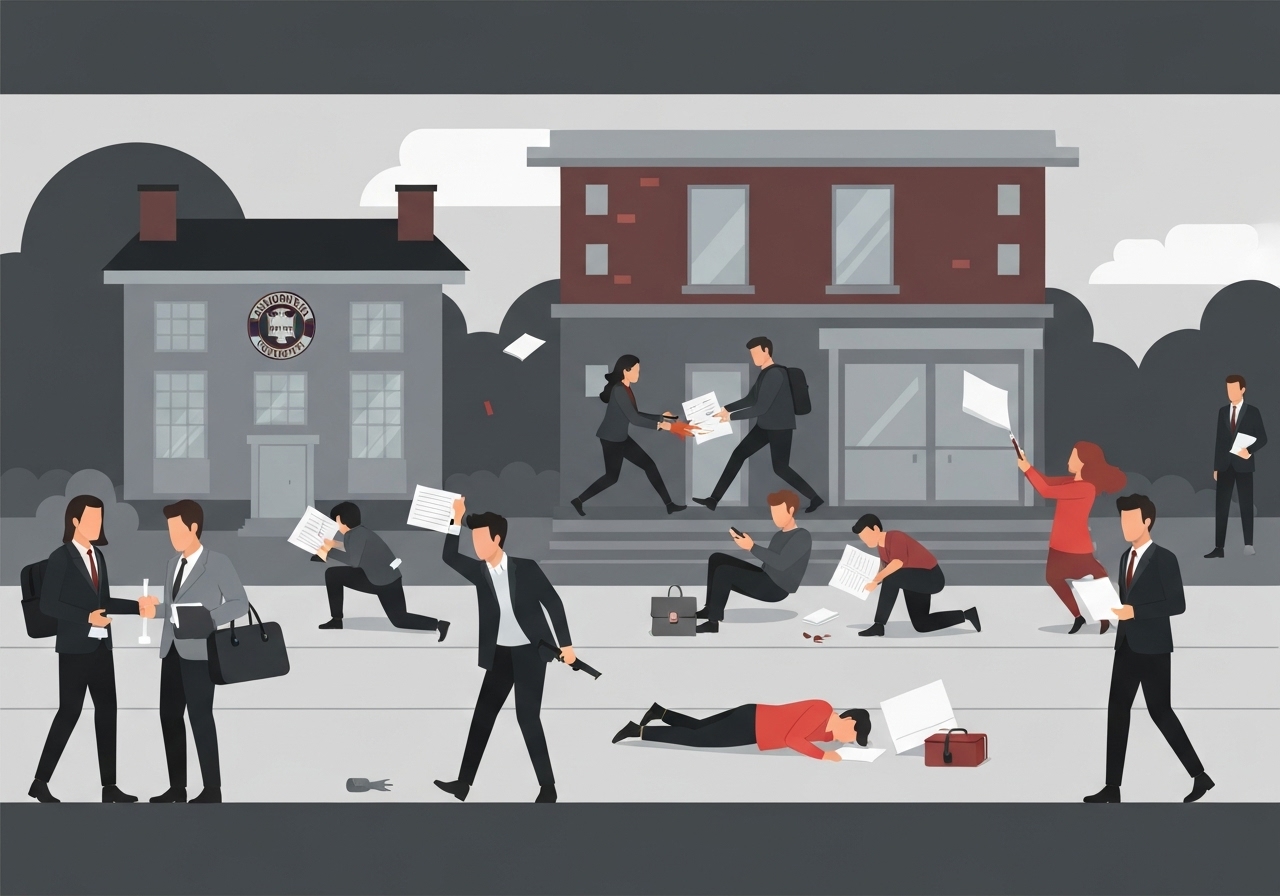
Lead: On Saturday in Providence, a gunman dressed in dark clothing opened fire inside the Barus & Holley engineering building at Brown University during engineering finals, killing at least two people and wounding eight others. Campus police and Providence officers conducted an extensive search of campus buildings and grounds for hours after the attack while officials ordered a shelter-in-place for nearby neighborhoods. Authorities later detained and released a person preliminarily thought to be involved; the investigation is ongoing and the FBI is assisting local law enforcement. Hospitals treated eight shooting victims, several in critical condition.
Key takeaways
- Fatalities: At least two people were killed in the shooting inside Barus & Holley, the university’s engineering building.
- Injuries: Eight people were transported to Rhode Island Hospital; six were reported in critical but stable condition, one in critical condition and one stable.
- Location and timing: The attack occurred on Saturday during engineering design exams in the seven‑story Barus & Holley building on the edge of Brown’s campus.
- Suspect description: Police describe a male suspect wearing dark clothing last seen leaving the engineering building; a preliminary detainee was later cleared of involvement.
- Police response: Officers searched campus buildings and grounds for more than three hours after the shooting and imposed a shelter‑in‑place for nearby residents.
- University impact: Brown’s emergency notification system issued alerts; classes and campus operations were disrupted as the investigation continued.
- Federal assistance: The FBI joined local authorities in the response and investigation.
Background
Brown University, an Ivy League institution in Providence, Rhode Island, enrolls roughly 7,300 undergraduates and more than 3,000 graduate students. The Barus & Holley complex, a seven‑story facility that houses the School of Engineering and part of the physics department, contains over 100 laboratories and dozens of classrooms and offices and was hosting engineering design finals when the shooting occurred. Campus security and Providence police maintain coordinated emergency procedures for active‑shooter events; this incident triggered Brown’s emergency notification system and a shelter‑in‑place directive for nearby neighborhoods.
Mass shootings on university campuses, while relatively rare compared with other forms of gun violence, carry heightened community impact because they occur where large numbers of young people congregate for classes and exams. Previous campus attacks have prompted debates about building security, law enforcement coordination, mental‑health support for students, and policies on armed response. Local stakeholders include the university administration, Providence public safety officials, Rhode Island Hospital medical teams, and federal partners such as the FBI.
Main event
According to Providence police and university alerts, the shooter was a male in dark clothing who was last seen leaving an engineering building shortly after the shots were heard. The incident unfolded during late afternoon hours; students in the building reported hearing multiple loud pops and then receiving active‑shooter alerts on their phones. Witnesses described sheltering in place—students hid under desks, turned off lights, or fled to nearby buildings and businesses for safety.
Emergency responders arrived on scene quickly and searched campus buildings and outdoor areas; officers also checked trash receptacles and other potential hiding places as part of the sweep. Mayor Brett Smiley announced a shelter‑in‑place order and said city resources were fully committed to locating the suspect. A person initially detained for questioning was later determined not to be involved, and police continued canvassing the area and reviewing security footage.
Rhode Island Hospital received eight gunshot victims; hospital spokespeople reported that six were in critical but stable condition, one was critical, and one was stable. University officials briefly sent an alert saying a suspect was in custody before correcting that message and noting the search remained active. The FBI confirmed it was assisting local authorities with the investigation.
Analysis & implications
The attack at an academic building during finals exacerbates immediate psychological harm for students, faculty and staff, potentially lengthening the recovery timeline for the campus community. Disruptions to exams and research, combined with the trauma of witnessing or narrowly avoiding violence, will likely prompt expanded counseling services and adjustments to academic schedules. Administrators will face pressure to review access controls, building‑level security, and emergency communication protocols to reduce vulnerability during high-traffic periods.
From a public‑safety perspective, the incident highlights the importance of rapid information flow between campus public‑safety units and municipal police, as well as clarity in public notifications—conflicting messages about a suspect in custody can increase confusion and anxiety. The involvement of federal investigators indicates authorities are treating the matter as a serious criminal probe with potential broader implications, including the need to trace the suspect’s movements and weapon procurement.
Politically and socially, the shooting may renew debates over gun policy, campus security funding, and mental‑health resources at higher education institutions. Local officials must balance law‑enforcement transparency with investigative needs, while universities nationwide may reevaluate lockdown procedures during exams. Long‑term implications could include legislative proposals at the state level, calls for stronger campus safety investments, and renewed attention to support systems for students affected by campus violence.
Comparison & data
| Metric | Count |
|---|---|
| Fatalities | 2 (minimum) |
| Injured (hospitalized) | 8 |
| Patients critical but stable | 6 |
| Patients critical | 1 |
| Patients stable | 1 |
The table summarizes official casualty figures released by hospital and police spokespeople. Those numbers reflect initial triage and may change as investigations and medical evaluations continue. For context, Brown University’s student population (about 7,300 undergraduates and over 3,000 graduate students) means a relatively small number of victims represents a significant shock to the broader campus community.
Reactions & quotes
Officials and community members expressed shock and pledged resources for the response. The following are succinct public statements and their context.
“We have all available resources” to find the suspect,
Mayor Brett Smiley (Providence, official statement)
The mayor framed the municipal response as comprehensive and urged residents near campus to remain inside while police conducted searches.
Police described the suspect as a male in dark clothing last seen leaving the engineering building,
Timothy O’Hara (Deputy Chief of Police)
Law enforcement provided a brief physical description as investigators canvassed campus and reviewed surveillance footage.
“All we can do right now is pray for the victims,”
President Donald Trump (brief White House remarks)
The president offered a short public expression of sympathy as federal agencies joined the response.
Unconfirmed
- Suspect identity and motive: Authorities have not publicly confirmed the shooter’s identity or a motive.
- Exact timeline of events inside the building: Detailed sequencing of shots, locations of victims, and shooter movements remain under investigation.
- Whether more than one suspect was involved: Initial reports considered multiple possibilities; police have not confirmed multiple attackers.
Bottom line
The shooting at Brown University on Saturday left at least two dead and eight wounded and triggered a major law‑enforcement response and temporary shelter‑in‑place for nearby neighborhoods. The incident occurred during engineering finals in the Barus & Holley building, intensifying its psychological and operational impact on students and staff.
Investigators, supported by the FBI, are continuing their work to identify and locate the shooter, establish a motive, and review security measures. In the near term, expect expanded campus counseling, potential changes to exam scheduling and building access policies, and public debate about preventive measures to limit similar tragedies.