
Lead
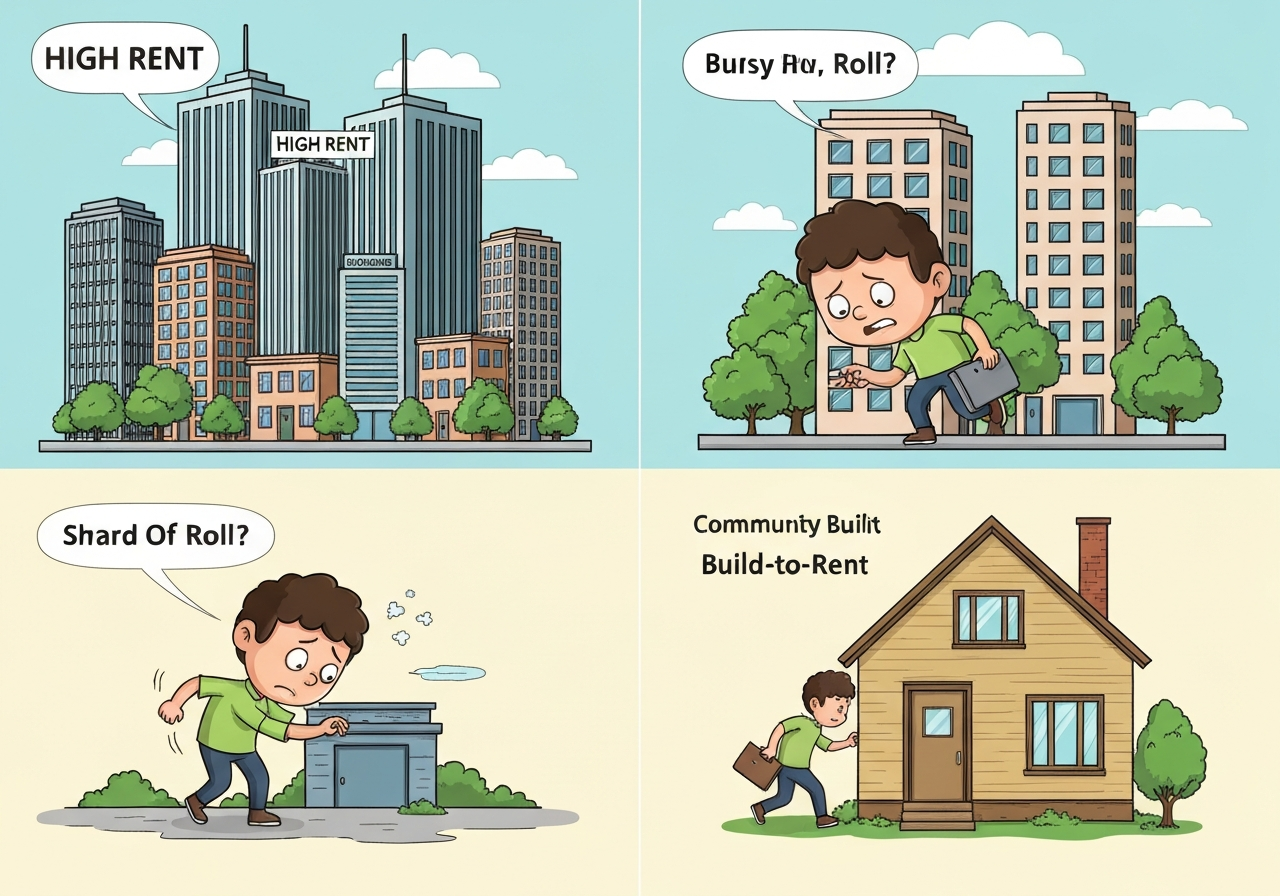
As the U.S. faces a deep housing affordability shortfall in 2025, a growing share of newly built single-family houses are being developed specifically for rent rather than sale. Renters like 87-year-old Joanne LaZette, who moved to a purpose-built rental house in Mesa, Arizona in 2022, say the model delivers single-family living without ownership responsibilities. Industry specialists report that roughly 7% of new single-family homes now come to market as rentals, and completions of so-called “build-to-rent” homes in 2024 were more than ten times those of a decade earlier. Proponents argue the trend expands supply and eases price pressure for both buyers and renters; critics and local opponents raise questions about long-term impacts and community fit.
Key Takeaways
- About 7% of newly built single-family houses now enter the market as rentals rather than for sale.
- Build-to-rent completions in 2024 exceeded levels from a decade earlier by more than 10-fold, concentrated in the Sun Belt and growing in Ohio and Utah.
- Redfin estimates an American household needs about $110,000 a year to afford a typical U.S. home, roughly 29% above median household income.
- Realtor.com estimates the national housing shortfall at just over 4 million units in 2025, driven by demand outpacing new construction.
- The National Association of Realtors reports about 800,000 fewer single-family houses for rent in 2024 compared with 2014, due in part to investor sales to owner-occupiers.
- Mortgage rates dipped below 6% for a 30-year fixed loan the week prior to publication, improving buying power for some but risking price increases without added supply.
- Surveys show shifting preferences: a Center for Generational Kinetics poll found only 8% of single-family renters named homeownership as the American dream.
Background
The shortage of housing in the United States is the product of long-term underbuilding relative to household formation. After the 2008 financial crisis, construction of single-family homes slowed and never fully caught up to demand; by 2025, analysts put the deficit at roughly 4 million units. That shortfall has driven prices and monthly housing costs higher, placing ownership out of reach for many households.
Build-to-rent (BTR) emerged as an investment and development response. Firms such as NexMetro, which began building in 2009 in the crisis aftermath, design and retain single-family units as rental inventory rather than selling them on completion. The model has strong appeal in fast-growing Sun Belt metros where land is available, and it has expanded into states such as Ohio and Utah as developers seek new markets.
Local politics complicate supply. Apartment projects frequently provoke resistance from neighborhood groups, a dynamic sometimes summarized as “attainable housing, just not near me.” Developers of single-story, cottage-style rental houses emphasize compatibility with existing neighborhoods as a selling point to overcome that opposition.
Main Event
Industry data and interviews with residents and executives show how build-to-rent is filling specific market niches. Many BTR residents are younger professionals or pet owners who want single-family amenities—private yards, no shared walls—without committing to ownership. Others are older adults, like LaZette, who prefer to avoid maintenance responsibilities in later life.
NexMetro’s CEO Josh Hartmann, who expanded the model after 2009, says the typical resident mix has evolved from post-foreclosure households to younger, often mobile renters and older households seeking simplicity. The company develops modest, single-story cottages that aim to fit into suburban contexts and minimize neighborhood pushback.
Proponents argue these units add supply that would otherwise not exist and therefore help reduce price pressure across both rental and for-sale markets. Urban Institute researchers and practitioners point to supply constraints as the central driver of affordability problems; by increasing the stock of occupied single-family homes, BTR can blunt upward price momentum.
At the same time, policy debates are active. In January, at the World Economic Forum, then-President Trump emphasized homeownership and proposed limits on institutional investors buying single-family homes—while his executive order contains provisions that could preserve developers’ ability to build new rental product. Observers warn that restrictions on new investment could reduce supply if not carefully drawn.
Analysis & Implications
Build-to-rent addresses a supply-side bottleneck by delivering units tailored for long-term rental occupancy. With a national shortfall exceeding 4 million units, even modest annual additions of single-family rental homes can help rebalance local markets. Economists note that increasing overall housing stock, regardless of tenure, reduces competition between buyers and renters and can moderate price growth.
The geographic concentration of BTR in the Sun Belt reflects both demand and feasibility: faster population growth, more available land, and regulatory environments receptive to lower-density development make those markets efficient for cottage-style single-family rentals. Expansion into Ohio and Utah signals that the concept can scale into different regional contexts, though local zoning and community responses remain critical variables.
There are distributional and political consequences to consider. If BTR growth is concentrated in certain neighborhoods, it may change local school funding bases, service demand, and long-term patterns of homeownership and wealth accumulation. Policymakers must weigh whether encouraging BTR complements goals to expand owner-occupied housing or inadvertently crowds out opportunities to increase for-sale supply in high-demand neighborhoods.
Financially, the model can be attractive to institutional investors seeking predictable cash flow, and attractive to renters who value maintenance-free living. However, long-term wealth-building through equity accrues to homeowners; renters must intentionally invest savings to replicate that effect. The net social outcome depends on whether increased BTR supply meaningfully lowers prices and whether renters have accessible pathways to wealth-building elsewhere.
Comparison & Data
| Metric | Value / Year |
|---|---|
| Share of new single-family houses built for rent | About 7% (recent) |
| Growth in BTR completions | More than 10× in 2024 vs. 2014 |
| Estimated national housing shortfall | ~4 million units (2025) |
| Income needed to afford typical home | $110,000 per year (Redfin) |
| Change in single-family rental stock | ~800,000 fewer units for rent in 2024 vs 2014 (NAR) |
The table highlights the mismatch between rising demand and constrained supply. A 7% share of new single-family homes delivered as rentals helps incrementally, but with a multi-million-unit shortfall and regional variability, BTR alone cannot close the gap. Complementary policy—zoning reform, infrastructure investment, and incentives for both rental and for-sale production—will determine whether increased output translates into sustained affordability.
Reactions & Quotes
Residents and experts express a range of perspectives on the practical and policy implications of build-to-rent.
Joanne LaZette describes the lifestyle trade-off she made in Mesa, Arizona: the house is new, private and maintenance-free, and she values that more than ownership.
“I share no walls with anybody, and it’s like having my own private little house that I just rent.”
Joanne LaZette, Mesa resident
NexMetro’s CEO frames the trend as a consumer-driven lifestyle choice and emphasizes the company’s design choices to reduce neighborhood friction.
“It’s just a lifestyle choice.”
Josh Hartmann, CEO, NexMetro
Housing analysts highlight the supply-side logic: increasing stock reduces competition and price pressure, benefiting both renters and buyers.
“Build-to-rent is a win-win all around,”
Laurie Goodman, Founder, Housing Finance Policy Center, Urban Institute
Unconfirmed
- Whether build-to-rent growth will, by itself, lower national home prices substantially—experts agree it helps, but the magnitude is uncertain and depends on total units added.
- How durable resident tenure patterns will be—it’s unclear whether many BTR tenants will remain long-term renters or transition to homeownership.
- The net fiscal impact on local governments—some municipalities may see different tax and service revenue profiles from rental cottages versus owner-occupied homes, but outcomes vary by jurisdiction.
Bottom Line
Build-to-rent is a growing, market-driven response to a deep U.S. housing supply shortfall. By delivering single-family units as rental stock—often in the Sun Belt and expanding to other states—developers can expand options for people who want detached homes without ownership responsibilities, easing some pressure on both rental and for-sale markets.
However, BTR is not a silver bullet. Policymakers who prioritize affordability should treat it as one tool among many: encourage more total housing production, reform exclusionary zoning, and design policies that ensure renters can build wealth or access stable pathways to homeownership if they choose. Local engagement on design and scale will determine whether communities accept BTR as compatible infill or resist it as disruptive to existing neighborhood character.
Sources
- NPR (news) — original reporting on build-to-rent residents and industry trends
- Redfin (real estate brokerage) — affordability estimates and income required to afford a typical home
- Realtor.com (industry data) — estimated national housing shortfall
- Urban Institute (think tank) — housing finance and supply analysis
- National Association of Realtors (industry association) — data on single-family rental inventory changes
- LendingTree (financial services) — rent vs. own cost comparisons