
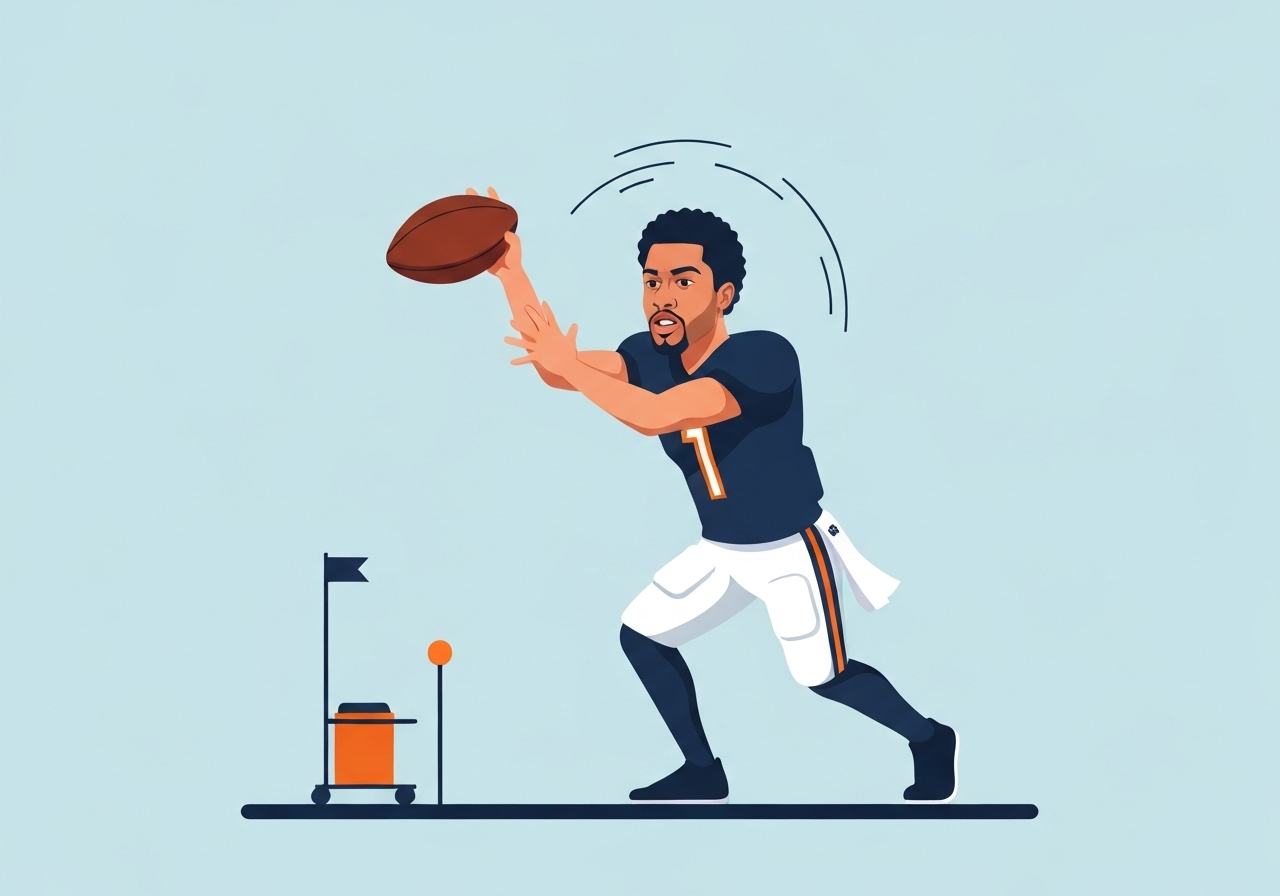
In the Chicago Bears’ first game under new head coach Ben Johnson, quarterback Caleb Williams produced a night of sharp highs and frustrating lows that contributed to a loss. Williams, in his second NFL season after being the No. 1 overall pick in the 2024 draft, opened the game with a poised drive capped by a rushing touchdown but followed with an extended stretch of inconsistent play. Johnson told reporters that tape review showed both throws that ranked with the best in the league and several misses he would want back, estimating three to four such plays. The coach called the outing a starting point and said the staff and player will work to correct execution ahead of next week.
Key Takeaways
- The Bears lost their first game with Ben Johnson as head coach; Williams showed both promising and problematic play across the game.
- Williams is in his second NFL season after being the 2024 No. 1 overall pick; Johnson singled out a handful of elite throws as well as multiple throws to “want back.”
- Johnson counted “three or four” plays on tape he would like to erase, specifying those were a minimum number from his review.
- The opening drive ended with Williams running the ball into the end zone, displaying command on early downs.
- A long midgame stretch of poor execution undermined the offense, and a late scoring drive fell short of changing the outcome.
- Johnson emphasized effort and competitiveness were not issues, but stressed fourth-quarter execution must improve.
- The loss raises immediate questions about consistency for a young franchise quarterback and the staff tasked with developing him.
Background
The Bears entered the season under a fresh coaching regime led by Ben Johnson, who assumed play-calling and overall offensive control with hopes of accelerating the offense’s development. Caleb Williams, the 2024 first overall selection, carried high expectations into Year 2 after a rookie season that showcased upside alongside typical early-career growing pains. The combination of a new staff and a young elite-credentialed quarterback set a narrative of rapid progress versus incremental learning. Leaguewide, second-year quarterbacks who were top picks often experience volatility as opponents adjust and as coaching staffs refine schemes around strengths and weaknesses.
Chicago’s roster construction and playbook choices were focal points in the offseason; Johnson’s arrival brought an emphasis on spacing and timing in the passing game while asking Williams to demonstrate pro-level processing under pressure. Fans and analysts tracked the opener for signs the offense could immediately elevate or whether it would need time to cohere. Past examples around the NFL show top prospects can flash elite traits one drive and struggle the next—making consistent execution the critical next step for both the player and the staff.
Main Event
On the game’s first offensive series, Williams appeared steady, using the pocket and the playbook to orchestrate a march that he finished himself with a rushing touchdown. That sequence highlighted his athleticism and situational awareness and suggested why Johnson praised some plays as NFL-caliber. After that strong start, the offense experienced a prolonged period of miscues: inaccurate throws, timing breakdowns, and stalled drives that surrendered momentum. Johnson noted the tape revealed a mix of “top notch” throws and multiple passes the team would prefer to have back.
The Bears showed resilience late, engineering a late scoring drive that narrowed the margin, but the rally came too late to alter the result. Johnson praised the players’ effort and competitiveness, but singled out fourth-quarter execution as an area for immediate improvement. In the postgame exchange, he said he and Williams reviewed the film together and that the quarterback was critical and reflective about his own performance. The coach framed the outing as a baseline from which they will try to improve in practice leading up to the next game.
Statistically, the game presented a split portrait: flashes of elite arm talent and decision-making in pressured moments offset by a clear set of errors that cost drives. That combination left the staff with concrete correction points — route timing, protection recognition, and accuracy under duress — to prioritize in meetings. For Williams, the performance reinforced the developmental path typical of a high-drafted passer transitioning fully to NFL speed and defensive complexity.
Analysis & Implications
The immediate implication is that Chicago must extract more consistency from its starting quarterback if it hopes to make a competitive push. Elite throws against pressure signal Williams’ ceiling is high; Johnson’s comparison of some plays to “the best in the NFL” is meaningful praise for a second-year player. But the referenced three-to-four throws the staff identified as errors are also significant because repeatable mistakes at the NFL level invite turnovers and stalled drives that cost games.
For the coaching staff, the performance underscores the need to calibrate play design and in-game adjustments to protect and accentuate Williams’ strengths while limiting exposure on borderline reads. That could mean tighter scripting early in games, clearer pre-snap communication, or situational simplification until consistency improves. The balance between challenging a young quarterback and shielding him from exploitable repeats is a central coaching judgment in the weeks ahead.
From a roster and long-term perspective, the result raises questions about surrounding weapons and protection. A quarterback’s development depends on the offensive line, route concepts, and complementary personnel; the Bears will be evaluated on whether they can optimize those elements to reduce the kinds of pressure-induced errors Johnson highlighted. League matchups will adjust quickly after tape review, so corrective measures need to be timely to prevent a short-term slide becoming systemic.
Comparison & Data
| Item | Detail |
|---|---|
| Coach | Ben Johnson (first game as Bears head coach) |
| Quarterback | Caleb Williams (second NFL season; 2024 No. 1 overall pick) |
| Tape review | “3–4 plays” identified by Johnson as ones they’d want back |
| Opening drive | Williams ended with a rushing touchdown |
The table above summarizes the factual touchpoints Johnson emphasized in postgame review. While the sample is a single outing, the contrast between a successful scripted opening drive and the midgame inconsistencies illustrates the kind of variance coaching staffs track when planning weekly corrections. The staff will prioritize repeats on the specific plays Johnson flagged and measure progress in subsequent weeks against those benchmarks.
Reactions & Quotes
Ben Johnson addressed the mixed performance in measured terms, combining praise for elite plays with clear expectations for cleaner execution.
“It was up and down. We had mixed results.”
Ben Johnson, Head Coach
Johnson elaborated that some throws were of a caliber he would rank alongside top NFL performers, then acknowledged the tape showed avoidable errors. He said he discussed the film with Williams, noting the quarterback was introspective and critical of his own execution, framing the game as a starting point for improvement.
“There were some things he did that were top notch and I would put him up there with some of the best in the NFL.”
Ben Johnson, Head Coach
Johnson also emphasized team effort despite the loss, insisting players competed throughout and that the focus now shifts to fixing execution especially in late-game situations. The coach set a clear expectation for the offense to clean up the mistakes ahead of next week’s opponent.
“Effort wasn’t an issue… the execution has got to improve, particularly there in the fourth quarter.”
Ben Johnson, Head Coach
Unconfirmed
- The exact identity and context of each of the “three or four” throws Johnson referenced have not been publicly itemized by the team and remain internal to the coaching review.
- Any planned playbook or schematic changes in response to the game have not been officially announced by the Bears as of the postgame comments.
Bottom Line
The game produced a clear, mixed diagnostic: Caleb Williams flashed the kind of talent that justified his top draft billing, yet repetitive execution issues materially harmed the Bears’ chance to win. Ben Johnson framed the performance as a glass-half-full start for a new coaching era, while making plain the immediate work required on technique and situational execution.
How the Bears respond in practice — correcting the handful of plays Johnson identified, adjusting calls to reduce pressure, and aligning supporting personnel — will determine whether this outing is an early hiccup or an indication of a longer-term adjustment period. For Williams, the priority is converting high-end flashes into consistent, game-to-game production that sustains wins.