
Lead
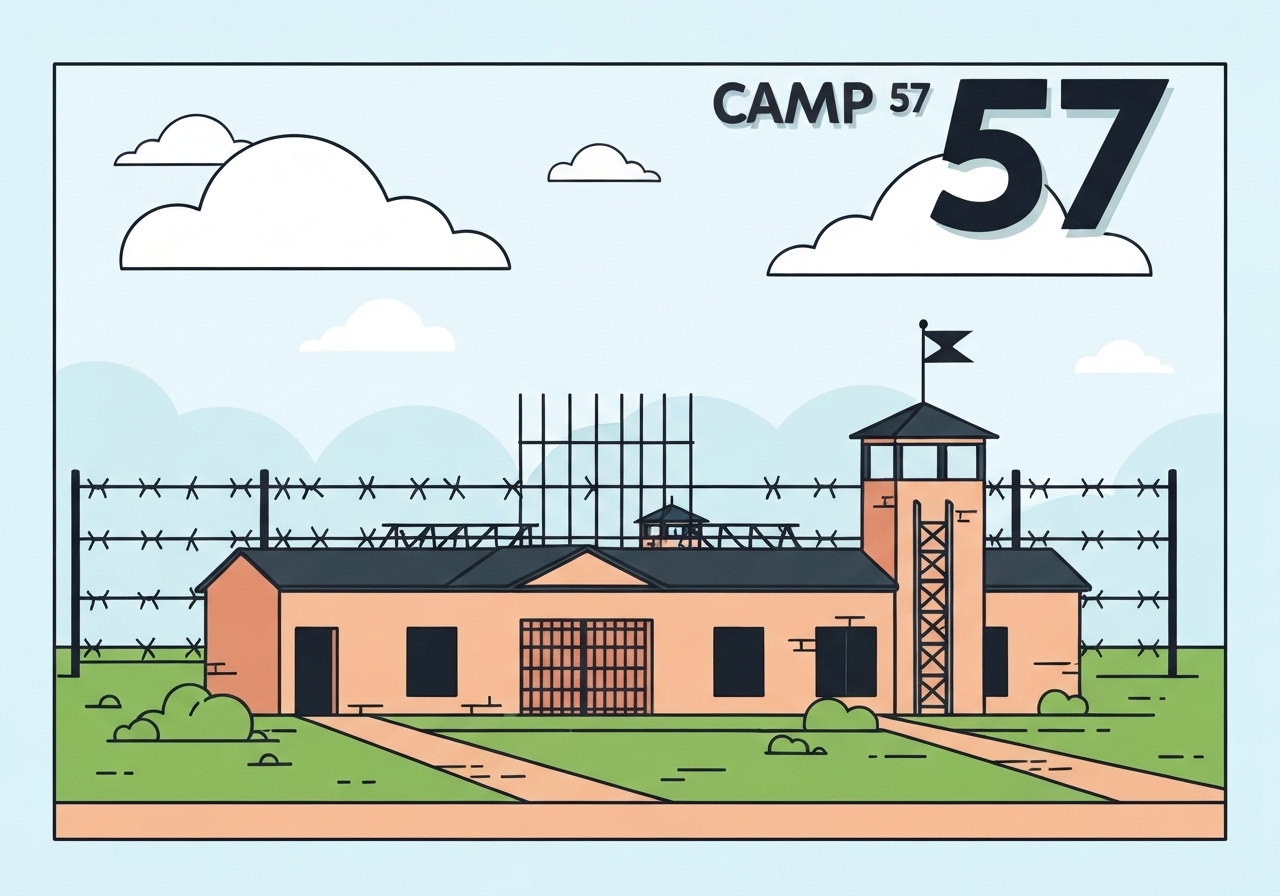
On Sept. 3, 2025, federal officials announced the opening of “Camp 57,” a new Immigration and Customs Enforcement (ICE) detention site at the Louisiana State Penitentiary (Angola) to hold undocumented migrants accused of crimes; the facility will house more than 400 men, with roughly half expected to arrive by the end of September.
Key Takeaways
- Camp 57 will be established inside the Louisiana State Penitentiary (Angola), an 18,000-acre maximum-security prison north of Baton Rouge.
- The facility is designed to accommodate over 400 men; officials said about half could be transferred by late September 2025.
- Federal leaders described the center as intended for serious criminal cases among undocumented migrants, calling it for the “worst of the worst.”
- Officials said the name honors Louisiana’s governor, Jeff Landry, the state’s 57th governor.
- Angola’s history and past litigation— including a 2021 finding of inadequate medical care and reports of forced labor-like conditions—have drawn criticism of the decision.
- The announcement follows other recent plans for detention sites in Republican-led states, including attempts in Florida and Nebraska.
Verified Facts
The new site, called Camp 57, will be located inside the Louisiana State Penitentiary (Angola), which spans about 18,000 acres and operates as the state’s largest maximum-security complex. State and federal officials say they will repurpose an existing, unused portion of the facility to create a segregated ICE detention space.
Officials from the Department of Homeland Security and the administration described the center as specifically intended to hold undocumented migrants accused of serious crimes. They have repeatedly framed Camp 57 as a tool to address violent crime and illegal immigration—two priorities cited by the administration.
Capacity details provided by state officials indicate room for over 400 men. Louisiana Gov. Jeff Landry said roughly half that cohort could be in place by the end of September 2025; federal transfer schedules and individual case processing will affect the final timeline.
| Item | Detail |
|---|---|
| Site | Louisiana State Penitentiary (Angola) |
| Acreage | 18,000 acres |
| Capacity | Over 400 men |
| Target population | Undocumented migrants accused of crimes |
| Projected arrivals | ~50% by end of Sept. 2025 (official estimate) |
Context & Impact
Angola carries a high-profile history: it is a former plantation and has been the subject of longstanding criticism over inmate treatment. Reporting and court findings in recent years highlighted issues including inadequate medical care and allegations that incarcerated people performed agricultural labor in extreme heat for little or no pay.
Human rights advocates and some criminal justice reform groups warn that placing immigration detainees inside a prison with Angola’s record raises humanitarian and legal concerns. They cite past rulings and reporting that document substandard conditions and limited oversight.
Politically, the move reinforces the administration’s broader push to expand detention capacity in states aligned with Republican governors. Similar proposals have emerged recently in Florida and Nebraska; some faced legal challenges or local opposition.
Operationally, housing immigration detainees in a maximum-security state prison requires coordination among state corrections officials, ICE, and federal courts to manage transfers, legal access, and medical and legal services for detainees.
Official Statements
“This facility will hold the most dangerous of criminals that have been out there harming individuals in this country,”
Kristi Noem, Secretary of Homeland Security
“Louisiana, you’re going to be an example for the rest of this country,”
Pamela Bondi, U.S. Attorney General
Explainer
Unconfirmed
- Specific arrival dates for individual detainee transfers beyond the officials’ target (half by end of September) remain subject to scheduling and court processing.
- Exact operational details about staffing levels, contractor involvement, and daily routines for Camp 57 have not been fully disclosed.
Bottom Line
The administration’s creation of Camp 57 at Angola is a politically charged effort to expand detention capacity for migrants accused of crimes. While officials highlight public-safety aims, the choice of Angola—given its history and past court findings—raises legal and human-rights questions that advocates and courts may test in coming weeks and months.