
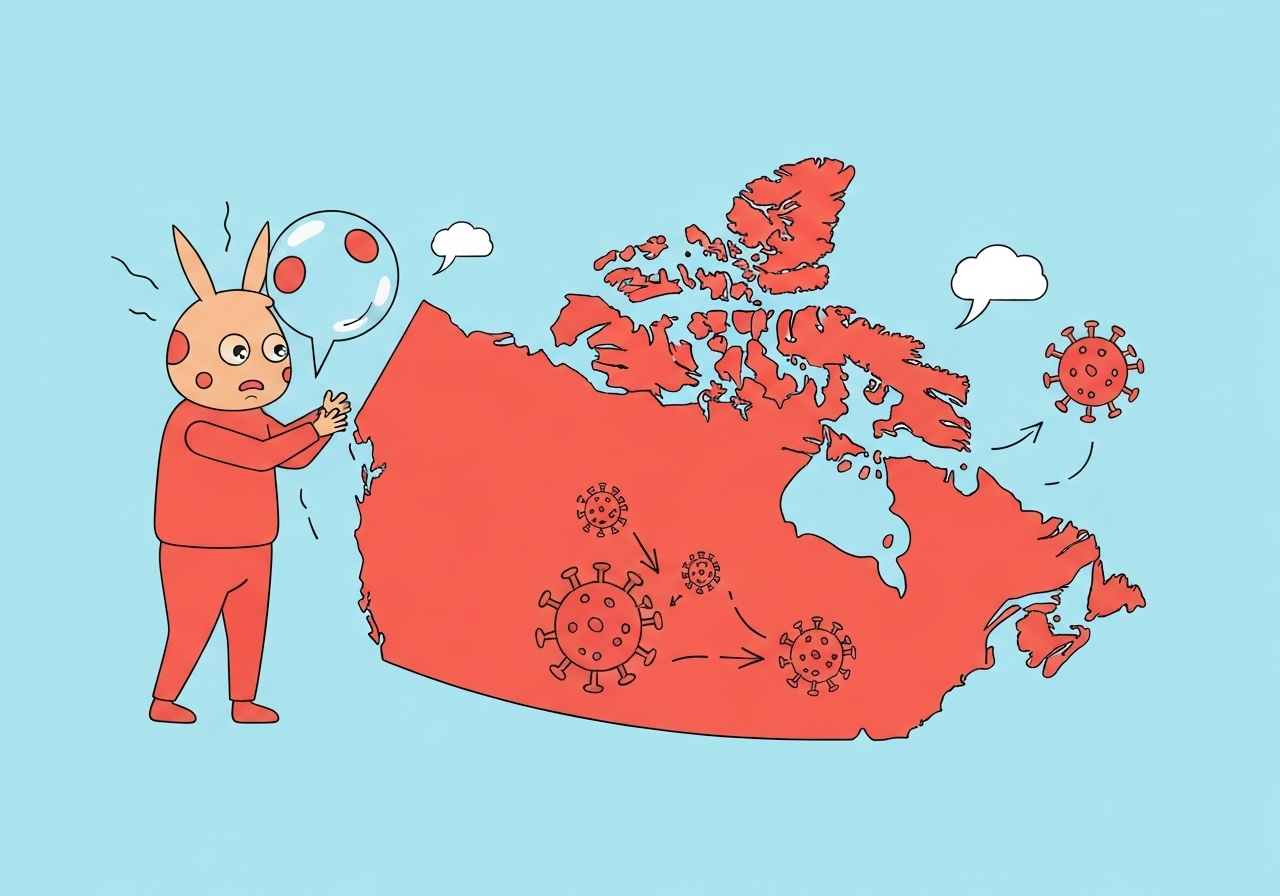
Lead: International health experts announced on 11 November 2025 that Canada has lost its measles elimination status after more than a year of continuous local transmission across the country. The decision follows 5,138 reported cases this year and two infant deaths linked to in‑utero exposure and premature birth. The declaration reflects falling childhood vaccination coverage and sustained spread of the highly contagious virus across the Americas. Canadian public health authorities say they are coordinating with partners to raise immunization rates and curb transmission.
Key Takeaways
- Canada has recorded 5,138 measles cases in 2025 and two deaths, both infants exposed in utero and born prematurely.
- The Pan American Health Organization determined measles spread uninterrupted within Canada for more than 12 months, triggering loss of elimination status.
- Measles elimination in Canada had been achieved in 1998; the Americas region was first declared measles-free in 2016.
- Vaccination coverage has slipped below the 95% threshold needed to prevent sustained outbreaks in many communities.
- The measles vaccine is credited with preventing an estimated 6.2 million deaths in the Americas from 2000 to 2023.
- Authorities cite a combination of lower routine immunization, travel-associated importations and clustered under-vaccinated populations as drivers of spread.
Background
Measles elimination is a formal designation that means endemic, continuous transmission has been interrupted; it does not mean zero imported cases. Canada first met that criterion in 1998 after sustained vaccination efforts. The United States followed in 2000 and, after regional progress, the Americas as a whole were declared free of endemic measles in 2016.
Since then, however, vaccination coverage in parts of the hemisphere has fallen below the 95% level needed for herd immunity, and large outbreaks in countries such as Venezuela and Brazil in 2018–2019 cost the region its status. Although the region briefly reclaimed elimination in 2024, renewed chains of transmission, including the one now documented in Canada, have altered that picture.
Main Event
On 11 November 2025, experts from the Pan American Health Organization (PAHO) announced their assessment that measles has been spreading within Canadian communities without interruption for more than a year. PAHO evaluated national surveillance data and determined the pattern met their criteria for loss of elimination. Canadian officials acknowledged the determination and said they are increasing efforts to detect cases, share data and expand vaccine outreach.
Health records for 2025 show 5,138 laboratory-confirmed or epidemiologically linked measles cases nationwide. Two deaths were reported; both were infants who had been infected before birth and were born prematurely, then succumbed to complications. Public health investigators have linked many cases to travel-associated importations and transmission in under-immunized clusters.
Field teams have reported outbreaks concentrated in several provinces and in communities with lower routine childhood vaccination uptake. Officials describe targeted campaigns to raise coverage, school-entry checks, and enhanced surveillance. However, experts warn that patchy immunization and delayed responses can allow the virus—one of the most contagious known—to re-establish sustained chains of local spread.
Analysis & Implications
Losing elimination status is largely symbolic, but it signals a reversal in public health progress and increases the practical risk of more cases, hospitalizations and deaths. At a population level, measles circulates when susceptible cohorts exceed the threshold kept in check by high vaccine coverage; falling below 95% leaves gaps that outbreaks exploit. For Canada, the status change highlights inequalities in vaccine access and acceptance across regions and communities.
Economically and operationally, outbreaks strain public health resources by requiring outbreak response teams, contact tracing, laboratory testing and temporary clinic expansions. They can also divert capacity from other preventive services. Internationally, re-established measles transmission in a high-income country complicates regional control efforts because it raises the chance of exportations to countries with weaker health systems.
Politically, the loss will likely sharpen debates about mandatory vaccination policies, funding for routine immunization programs, and investment in community outreach. Public trust in immunization programs can be fragile; transparent, evidence-based communication and accessible vaccination services are key to restoring coverage. If coverage rebounds quickly, elimination can be regained—PAHO has pointed to past recoveries as precedent.
Comparison & Data
| Year/Metric | Key Data |
|---|---|
| 1998 | Canada first achieved measles elimination |
| 2016 | Americas declared measles-free |
| 2000–2023 | Estimated 6.2 million deaths prevented by measles vaccine in the Americas |
| 2025 (to date) | 5,138 reported cases in Canada; 2 deaths |
The table places the 2025 Canadian outbreak in historical context: elimination was previously achieved and the region has reversed setbacks before. The recorded 5,138 cases this year contrast sharply with the near-absence of endemic disease when coverage remained at or above 95%. Restoring that coverage is the principal lever to reduce transmission and reclaim elimination.
Reactions & Quotes
Public health leaders outside government stressed the avoidable nature of the setback and urged renewed vaccination campaigns. Their comments reflect frustration that a vaccine-preventable pathogen has regained footing in a wealthy country with established immunization infrastructure.
This is a troubling public‑health setback that should prompt immediate action to close immunity gaps.
Jennifer Nuzzo, Brown University (infectious disease expert)
PAHO leadership framed the loss as reversible and called for coordinated regional action to interrupt chains of transmission. Officials emphasized that the region has eliminated measles before and can do so again with rapid, sustained measures.
Elimination has been achieved twice in the region; renewed collective effort can restore that status.
Dr. Jarbas Barbosa, Pan American Health Organization (director)
Unconfirmed
- Detailed geographic breakdowns of all 5,138 cases and the precise timeline for each local transmission chain remain under validation by national authorities.
- Attribution of recent case clusters to specific vaccine coverage declines in named communities is still being investigated and requires more granular immunization and sociodemographic data.
Bottom Line
The loss of measles elimination status in Canada is a clear indicator that gaps in vaccination coverage can quickly undo decades of progress against a vaccine-preventable disease. While the designation is symbolic, it corresponds to sustained local spread that poses real risks, especially to infants and under-immunized groups.
Restoring high two‑dose coverage, targeting outreach to underserved communities, and sustaining surveillance and rapid outbreak response are the immediate priorities. If implemented promptly and equitably, these measures can curtail transmission and allow Canada—and the region—to regain elimination status in the medium term.
Sources
- The Guardian (news report)
- Pan American Health Organization (PAHO) (official regional public health agency)
- World Health Organization (WHO) (international public health organization)
- Brown University (academic institution)