
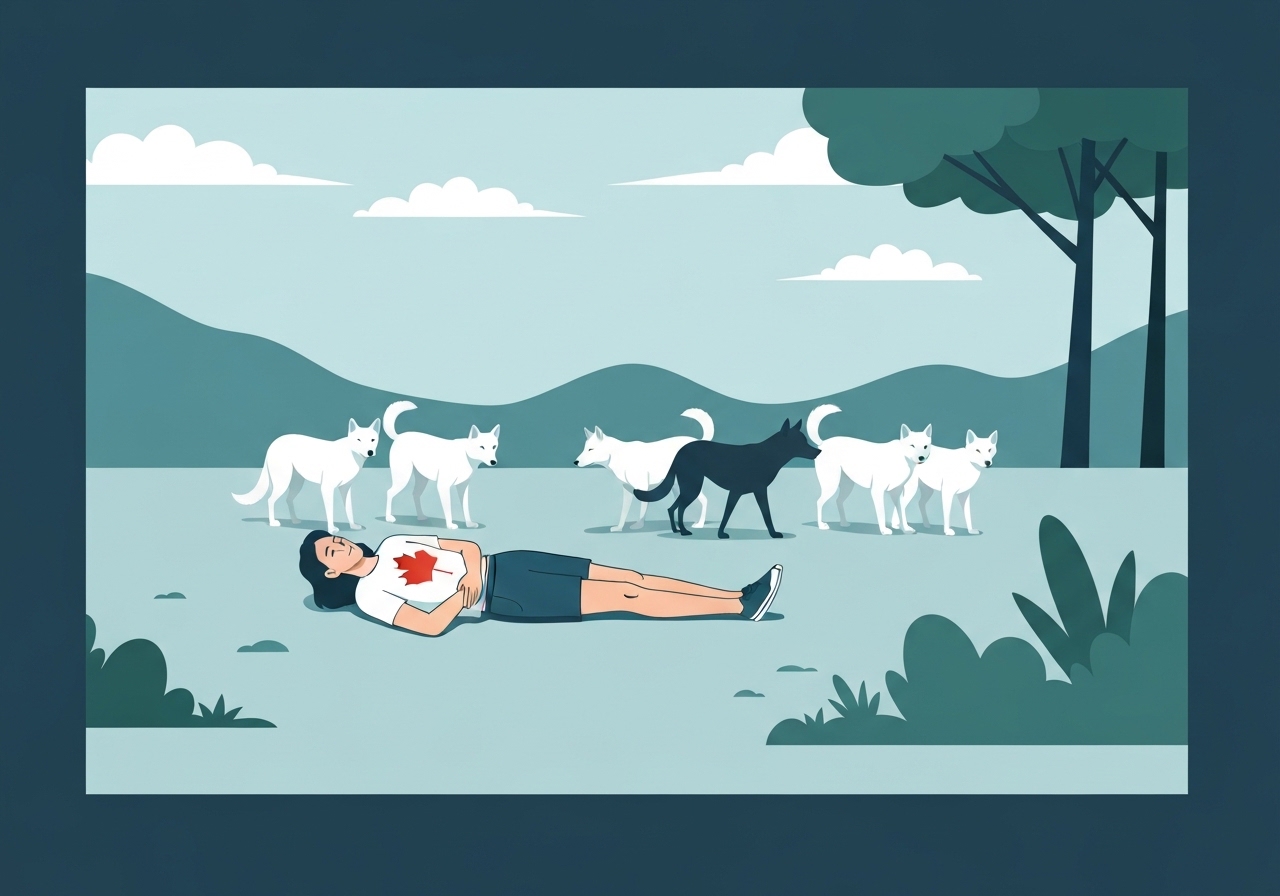
A 19-year-old Canadian tourist was found dead on K’Gari (off Queensland’s east coast) early Monday morning, discovered about 06:30 local time (20:30 GMT Sunday) with a pack of dingoes around the body. Two men driving along the shoreline reported seeing roughly 10 dingoes gathered around an object, which they realised was the woman, Queensland police said. Police have not yet determined whether the cause of death was drowning or injuries inflicted by animals; a post-mortem is scheduled for Wednesday. Authorities noted markings on the body that are “consistent with having been touched and interfered with by the dingoes,” while urging caution around wildlife on the island.
Key takeaways
- The victim was a 19-year-old Canadian woman working at a backpacker hostel on K’Gari; she had been on the island for about six weeks.
- Her body was found at about 06:30 local time on Monday (20:30 GMT Sunday) near the Maheno shipwreck, a well-known landmark.
- Two men driving the beach located a pack of about 10 dingoes gathered around the remains and alerted police.
- Police inspector Paul Algie confirmed markings on the body consistent with dingoes having touched or interfered with it, but the precise cause of death remains under investigation.
- The woman had told friends she planned a 05:00 morning swim, according to local media reporting.
- A post-mortem examination is due on Wednesday to establish cause of death and any contribution from animal interaction.
- K’Gari is a recognized wilderness area with a resident dingo population; dingoes are protected as a native species in Queensland national parks.
Background
K’Gari is an island destination that draws tourists for its beaches and natural features; parts of the island are managed as protected wilderness. The island’s dingo population is a long-standing ecological presence and is legally protected in Queensland national parks as a native species. This protection exists alongside ongoing management efforts aimed at minimizing negative human–wildlife encounters while respecting the animals’ cultural significance to local First Nations communities.
Beaches such as the stretch near the Maheno shipwreck are popular with visitors, which creates recurring challenges for park managers balancing access, safety and conservation. Authorities have previously issued warnings about approaching dingoes and advised visitors on safety practices; the discovery of a tourist’s body in close proximity to a dingo group will intensify scrutiny of those management practices. Local emergency and policing services respond routinely to wildlife incidents on the island, but each serious event prompts renewed review of signage, visitor education and enforcement strategies.
Main event
Queensland police said the woman’s body was located around 06:30 on Monday, after two men driving along the beach came upon a pack of about 10 dingoes gathered around an object. On inspection they realised the object was a human body and notified authorities. Police Inspector Paul Algie spoke to local media about the discovery and the scene they encountered.
Inspector Algie said officers found markings on the body that are consistent with having been touched and interfered with by dingoes, but he emphasised that forensic examination is required to determine whether the animal interaction preceded or followed the death. A post-mortem was scheduled for Wednesday to establish cause of death and any injuries contributing to it. The woman’s name has not been released by police pending family notification.
The body was found close to the Maheno shipwreck, a shipwrecked hull that washed ashore in 1935 and is a frequent stop for visitors along that beach. Local reporting indicates the woman had been employed at a backpackers’ hostel for roughly six weeks and had told friends she intended to swim at about 05:00 the same morning. Police continue to examine the scene and interview witnesses.
Analysis & implications
The immediate question for authorities is whether the woman died from an unrelated cause such as drowning and was then approached by dingoes, or whether a direct dingo attack was responsible. The post-mortem and forensic work will be decisive; until then, any attribution of cause remains provisional. How investigators sequence injuries and environmental evidence will shape public messaging and potential operational responses on the island.
From a policy perspective, the incident will likely renew debate over visitor safety measures on K’Gari: signage placement, ranger patrols, restrictions on beach driving, and public education about wildlife interactions. Park managers must weigh the island’s conservation objectives and the cultural importance of dingoes to First Nations people against the need to protect visitors from harm. Any changes may require coordination between Queensland Parks, local First Nations representatives and tourism stakeholders.
Tourism could be affected in the near term if public concern grows; media coverage of rare but high-profile events often depresses short-term visitation to affected sites. Longer-term impacts will depend on how authorities respond, whether immediate safety improvements are implemented and whether public confidence in visiting the island is restored. Legal and reputational consequences—such as inquiries or reviews of management practice—are possible if systemic gaps are identified during investigation.
Comparison & data
| Fact | Detail |
|---|---|
| Victim age | 19 |
| Discovery time | 06:30 local (20:30 GMT previous day) |
| Location | K’Gari, near Maheno shipwreck |
| Number of dingoes reported | About 10 |
| Employment | Backpackers’ hostel; ~6 weeks |
| Post-mortem | Scheduled for Wednesday |
The table above summarises key, confirmed facts released by police and reported by local media. These data points frame the investigation and help clarify what is known versus what remains under examination, such as the precise cause and timing of death relative to animal contact.
Reactions & quotes
“It was obviously a very traumatic and horrific scene for them to uncover.”
Paul Algie, Queensland Police (inspection comment)
Inspector Algie used that description to convey the emotional impact on the discovery party and to underscore the seriousness with which police are treating the investigation. Police have repeatedly appealed to visitors to exercise caution on the island.
“Dingoes are wild animals, and whilst they are very culturally significant to the local First Nations people and to the people that live on the island, they are still wild animals and need to be treated as such.”
Paul Algie, Queensland Police (public warning)
This statement reflects the dual responsibilities authorities face: preserving cultural and ecological values while advising public safety precautions. Local media also reported that the woman had told friends she planned an early morning swim, a detail now part of the timeline under review.
Unconfirmed
- Whether the woman’s injuries were caused before death by dingoes or if they occurred post-mortem—this remains to be established by the coroner’s post-mortem.
- The precise identity of the dingoes (pack composition or whether any animals involved are habituated to humans) is not yet confirmed by authorities.
Bottom line
An investigation is under way after a 19-year-old Canadian woman’s body was found on K’Gari with dingoes present nearby; forensic results from a post-mortem will be critical to determining cause and sequence of events. In the short term, park authorities and police will focus on scene examination, witness interviews and messaging that emphasises visitor safety around wildlife.
Longer-term consequences may include renewed review of management measures on K’Gari, potential changes to visitor guidance, and discussions with First Nations stakeholders about how to protect both cultural values and human safety. For now, officials urge caution and adherence to wildlife safety advice while investigations continue.
Sources
- BBC News — media report summarising police statements and local coverage
- Queensland Police Service: News — official police communications and media releases (official)
- ABC News Australia — local media reporting referenced by authorities (media)