
Lead
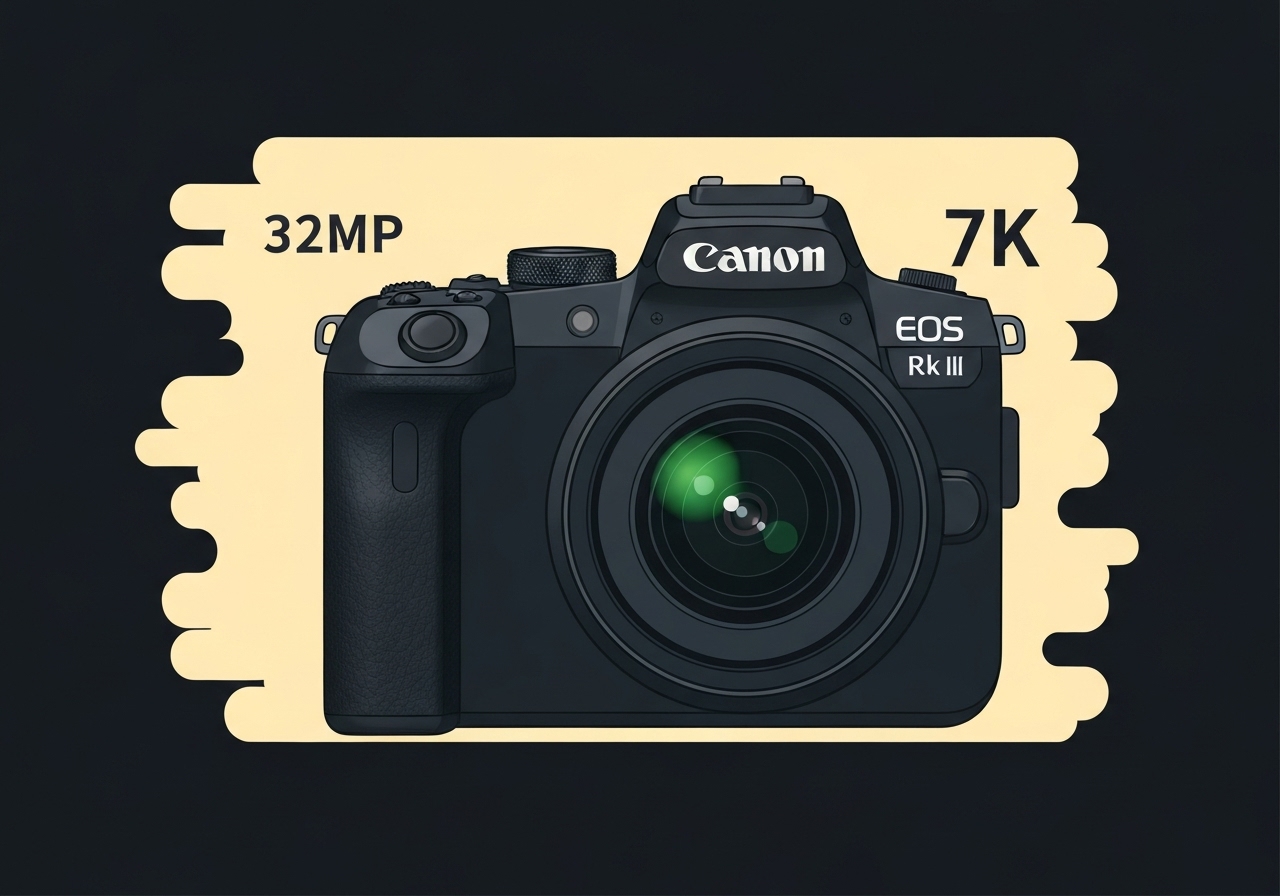
Canon has unveiled the EOS R6 Mark III, a full-frame mirrorless aimed at hybrid stills-and-video shooters. The camera upgrades the R6 line with a 32.5‑megapixel sensor, enhanced autofocus and new video options including 7K/60p RAW and 4K/120p. Canon also reworked the media configuration to a dual-slot layout with CFexpress Type B plus SD, and added practical features such as a tally lamp and full‑size HDMI Type A. The R6 Mark III ships November 25 for a body price of $2,799, with two kit options at $3,149 and $4,049 respectively.
Key takeaways
- The EOS R6 Mark III uses a 32.5‑megapixel full‑frame sensor, up from 24MP in the prior R6 Mark II.
- Video capabilities include 7K/60p RAW open‑gate recording and 4K/120p, plus Canon Log 2 and custom looks for grading.
- Burst performance remains high despite the higher resolution: up to 12 fps with a mechanical shutter and 40 fps electronically.
- Card configuration is asymmetrical: one CFexpress Type B slot and one SD slot, trading convenience for higher sustained throughput.
- Pricing: body‑only $2,799; RF 24‑105mm STM kit $3,149; RF 24‑105mm L kit $4,049. Launch date is November 25.
- Canon introduced a compact RF 45mm f/1.2 STM prime at $469.99 (ships early December); it is not classified as an L lens and lacks weather sealing.
- Hardware changes important to videographers include a tally lamp and a full‑size HDMI Type A rather than micro HDMI.
Background
The R6 line has been positioned as a versatile, relatively affordable full‑frame option that sits below Canon’s higher‑resolution R5 family. While the R5 Mark II targets photographers prioritizing pixel count and top‑end specs, Canon has used the R6 series to balance stills capability, speed and video features for a broader audience. Historically, Canon has differentiated models by sensor resolution, card speed and pro features; the R6 Mark III is the latest step in that product segmentation.
Mirrorless camera development in recent years has focused on hybrid performance: higher resolution sensors for stills alongside increasingly sophisticated video pipelines. Competitors have been pushing video specs (higher frame rates, internal RAW) while demanding faster media to sustain data rates. Canon’s choice to move to CFexpress Type B for one slot reflects that industry trend toward media capable of long, high‑bandwidth recordings and faster buffer clears during long bursts.
Main event
The headline hardware change is a new 32.5‑megapixel sensor that raises the R6 Mark III well above the previous 24MP R6 model. That sensor increase allows more cropping flexibility and finer detail for prints, while Canon has retained fast continuous shooting: 12 fps with the mechanical shutter and up to 40 fps electronically. According to Canon materials, the faster CFexpress Type B slot is a contributing factor to maintaining those sustained rates at higher resolution.
On the video side, Canon added support for up to 7K/60p RAW recording using a full corner‑to‑corner open‑gate readout, intended to give editors maximum headroom for reframing and stabilization. The camera also records 4K at 120p and offers more color/gamma control, including Canon Log 2 and custom looks. Practical ports and indicators for shooters were improved: a full‑size HDMI Type A replaces micro HDMI and a tally lamp makes on‑camera recording obvious to subjects and crew.
Ergonomically and operationally, Canon changed the dual‑card design from dual SD slots to an asymmetrical pairing: one CFexpress Type B and one SD. CFexpress Type B delivers higher sustained write speeds needed for long RAW video and high‑rate bursts, but it is more expensive and less common than SD. That tradeoff will please users who prioritize throughput and long recordings but may be an inconvenience for those who prefer the ubiquity and lower cost of SD cards.
Analysis & implications
Raising resolution to 32.5MP moves the R6 Mark III into a more capable stills territory without crossing into the premium price band of the R5 Mark II. For many pros and serious enthusiasts, the new sensor hits a sweet spot: noticeably more detail than the previous R6, while keeping the body price under $3,000. That makes the R6 Mark III a competitive option for wedding, event, and hybrid content creators who need both solid stills and advanced video in a single camera.
The addition of 7K RAW open‑gate recording is significant because it gives postproduction teams extra pixels for stabilization, reframing and down‑sampling, which can yield better final image quality than native 4K capture. However, 7K RAW produces very large files and requires a workflow capable of handling high sustained data rates—hence Canon’s move to CFexpress Type B. Workflows and storage costs will be a practical consideration for buyers who intend to use the highest bitrate modes regularly.
Canon’s decision to include one CFexpress Type B slot rather than two reflects a compromise between cost, size and feature set. CFexpress Type B supports the burst and video performance consumers expect now, but the continued use of an SD slot keeps some backward compatibility for users with existing SD investment. From a market perspective, this arrangement signals Canon expects buyers in this segment to accept mixed media formats rather than forcing a full CFexpress ecosystem.
Comparison & data
| Model | Sensor | Top video | Burst fps | Card slots | Body price |
|---|---|---|---|---|---|
| EOS R6 Mark II | 24 MP | 4K/60p (varies) | 12 fps / 40 fps | Dual SD | — (previous model) |
| EOS R6 Mark III | 32.5 MP | 7K/60p RAW, 4K/120p | 12 fps (mech) / 40 fps (elec) | CFexpress Type B + SD | $2,799 |
| EOS R5 Mark II | ≈45 MP | Higher-end video options | Top-end speeds | Pro card options | > $4,000 (body) |
The table shows how Canon is spacing product tiers by sensor resolution, video capability and price. The R6 Mark III narrows the resolution gap with higher‑end models while preserving a lower entry price point. Buyers should weigh whether the step up to 32.5MP and expanded video is worth the media and storage tradeoffs compared with the prior R6.
Reactions & quotes
Canon framed the R6 Mark III as a model that brings higher resolution and modern video features to the midline R series. The following quotations capture official positioning and early commentary.
“The R6 line is designed to deliver high performance to users who don’t require the R5 Mark II’s higher resolution or price point.”
Canon (official announcement)
“This lens isn’t aimed at pixel peepers,”
Drew MacCallum, Canon USA (product briefing)
“The Mark III represents a notable bump in both stills resolution and video flexibility for Canon’s midrange mirrorless line,”
Antonio G. Di Benedetto, The Verge (report)
Unconfirmed
- Long‑term durability and real‑world thermal performance during sustained 7K/60p RAW recording have not yet been independently verified.
- Actual battery life when recording in the highest bitrate modes (7K RAW, 4K/120p) is not yet confirmed in third‑party testing and will depend on workflow and accessories.
Bottom line
The EOS R6 Mark III is a clear evolution of Canon’s midline mirrorless strategy: higher sensor resolution, expanded video features and practical on‑camera refinements aimed at hybrid creators. It keeps the R6 family accessible at a sub‑$3,000 body price while adding capabilities—7K RAW and a CFexpress Type B slot—that appeal to demanding workflows.
For buyers, the decision will hinge on workflow priorities: those who need higher resolution and advanced video should find the R6 Mark III compelling, but they must budget for faster media and more storage. Photographers who prioritize simplicity and lower media costs may prefer to stick with dual‑SD configurations or consider whether the R5 Mark II’s higher pixel count justifies its larger price tag.