
Lead
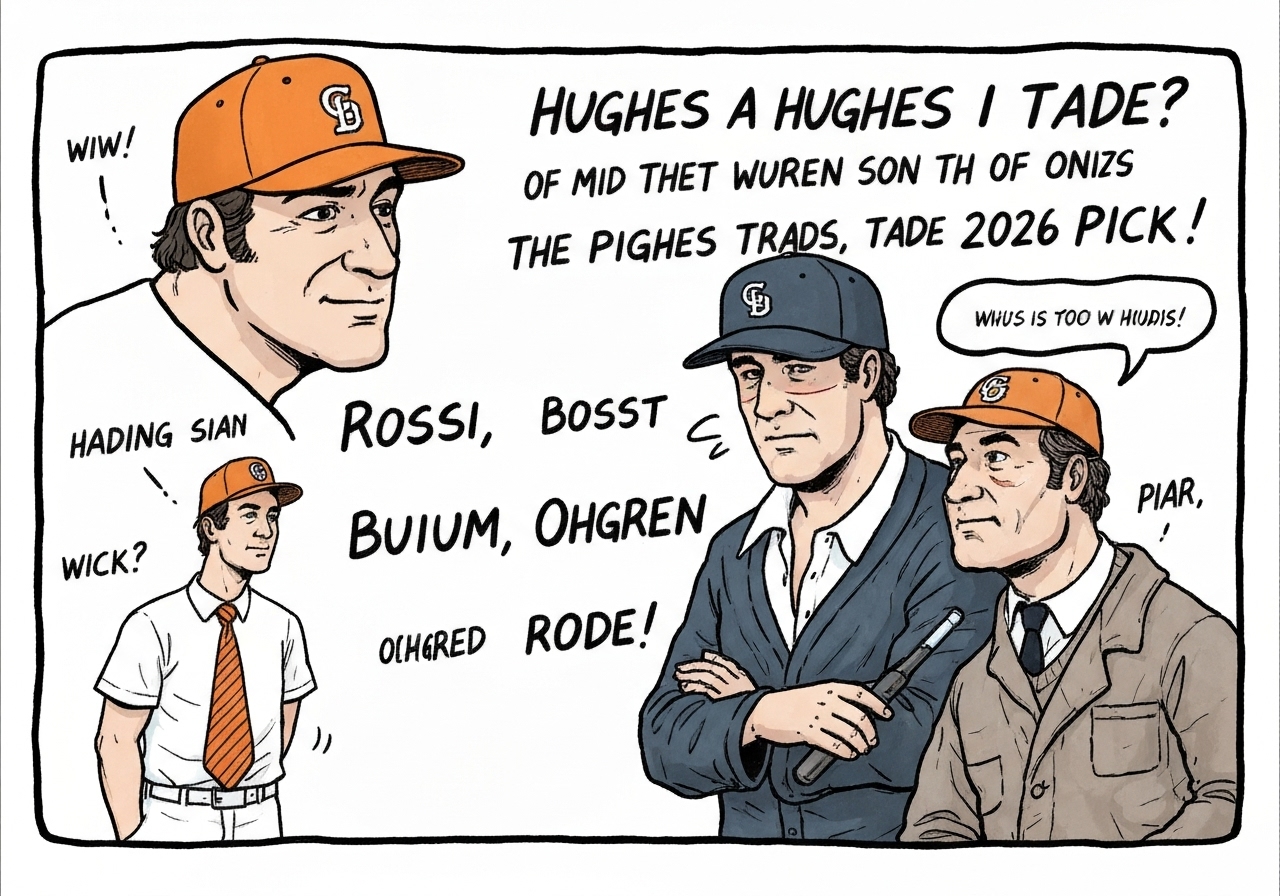
On Dec. 13, 2025, the Vancouver Canucks traded captain and 2023-24 Norris Trophy winner Quinn Hughes to the Minnesota Wild, receiving forwards Marco Rossi and Liam Ohgren, defenseman Zeev Buium and a first-round pick in the 2026 NHL Draft. The move came after Vancouver missed the 2025 playoffs and amid signs Hughes might not re-sign long term; the club described the transaction as part of a retool/rebuild. Vancouver added a significant pool of young talent — all players selected in the first round between 2020 and 2024 — and now holds extra draft capital heading into June. Management framed the trade as an effort to gain leverage and accelerate a youth-driven roster reset rather than wait until options were limited.
Key Takeaways
- Quinn Hughes was traded to the Minnesota Wild on Dec. 13, 2025; he is under a six-year, $47.1 million contract signed Oct. 3, 2021 (AAV $7.85 million) and becomes part of Minnesota’s blue line immediately.
- Vancouver received Marco Rossi (24, No. 9, 2020), Liam Ohgren (21, No. 19, 2022), Zeev Buium (20, No. 12, 2024) and a 2026 first-round pick, adding youth and draft capital to its rebuild.
- Rossi has 13 points (4 G, 9 A) in 17 games this season and is in the first year of a three-year, $15 million deal he signed Aug. 22, 2025 ($5 million AAV).
- Buium has 14 points (3 G, 11 A) in 31 games in 2025-26 and brings a track record of international and NCAA success: U.S. U18 gold (2023), World Junior golds (2024, 2025) and an NCAA title with Denver (2024).
- Ohgren is still developing — he has played 18 games this season without registering a point — but remains a recent first-round prospect with projected upside.
- Vancouver’s record entering the road trip was 11-17-3; management described the move as retooling rather than a long, multi-year teardown and said they expect the club could rebound within a few seasons with the new assets.
Background
The Canucks entered the 2025-26 season under mounting pressure after missing the 2025 Stanley Cup Playoffs. General manager and president of hockey operations Jim Rutherford indicated the club received signs that Hughes was unlikely to re-sign in Vancouver past his current contract, prompting an early search for trade opportunities rather than waiting until a deadline or free-agency window. Vancouver had already moved veteran forward J.T. Miller to the New York Rangers on Jan. 31, 2025, as part of a prior step toward retooling the roster and acquiring younger, cost-controlled assets.
Quinn Hughes, the 2023-24 Norris Trophy winner, had drawn external interest, notably from the New Jersey Devils where his brothers Jack and Luke play. That family connection made New Jersey a logical suitor, but Rutherford said he wanted to avoid letting negotiations narrow to a single team or timeline that would reduce the Canucks’ leverage. The club therefore pursued multiple discussions, seeking the best package for a player who could walk away in free agency after 2026-27.
Main Event
Negotiations intensified in December 2025. Vancouver engaged with several teams over a period of weeks; late in the process, Minnesota general manager Bill Guerin placed a decisive offer that included two NHL-ready forwards, a high-upside young defenseman and a 2026 first-round selection. Rutherford described Minnesota’s bid as above and beyond other proposals and said he gave other interested parties an opportunity to respond before finalizing the deal.
The Canucks acquired Marco Rossi — a polished center who has produced 13 points in 17 games and carries a $5 million cap hit under a three-year, $15 million contract — along with Liam Ohgren, a still-developing winger taken in the first round in 2022, and Zeev Buium, a 20-year-old left-shot offensive defenseman widely regarded for his mobility and power-play instincts. Vancouver also secured a first-round pick in the 2026 draft, increasing its long-term asset base.
Rutherford said the club aimed to get Hughes closer to family by moving him to the Eastern time zone, and that Vancouver’s scouts and development staff are enthusiastic about the players they received, particularly Buium’s potential to grow into a high-usage defenseman. Hughes agreed to the destination and arrived in Minnesota as the Wild reinforced a top-four defense corps with a Norris-caliber player.
Analysis & Implications
The trade represents a clear shift in Vancouver’s timeline. By turning an elite, but soon-to-be free-agent defenseman into multiple young assets and a draft pick, the Canucks increase their runway for a youth-driven rebuild while retaining flexibility to accelerate or pivot based on performance and cap movement. Management emphasized that this is intended as a retool that could produce meaningful improvement within two to three seasons rather than a five- to seven-year teardown.
For Minnesota, acquiring Hughes is a near-term win: the Wild bolster a championship-contending roster with an elite puck-moving defenseman who can quarterback a power play and push them deeper in the standings. The Wild are accepting the near-term cap charge for a player who can shift playoff dynamics; whether Hughes signs a long-term deal in Minnesota remains a future decision, but the Wild’s willingness to part with multiple first-round-caliber assets shows they prioritized a proven top-pairing defenseman now.
The key domestic implications center on development and asset allocation. Buium’s track record at international tournaments and college suggests a higher ceiling among the pieces Vancouver received, but his readiness to replace an established No. 1-type like Hughes is not guaranteed. Rossi provides an immediate upgrade at center with proven NHL production; Ohgren is a longer-term upside play. Vancouver’s ability to develop and retain these players, plus the 2026 first-round pick, will determine whether the trade accelerates a return to contention.
Comparison & Data
| Player | Age | Draft (Year/Overall) | 2025-26 (G-A-P) | Contract |
|---|---|---|---|---|
| Marco Rossi | 24 | 2020 / No. 9 | 17 GP — 4-9-13 | 3 yr, $15M (signed Aug. 22, 2025) — $5.0M AAV |
| Liam Ohgren | 21 | 2022 / No. 19 | 18 GP — 0-0-0 | Entry/early-career contract |
| Zeev Buium | 20 | 2024 / No. 12 | 31 GP — 3-11-14 | Entry/early-career contract |
| Quinn Hughes | — | Undisclosed here | — | 6 yr, $47.1M (signed Oct. 3, 2021) — $7.85M AAV |
The table highlights the immediate contrast: Hughes is an established, high-impact defenseman with a significant cap hit and award pedigree (2023-24 Norris), while Vancouver received a mix of NHL-ready scoring (Rossi), high-upside youth (Buium, Ohgren) and draft capital. That balance favors short- to mid-term roster flexibility at the cost of top-end defense talent now.
Reactions & Quotes
Canucks leadership framed the move as a pragmatic decision to maximize return while the club still had leverage.
“In order to give us any leverage and not get painted into the corner… we felt that trying to do a deal in December or the first half of January would give us the most leverage.”
Jim Rutherford, Vancouver president of hockey operations
Minnesota’s front office pushed late and decisively for Hughes.
“I’m reading all this stuff. Is there any chance of us getting in?”
Bill Guerin, Minnesota general manager (reported)
Vancouver’s general manager highlighted the club’s youth focus and Buium’s profile.
“He’s an extremely talented offensive-minded defenseman… we’re really excited to work with him here.”
Patrik Allvin, Vancouver general manager
Unconfirmed
- Reports that New Jersey was the definitive frontrunner remain partially unverified; while the Devils were widely reported as a top suitor, the exact offers and discussions between teams are not fully public.
- Whether Quinn Hughes will sign a long-term contract in Minnesota after his current deal expires following the 2026-27 season is unresolved and depends on future negotiations and performance.
Bottom Line
The Canucks traded an elite, Norris-winning defenseman while he still carried market value and received a package emphasizing youth, cost control and draft capital. Management positioned the move as a timely, leverage-driven decision intended to accelerate a return to competitiveness without committing to a prolonged teardown.
For Minnesota, the acquisition is an immediate upgrade with clear championship-aspiration intent; for Vancouver, success hinges on player development (especially Buium and Ohgren), Rossi’s fit in the middle and prudent use of the 2026 first-round pick. Watch the 2026 draft, Vancouver’s development pipeline over the next two seasons, and any contract decisions that follow Hughes’ remaining term to judge the trade’s long-term outcome.