
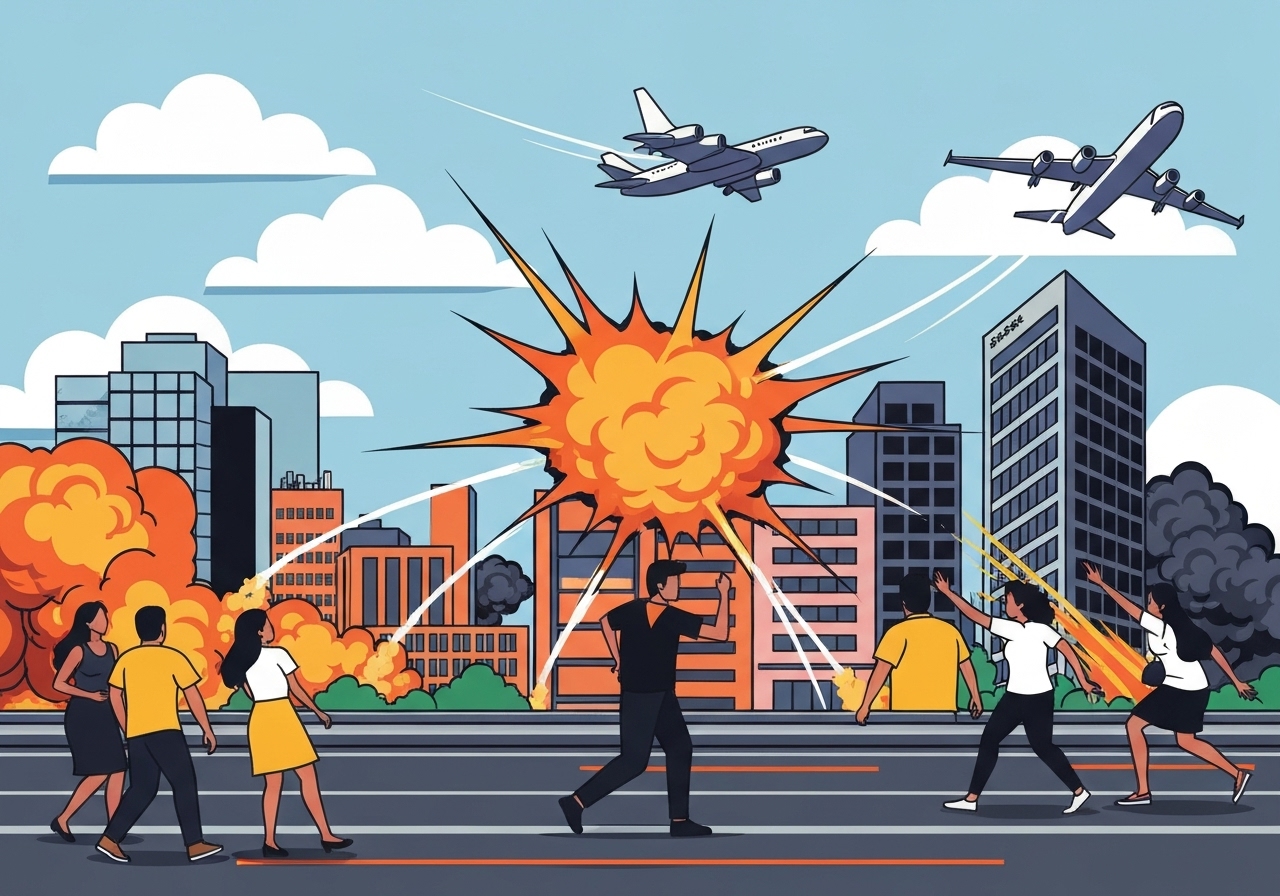
Lead: On Jan. 3, 2026, residents of Caracas reported multiple loud explosions and observed aircraft flying over the capital, prompting a sharp diplomatic reaction from Caracas. Venezuelan authorities publicly accused the United States of mounting an attack as images and eyewitness reports circulated in the morning. The events occurred amid weeks of heightened pressure from the Trump administration toward Nicolás Maduro’s government. Immediate details about damage or casualties remained unclear in the hours after the incidents.
Key Takeaways
- Explosions were reported in Caracas on Jan. 3, 2026; timestamped reporting by Bloomberg first published at 6:29 AM UTC and updated at 8:23 AM UTC.
- Multiple residents said they heard loud detonations and saw aircraft overhead; photographic coverage credited to Matias Delacroix/AP captured scenes on the streets.
- The Venezuelan government publicly accused the United States of carrying out an attack; the accusation was made against a backdrop of recent U.S. policy pressure on the Maduro administration.
- No independently verified casualty or damage figures were available in early reporting; authorities had not released a comprehensive incident report at the time of the initial coverage.
- The episode intensified already strained U.S.–Venezuela relations after weeks of diplomatic and political confrontation.
Background
Venezuela has been the focus of sustained international attention since contested elections and economic collapse reshaped its politics over recent years. The Maduro administration has faced sanctions and diplomatic isolation from the U.S. and some Western capitals, while maintaining support from allies including Russia, China and regional partners. In late 2025 and early 2026, U.S. officials publicly increased pressure, citing concerns about governance and sanctions enforcement; those moves raised tensions between Washington and Caracas.
Caracas itself has seen episodic security incidents in the past decade, ranging from political demonstrations to isolated violent confrontations tied to criminal groups. The capital’s dense urban environment amplifies the visibility and immediacy of loud events such as explosions or aircraft activity, producing rapid social-media circulation and public alarm. Within that context, any unusual military or aerial activity is likely to be framed in political terms by both government and opposition actors.
Main Event
Early on Jan. 3, residents across central neighborhoods reported hearing multiple explosions and described seeing aircraft pass over the city. Eyewitness accounts varied in timing and location, but converged on a pattern of short, loud detonations audible across several districts. Photographs and fast-moving social posts showed pedestrians and motorists reacting to the sounds, with some footage filmed near principal thoroughfares in Caracas.
The Venezuelan government responded quickly in public statements, accusing an external actor of carrying out the attack and directly naming the United States as responsible. The accusation came before an independent, on-the-ground forensic account had been made public. Officials framed the incident as a violation of sovereignty in the context of sustained external pressure.
At the time of initial reporting there was no widely available independent confirmation of the source of the explosions or of aircraft flight paths from third-party monitoring platforms. U.S. federal agencies had not issued a detailed public account in the first hours that followed the events. Local emergency services and hospitals did not provide consolidated casualty totals immediately after the morning incidents.
Analysis & Implications
The incident sharpens an already tense bilateral relationship. An accusation of direct U.S. involvement dramatically raises the diplomatic stakes and could prompt reciprocal measures such as new sanctions, expulsions of diplomats, or accelerated international denunciations. For Caracas, framing the episode as an attack serves domestic political purposes by consolidating narratives of external hostility and rallying supporters.
For Washington, an allegation of this nature—if sustained—would carry significant legal and political ramifications. Confirmation would require clear evidence linking assets or personnel to the event; absent that, the United States would likely face pressure to provide timely transparency to avoid escalation. The demand for verifiable, publicly available intelligence or third-party verification becomes central to de-escalation.
Regionally, neighbors and multilateral bodies may be compelled to respond, balancing concerns about sovereignty, regional stability and humanitarian consequences. Countries that already criticise or support Caracas will interpret the episode through existing alignments, potentially affecting votes or statements at forums such as the Organization of American States or the United Nations.
Reactions & Quotes
Venezuelan authorities described the morning incidents as an external attack on national sovereignty and held a foreign government responsible in early public remarks.
Venezuelan government (statement)
Residents and local witnesses reported hearing distinct detonations and seeing aircraft, capturing some of the episodes on mobile devices that circulated online.
Eyewitnesses in Caracas
Independent observers and analysts called for rapid, transparent verification from multiple sources before firm conclusions are drawn about responsibility.
Security analysts / regional observers
Unconfirmed
- No independent forensic confirmation of the explosions’ origin (weapon type, location of detonation, or responsible party) was available in the immediate aftermath.
- There was no publicly released, corroborated flight-path data at the time tying specific aircraft to the incident.
- Comprehensive casualty or damage assessments had not been published by authorities or independent monitors during early reporting.
Bottom Line
The Jan. 3 incidents in Caracas—explosions and reports of low-flying aircraft—represent a significant flashpoint in U.S.–Venezuela relations because they triggered direct accusations of external aggression amid an already fraught diplomatic environment. Immediate, transparent verification by independent sources is critical to avoid rapid escalation and to clarify whether the events reflect a targeted strike, a misidentified technical incident, or another cause.
Observers should watch for validated radar or satellite data, hospital and emergency-service reports, and any formal diplomatic exchanges between Washington and Caracas in the hours and days following the incident. Those pieces of evidence will determine whether the episode prompts policy shifts, new sanctions, or international mediation efforts.
Sources
- Bloomberg — news organization reporting the initial accounts and timeline.
- Associated Press — news/photography source (image credit to Matias Delacroix/AP noted in early coverage).