
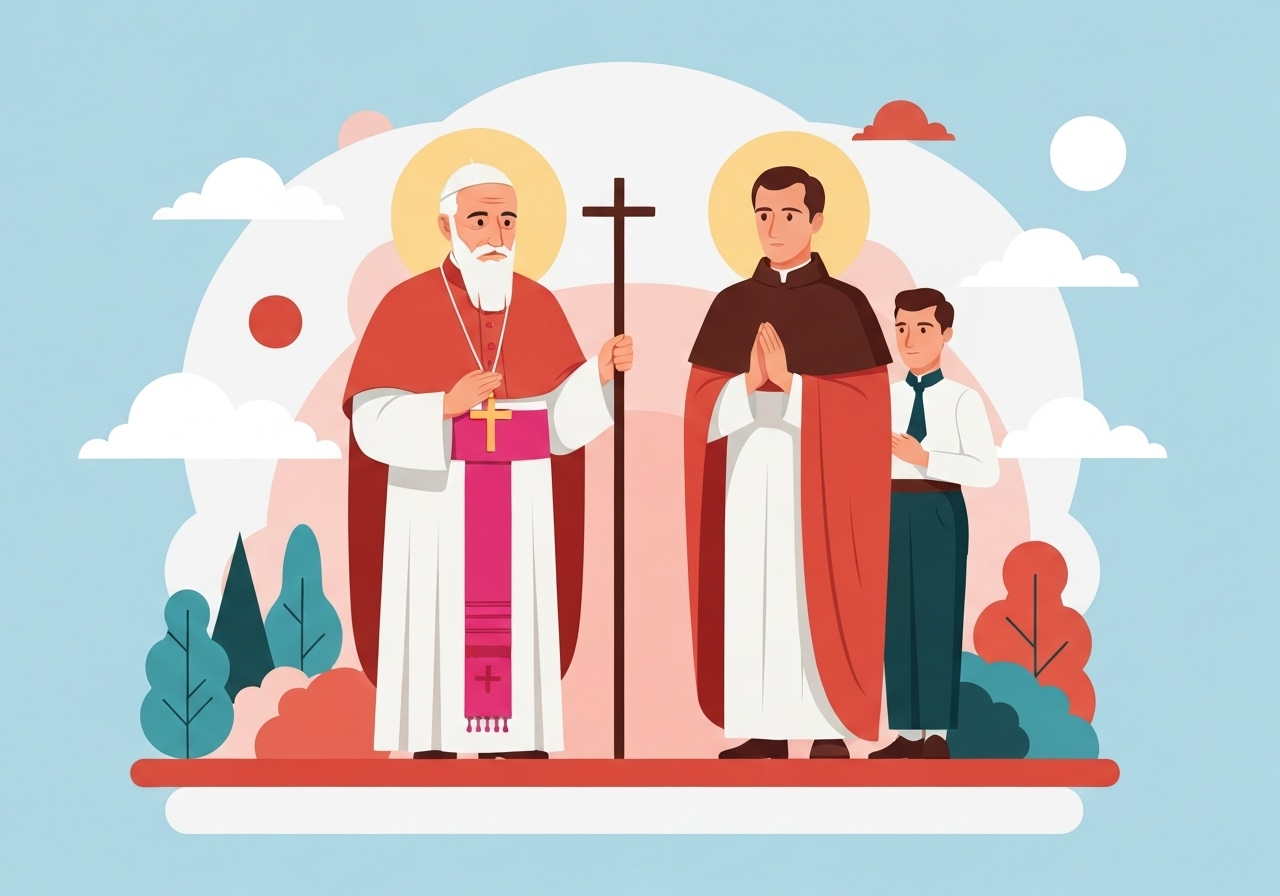
— In St Peter’s Square at the Vatican, Pope Leo XIV canonised Carlo Acutis and Pier Giorgio Frassati before about 70,000 people, declaring Acutis the first saint born in the millennial generation and presenting new, youth-focused role models for the Church.
Key Takeaways
- The canonisations took place on 7 September 2025 at St Peter’s Square, Rome.
- Pope Leo XIV proclaimed Carlo Acutis (1991–2006) the first millennial saint.
- Also canonised was Pier Giorgio Frassati (1901–1925), a noted Italian lay activist.
- About 70,000 people attended the Mass on the parvis of St Peter’s Basilica.
- Two miracles linked to Acutis—reported in 2013 and 2022—were recognised by the Church.
- Carlo Acutis’ remains have been on display at the Sanctuary of the Spoliation in Assisi since 2019.
- Frassati’s body has been a pilgrimage focus in Turin; his beatification dates to 1990.
Verified Facts
The canonisation ceremony was presided over by Pope Leo XIV on 7 September 2025 and followed the Vatican’s established liturgy, including the traditional Latin formula declaring the two blesseds to be saints. The event was attended by tens of thousands of pilgrims gathered in St Peter’s Square.
Carlo Acutis, born in 1991 and died in 2006, was known for combining deep personal faith with an early mastery of digital tools. His work cataloguing Eucharistic miracles online and his popular presence among young Catholics contributed to his wide following. The Vatican recognised two medically inexplicable recoveries as miracles attributed to his intercession: a Brazilian boy in 2013 and a Costa Rican student wounded in Florence in 2022.
Pier Giorgio Frassati, born 1901 and died 1925, was a lay Catholic from Turin who mixed social activism with personal piety. Son of Alfredo Frassati, founder of the newspaper La Stampa, Pier Giorgio became renowned for his charity work among the poor and for involvement with Catholic associations. He was beatified by Pope John Paul II in 1990 and his remains have drawn pilgrims to Turin since 2008.
Carlo Acutis’ body has been kept in Assisi in a glass reliquary since 2019; a continuous webcam stream and online coverage have made the site accessible globally. The Vatican cited the two authenticated miracles as the canonical basis for his elevation to sainthood.
Context & Impact
The canonisation of a figure born in 1991 signals a deliberate pastoral emphasis on accessibility to younger Catholics. Church leaders presented Acutis as a bridge between faith and contemporary culture, a tangible example of holiness lived in the internet age.
Pier Giorgio Frassati’s elevation reinforces a longstanding model of lay engagement that links political and social concern with personal devotion. His life is frequently cited by Catholic social movements as an example of combining activism and prayer.
Observers expect the dual canonisations to increase pilgrim flows to both Assisi and Turin, and to generate renewed interest in youth outreach and digital evangelisation projects. The Vatican framed the ceremonies as both a national and international celebration of Christian witness.
“We declare and define Blessed Pier Giorgio Frassati and Blessed Carlo Acutis as Saints and we inscribe them in the Roll of Saints.”
Pope Leo XIV / Vatican
Unconfirmed
- Long-term effects on young Catholics’ Mass attendance and vocations remain uncertain and will need statistical study.
- Estimates of future yearly pilgrim numbers to Assisi and Turin vary; precise projections are not yet available.
Bottom Line
The simultaneous canonisation of Carlo Acutis and Pier Giorgio Frassati on 7 September 2025 highlights the Vatican’s desire to present contemporary and historical lay models of holiness. Acutis’ recognition as the first millennial saint connects digital-age life with traditional devotion, while Frassati’s canonisation renews attention to social commitment within faith.